
Intro
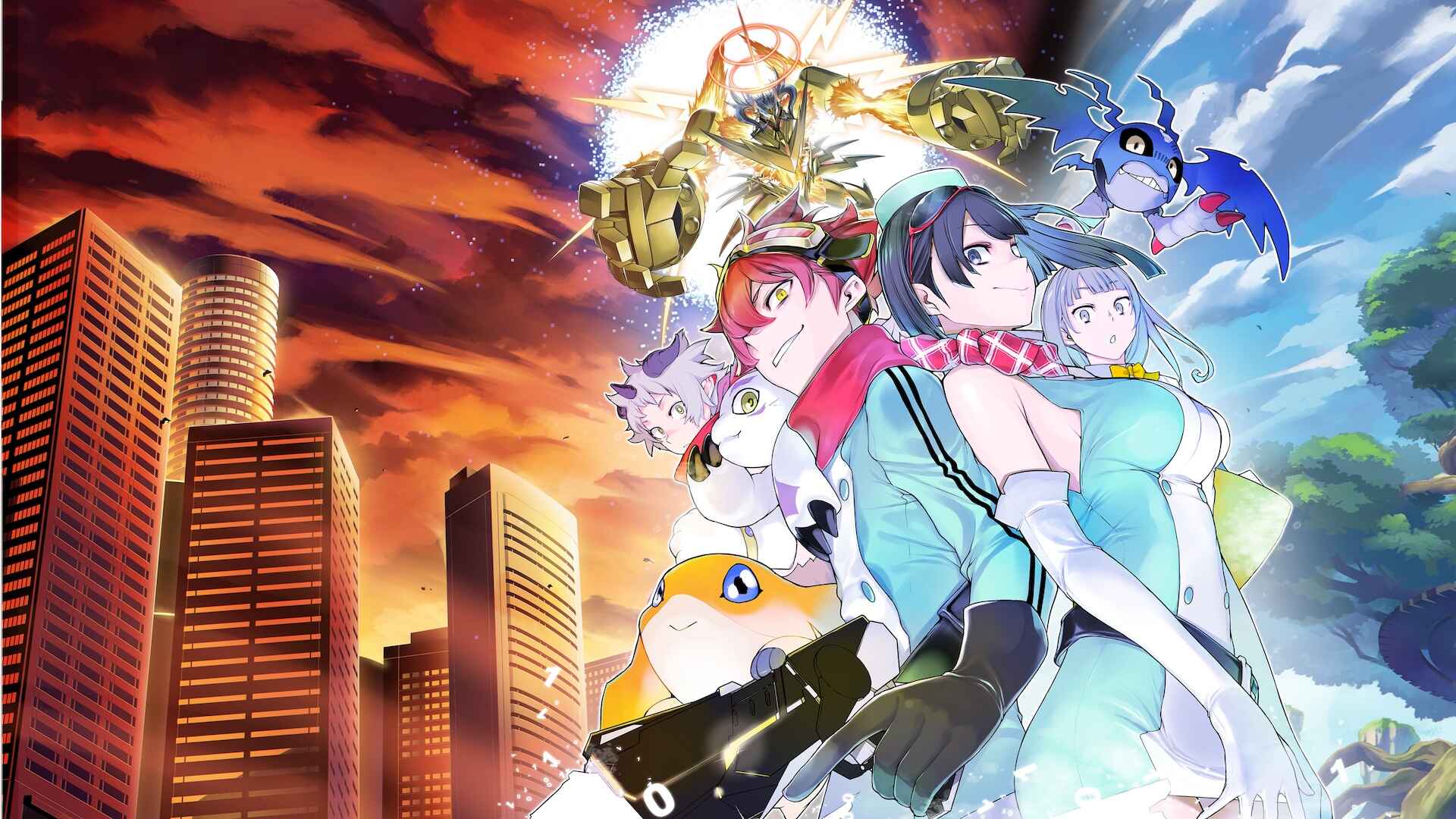
Digimon Story: Time Stranger is the latest entry in Media.Vision’s long-running Digimon Story line, brought to Nintendo’s newest hardware with a dedicated Switch 2 port.
Developed by Media.Vision and published by Bandai Namco, the title follows the studio’s recent work on Digimon Story: Cyber Sleuth and Hacker’s Memory and continues its focus on creature-collection RPG systems and turn-based combat.
Reviewer perspective and developer background
The reviewer openly acknowledged not being a long-time Digimon fan, noting that an enthusiastic recommendation of Digimon Story: Cyber Sleuth was their introduction to the series and that it left a positive impression.
That early experience led them to follow subsequent Media.Vision Digimon releases with interest.
Media.Vision is credited here for carrying forward the series’ mechanical strengths — team-based Digimon combat, Digivolution, and breed/merge systems — into Time Stranger.
Performance and Switch 2 port
On Nintendo Switch 2, Time Stranger offers quality and performance modes.
Performance mode targets a higher framerate (the port can approach 60fps but does not always sustain it), while quality mode trades framerate for improved visuals.
The port makes reasonable compromises to adapt a game originally designed for more powerful hardware; occasional framerate drops occur in larger areas with many NPCs or on-screen effects, but overall the experience is stable and playable in either mode.
Gameplay systems and combat
Time Stranger positions itself mechanically between Pokémon-style creature collecting and the thematic cadence of Persona-like JRPGs.
Players recruit Digimon by digitizing them in battle, raise and Digivolve them, and customize stats, skills, and equipment.
Combat uses a three-active, three-bench party structure that rewards tactical planning across elemental weaknesses, personality types, and item use.
Boss encounters are challenging but approachable thanks to adjustable difficulty options.
Story and structure
The plot places the player as an agent in an organization called ADAMAS.
After a dramatic opening sequence featuring large Digimon in Shinjuku, the narrative sends the protagonist back in time to investigate anomalies that threaten the future.
The story moves at a steady pace and delivers time-travel intrigue, though some characters feel less developed than the title’s mechanics warrant.
Scope and design
Time Stranger leans into a focused, mid-budget RPG design: dungeon spaces can feel repetitive and many zones are presented as smaller, digestible chunks rather than sprawling open areas.
That structure helps the Switch 2 port maintain performance and keeps play sessions tightly paced.
Fans of creature collectors will find abundant systems to experiment with, while newcomers can enjoy a self-contained RPG that doesn’t demand extreme time investment.
Conclusion
Digimon Story: Time Stranger is a competent Switch 2 port that preserves Media.Vision’s core design strengths: satisfying creature-collection loops, tactical turn-based combat, and a serviceable time-travel narrative.
It is not the largest RPG on the platform, but it offers a compact, well-made experience for Digimon fans and newcomers alike.
Version Tested: Nintendo Switch 2
Review Copy Provided by Bandai Namco Entertainment
Score: 8/10
Digimon Story: Time Stranger is the latest entry in Media.Vision’s long-running Digimon Story line, brought to Nintendo’s newest hardware with a dedicated Switch 2 port.
Developed by Media.Vision and published by Bandai Namco, the title follows the studio’s recent work on Digimon Story: Cyber Sleuth and Hacker’s Memory and continues its focus on creature-collection RPG systems and turn-based combat.
Reviewer perspective and developer background
The reviewer openly acknowledged not being a long-time Digimon fan, noting that an enthusiastic recommendation of Digimon Story: Cyber Sleuth was their introduction to the series and that it left a positive impression.
That early experience led them to follow subsequent Media.Vision Digimon releases with interest.
Media.Vision is credited here for carrying forward the series’ mechanical strengths — team-based Digimon combat, Digivolution, and breed/merge systems — into Time Stranger.
Performance and Switch 2 port
On Nintendo Switch 2, Time Stranger offers quality and performance modes.
Performance mode targets a higher framerate (the port can approach 60fps but does not always sustain it), while quality mode trades framerate for improved visuals.
The port makes reasonable compromises to adapt a game originally designed for more powerful hardware; occasional framerate drops occur in larger areas with many NPCs or on-screen effects, but overall the experience is stable and playable in either mode.
Gameplay systems and combat
Time Stranger positions itself mechanically between Pokémon-style creature collecting and the thematic cadence of Persona-like JRPGs.
Players recruit Digimon by digitizing them in battle, raise and Digivolve them, and customize stats, skills, and equipment.
Combat uses a three-active, three-bench party structure that rewards tactical planning across elemental weaknesses, personality types, and item use.
Boss encounters are challenging but approachable thanks to adjustable difficulty options.
Story and structure
The plot places the player as an agent in an organization called ADAMAS.
After a dramatic opening sequence featuring large Digimon in Shinjuku, the narrative sends the protagonist back in time to investigate anomalies that threaten the future.
The story moves at a steady pace and delivers time-travel intrigue, though some characters feel less developed than the title’s mechanics warrant.
Scope and design
Time Stranger leans into a focused, mid-budget RPG design: dungeon spaces can feel repetitive and many zones are presented as smaller, digestible chunks rather than sprawling open areas.
That structure helps the Switch 2 port maintain performance and keeps play sessions tightly paced.
Fans of creature collectors will find abundant systems to experiment with, while newcomers can enjoy a self-contained RPG that doesn’t demand extreme time investment.
Conclusion
Digimon Story: Time Stranger is a competent Switch 2 port that preserves Media.Vision’s core design strengths: satisfying creature-collection loops, tactical turn-based combat, and a serviceable time-travel narrative.
It is not the largest RPG on the platform, but it offers a compact, well-made experience for Digimon fans and newcomers alike.
Version Tested: Nintendo Switch 2
Review Copy Provided by Bandai Namco Entertainment
Score: 8/10