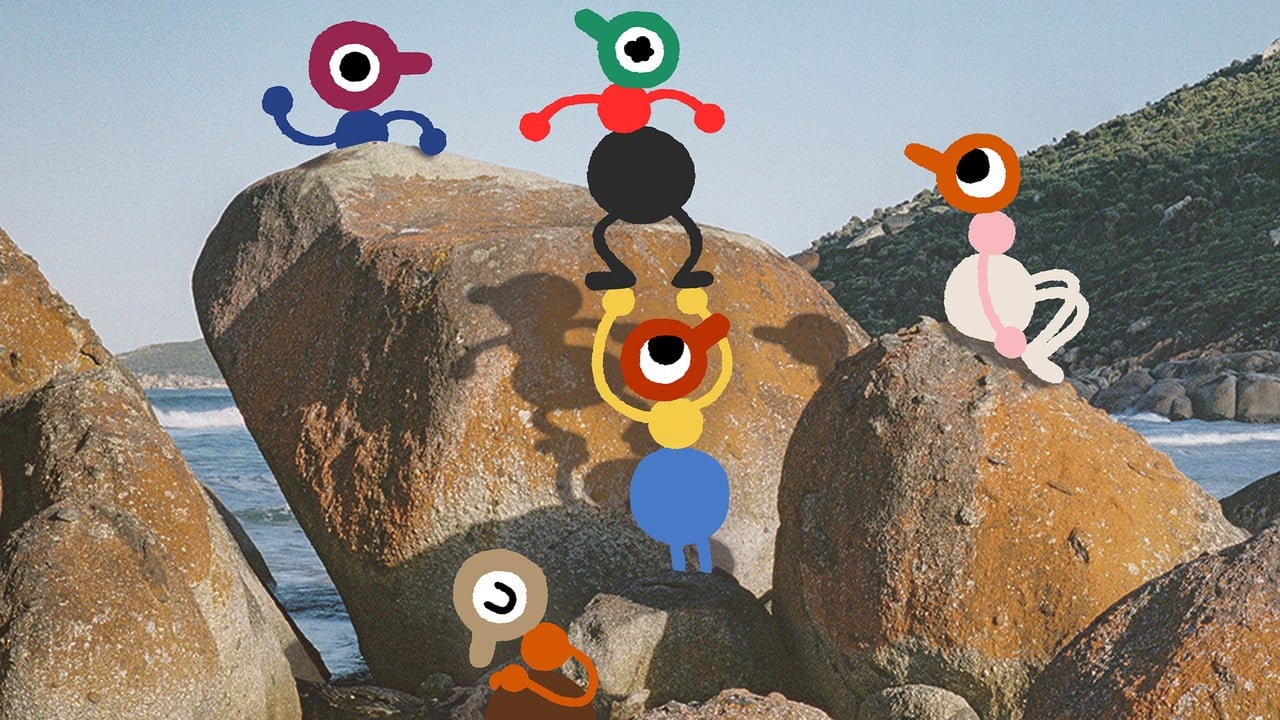
House House, the Australian studio best known for Untitled Goose Game, has confirmed limited use of large language models (LLMs) during the final development of its highly rated indie title Big Walk, a disclosure that has led to the game's disqualification from the upcoming 29th Independent Games Festival (IGF).
The IGF published a policy stating it would 'Decline to Vote for Any Game That Uses Generative AI in Any Capacity' for this year's awards cycle.
Following that announcement, House House told media outlet Aftermath that it used LLMs sparingly in the 'final stretch' of Big Walk to help diagnose and fix technical problems and certain bugs.
According to the developer, snippets derived from LLM responses were used only as starting points and subsequently modified into game code, representing 'well under 0.1% of Big Walk's code.' The studio said generative AI was not used in any other aspect of development.
House House also explained why the AI use was not disclosed earlier.
The developer said the team did not file a disclosure on Steam because, in their experience, the platform does not request disclosure of code or chatbot usage.
With the IGF disqualification becoming public, House House opted to post a formal disclosure to address growing public interest.
In a follow-up statement, the studio qualified its position, noting that this admission is not intended as an endorsement of AI tools.
House House expressed concern that voluntary disclosures might normalize generative AI and said it supports efforts to limit potential harms that such technologies can cause in videogames and the wider world.
Big Walk's disqualification highlights the evolving relationship between generative AI, platform policies, and industry awards.
The IGF's zero-tolerance stance for entries that used generative AI in any capacity has immediate effects for developers who incorporated AI-assisted problem solving during late-stage development.
Platforms such as Steam and storefronts across consoles and PCs are still clarifying how and when developers should disclose AI-assisted work, while award bodies like the IGF have already taken a definitive position for this awards cycle.
House House's confirmation is a notable development for indie game makers and awards organizers alike.
As the industry continues to adapt to LLMs and other generative systems, established creators and newcomers will be watching how platform disclosure rules and awards criteria evolve.
For now, Big Walk remains a top-rated indie title whose IGF eligibility was affected by a narrowly scoped use of AI tools during its final development phase.