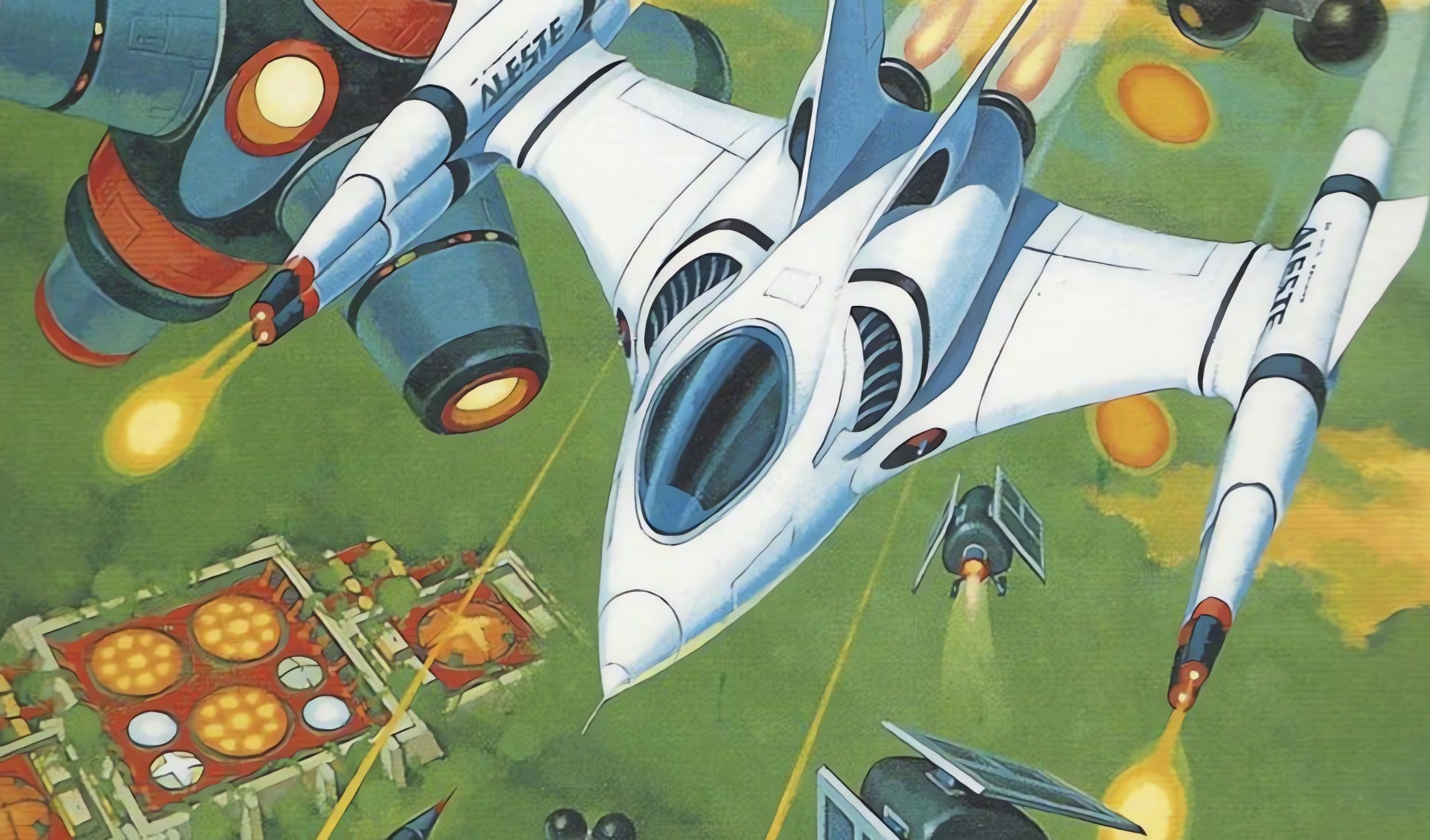

Aleste 35th Anniversary: Compile's Shooter Legacy from Sega Mark III to Modern Re-releases
On February 29, 1988, Compile launched Aleste on Sega's Mark III hardware, marking the debut of what would become one of the developer's best-known shoot-'em-up franchises.
Known outside Japan as Power Strike, the original Aleste set the template for high-speed, weapon-focused vertical shooters that Compile continued to refine across multiple platforms over the next decade.
The Aleste saga spans several notable entries.
MUSHA Aleste (for the Mega Drive/Genesis) and Super Aleste (Super Nintendo Entertainment System) are frequently cited among the series' high points, while Robo Aleste and GG Aleste II expanded the franchise's presence on Sega hardware.
Outside of Japan the series also carried the Power Strike name; that branding led to a Master System sequel, Power Strike II, released in 1993 for European and Brazilian markets.
Because the inaugural release fell on February 29 — a leap day — anniversary calculations are sometimes treated as an oddity.
In plain terms: the original title's launch date was February 29, 1988, and while that exact calendar date recurs only every four years, the franchise's historical milestone is commonly observed by press and fans alike.
Preservation and modern accessibility have been a recurring theme for Aleste.
Several classic entries have been collected and reissued as part of the Aleste Collection, a modern compilation that brings Compile's shooter design to contemporary systems.
M2, a studio with a strong track record in faithful ports and retro compilations, has been involved in stewarding the series in recent years.
The company has worked on new Aleste-branded efforts such as Aleste Branch and SenXin Aleste, and M2's broader release strategy has included bringing retro shooters to platforms like the Nintendo Switch via the eShop.
Aleste's legacy is both technical and cultural: the series helped define Compile's approach to fast-paced scoring shooters and contributed several mechanics and visual flourishes that influenced later developers.
As publishers and preservationists continue to make retro catalogs available on modern storefronts, Aleste remains an important touchstone for enthusiasts of classic Japanese shmups and for developers studying 8-bit and 16-bit era shooter design.
On February 29, 1988, Compile launched Aleste on Sega's Mark III hardware, marking the debut of what would become one of the developer's best-known shoot-'em-up franchises.
Known outside Japan as Power Strike, the original Aleste set the template for high-speed, weapon-focused vertical shooters that Compile continued to refine across multiple platforms over the next decade.
The Aleste saga spans several notable entries.
MUSHA Aleste (for the Mega Drive/Genesis) and Super Aleste (Super Nintendo Entertainment System) are frequently cited among the series' high points, while Robo Aleste and GG Aleste II expanded the franchise's presence on Sega hardware.
Outside of Japan the series also carried the Power Strike name; that branding led to a Master System sequel, Power Strike II, released in 1993 for European and Brazilian markets.
Because the inaugural release fell on February 29 — a leap day — anniversary calculations are sometimes treated as an oddity.
In plain terms: the original title's launch date was February 29, 1988, and while that exact calendar date recurs only every four years, the franchise's historical milestone is commonly observed by press and fans alike.
Preservation and modern accessibility have been a recurring theme for Aleste.
Several classic entries have been collected and reissued as part of the Aleste Collection, a modern compilation that brings Compile's shooter design to contemporary systems.
M2, a studio with a strong track record in faithful ports and retro compilations, has been involved in stewarding the series in recent years.
The company has worked on new Aleste-branded efforts such as Aleste Branch and SenXin Aleste, and M2's broader release strategy has included bringing retro shooters to platforms like the Nintendo Switch via the eShop.
Aleste's legacy is both technical and cultural: the series helped define Compile's approach to fast-paced scoring shooters and contributed several mechanics and visual flourishes that influenced later developers.
As publishers and preservationists continue to make retro catalogs available on modern storefronts, Aleste remains an important touchstone for enthusiasts of classic Japanese shmups and for developers studying 8-bit and 16-bit era shooter design.