
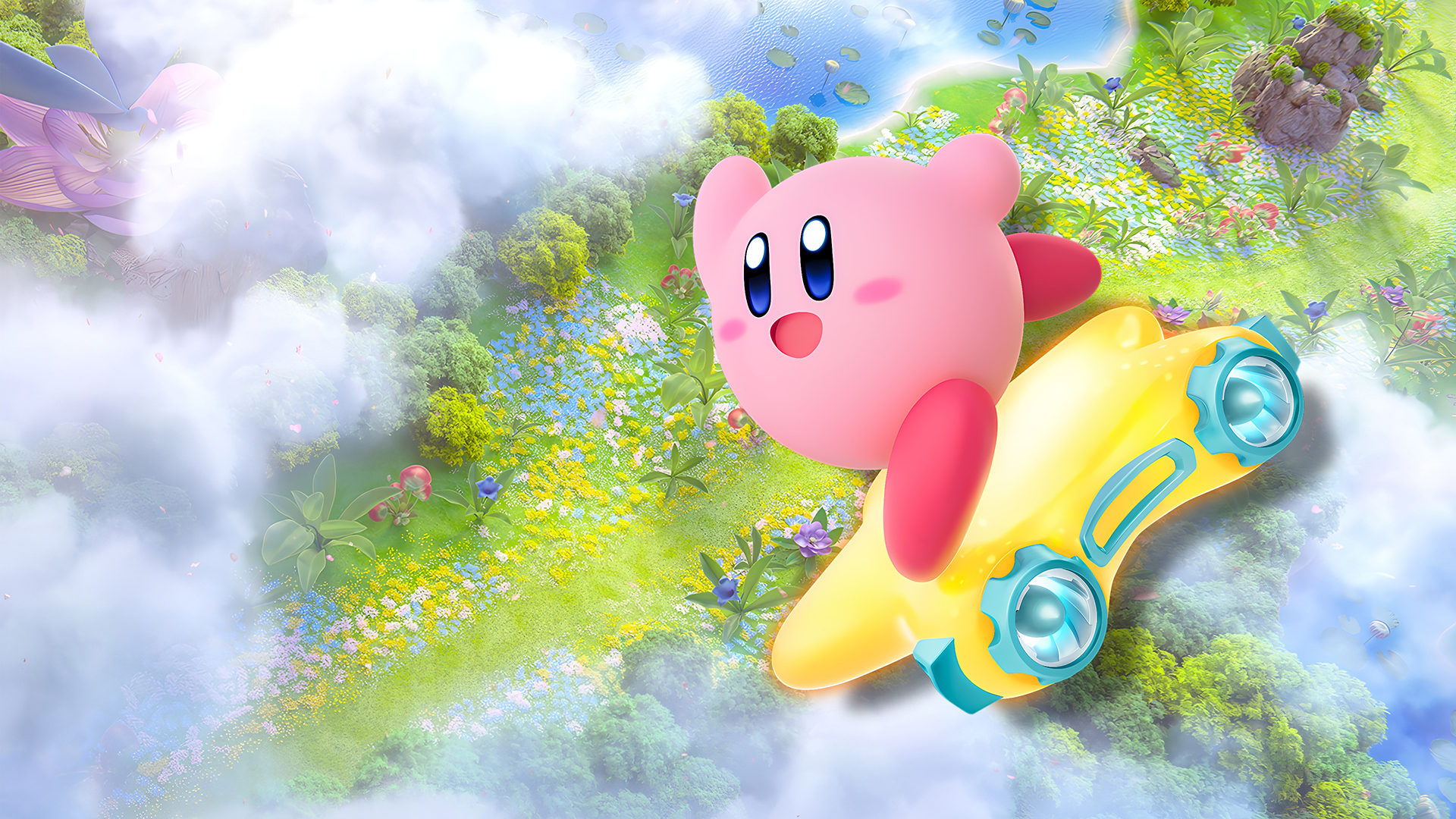


Kirby Air Riders, the latest high-speed racing installment in the beloved Kirby franchise from HAL Laboratory, has been available for just over a week on the Nintendo Switch.
As anticipation runs high among fans of Nintendo’s eShop hits, analysts at Digital Foundry have provided a comprehensive technical breakdown of the game, spotlighting its performance under the microscope of modern gaming standards.
Digital Foundry’s report praises Kirby Air Riders for excelling at the fundamentals—delivering exhilarating racing mechanics, familiar competitive vibes reminiscent of Super Smash Bros., and visually impressive new race tracks designed for the Switch’s unique capabilities.
According to their analysis, the lighting system is a standout feature.
The game leverages Nvidia’s RTX Global Illumination (RTXGI) technology to illuminate dynamic objects and characters with impressive smoothness.
By opting for efficient light maps instead of full ray-traced lighting, Kirby Air Riders maintains solid frame rates, ensuring a fluid experience even amid fast-paced gameplay.
The review acknowledges that, while some finer environmental details might not dazzle when scrutinized up close, the game’s focus squarely rests on speed and action—players are hardly given a moment to pause and examine textures.
Digital Foundry emphasizes that this gameplay-driven approach is perfectly suited to the energetic, never-stop nature of Kirby Air Riders.
Under the hood, Kirby Air Riders introduces the new SOL-AVES engine, developed by HAL Laboratory for the Nintendo Switch.
Digital Foundry highlights that, while the engine’s debut performance is impressive, it also lays the groundwork for even more visually ambitious projects in the future.
The engine generates a unique visual identity paired with robust stability, marking a strong start for this latest technology deployment by HAL Laboratory.
In terms of resolution, Kirby Air Riders routinely achieves a crisp 1080p image quality in docked mode, with certain sections—especially in Top Ride mode—pushing as high as 1440p.
When played in handheld mode, the game typically displays at 900p but fluctuates between 720p and 1080p depending on in-game conditions.
However, the HDR implementation comes up short.
Digital Foundry’s testers report that, aside from some particle effects, the HDR visuals tend to look washed out and unnaturally dim, resulting in color representation that appears inconsistent and disappointing.
Performance-wise, Kirby Air Riders impresses by consistently targeting 60 frames per second.
The game holds this frame rate reliably, with only occasional minor dips, particularly in the busy City Trial mode.
Local multiplayer with three or four players drops the frame rate to the 40–50fps range, primarily in the more demanding City Trial mode, yet still delivers a highly playable experience overall.
Notably, there is currently no 120Hz display support for the title on the Switch.
In conclusion, Kirby Air Riders emerges as a vibrant and chaotic racer filled with depth and competitive excitement for both casual and hardcore players.
While its technical improvements—driven by Nvidia’s RTXGI and the debut of the SOL-AVES engine—stand out, some areas, like HDR, leave room for improvement.
With ongoing support and Nintendo Switch’s ever-expanding eShop catalog, Kirby Air Riders is set to become a staple for fans of high-octane, character-driven racing games.
As anticipation runs high among fans of Nintendo’s eShop hits, analysts at Digital Foundry have provided a comprehensive technical breakdown of the game, spotlighting its performance under the microscope of modern gaming standards.
Digital Foundry’s report praises Kirby Air Riders for excelling at the fundamentals—delivering exhilarating racing mechanics, familiar competitive vibes reminiscent of Super Smash Bros., and visually impressive new race tracks designed for the Switch’s unique capabilities.
According to their analysis, the lighting system is a standout feature.
The game leverages Nvidia’s RTX Global Illumination (RTXGI) technology to illuminate dynamic objects and characters with impressive smoothness.
By opting for efficient light maps instead of full ray-traced lighting, Kirby Air Riders maintains solid frame rates, ensuring a fluid experience even amid fast-paced gameplay.
The review acknowledges that, while some finer environmental details might not dazzle when scrutinized up close, the game’s focus squarely rests on speed and action—players are hardly given a moment to pause and examine textures.
Digital Foundry emphasizes that this gameplay-driven approach is perfectly suited to the energetic, never-stop nature of Kirby Air Riders.
Under the hood, Kirby Air Riders introduces the new SOL-AVES engine, developed by HAL Laboratory for the Nintendo Switch.
Digital Foundry highlights that, while the engine’s debut performance is impressive, it also lays the groundwork for even more visually ambitious projects in the future.
The engine generates a unique visual identity paired with robust stability, marking a strong start for this latest technology deployment by HAL Laboratory.
In terms of resolution, Kirby Air Riders routinely achieves a crisp 1080p image quality in docked mode, with certain sections—especially in Top Ride mode—pushing as high as 1440p.
When played in handheld mode, the game typically displays at 900p but fluctuates between 720p and 1080p depending on in-game conditions.
However, the HDR implementation comes up short.
Digital Foundry’s testers report that, aside from some particle effects, the HDR visuals tend to look washed out and unnaturally dim, resulting in color representation that appears inconsistent and disappointing.
Performance-wise, Kirby Air Riders impresses by consistently targeting 60 frames per second.
The game holds this frame rate reliably, with only occasional minor dips, particularly in the busy City Trial mode.
Local multiplayer with three or four players drops the frame rate to the 40–50fps range, primarily in the more demanding City Trial mode, yet still delivers a highly playable experience overall.
Notably, there is currently no 120Hz display support for the title on the Switch.
In conclusion, Kirby Air Riders emerges as a vibrant and chaotic racer filled with depth and competitive excitement for both casual and hardcore players.
While its technical improvements—driven by Nvidia’s RTXGI and the debut of the SOL-AVES engine—stand out, some areas, like HDR, leave room for improvement.
With ongoing support and Nintendo Switch’s ever-expanding eShop catalog, Kirby Air Riders is set to become a staple for fans of high-octane, character-driven racing games.