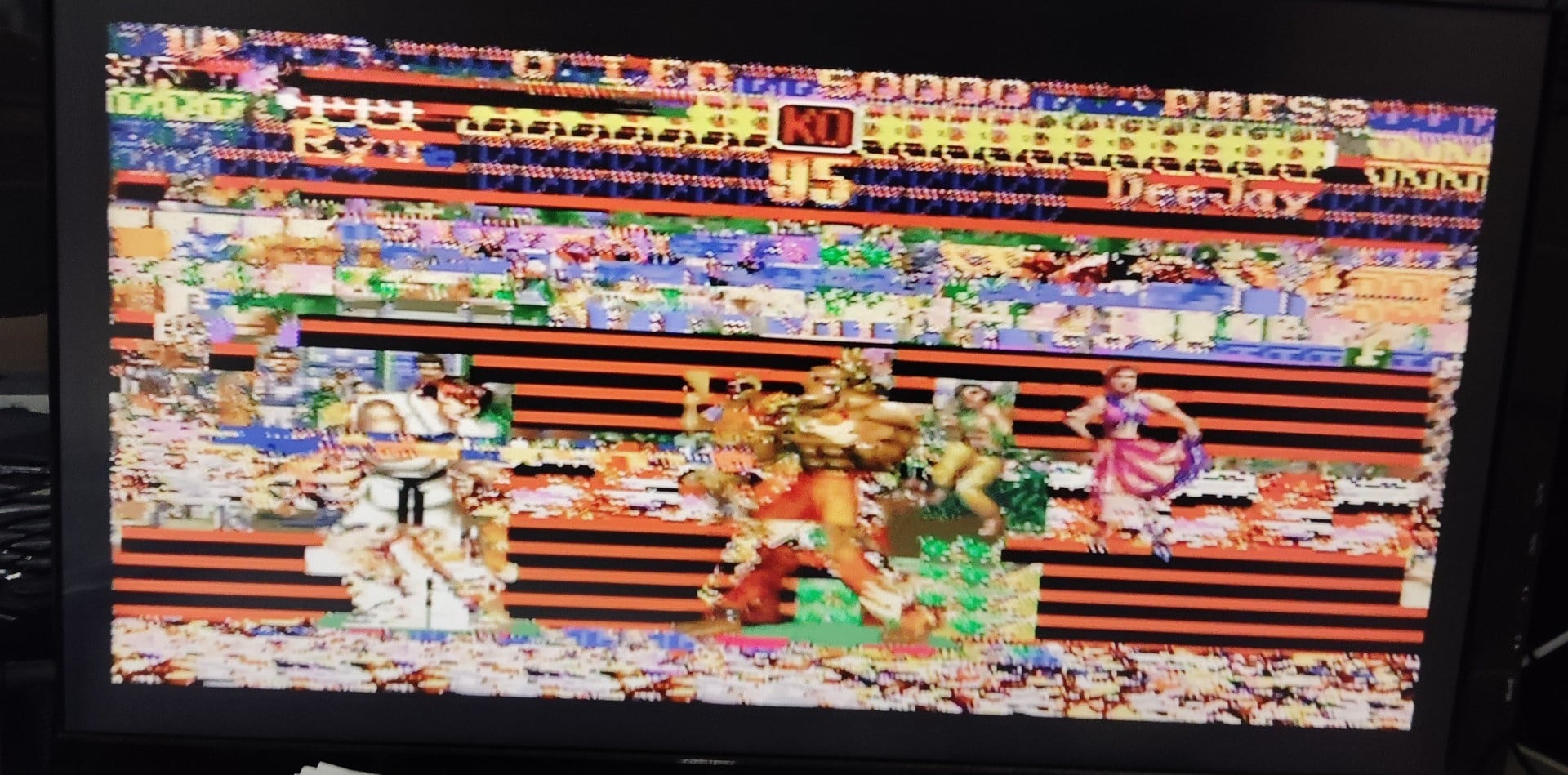


Street Fighter II Turbo, one of Capcom's most iconic fighting games, has surprised players decades after its original release with the discovery of a previously unknown debug menu.
Since its debut in arcades in 1991 and later on platforms such as the Super Nintendo Entertainment System (SNES) and Nintendo Switch (via the Capcom Arcade Stadium collection), Street Fighter II Turbo has been a cornerstone for competitive fighting games and a hallmark of Capcom's rich arcade legacy.
The latest revelation comes courtesy of the researcher known as TurboAnnihilate, who managed to unearth a hidden debug menu specifically designed for sprite scaling and rotation.
While Street Fighter II Turbo is famous for its detailed pixel art and fluid animation, the game did not officially implement dynamic sprite scaling or rotation—effects known to appear in other contemporary fighting games like SNK's Art of Fighting and Fatal Fury series.
According to TurboAnnihilate, accessing this developer tool requires activating the game’s test mode using the DIP switch settings, typically found in emulator environments such as Fightcade or MAME.
Once in test mode, players are instructed to restart the system while holding down the Player 1 medium punch button to access the object test mode.
Further manipulation of inputs—toggling through modes and specific button presses with both Player 1 and Player 2 controls—reveals the hidden sprite manipulation functions, allowing users to experiment with rotation and scaling parameters.
Notably, the Player 1 light punch button resets values during testing, giving insight into the developers’ process for fine-tuning the game's graphics engine.
The discovery of this menu underlines Capcom’s forward-thinking development practices, as it appears developers experimented with technical functionalities that ultimately were not used in the final retail release.
This debug tool also suggests that the team considered advanced visual effects to further enhance the fast-paced combat Street Fighter II Turbo is celebrated for.
Street Fighter II Turbo's influence on the fighting genre remains deeply significant, with millions of copies sold across arcade, SNES, and modern digital platforms such as the Nintendo Switch eShop.
Capcom has frequently revisited the title in anniversary collections and Nintendo Direct showcases, underscoring the game's enduring popularity and the company’s commitment to preserving gaming history.
Ultimately, the hidden debug capabilities shed new light on the creative and technical experimentation that shaped Street Fighter II Turbo’s development.
This latest discovery not only fuels the enthusiasm of archival and speedrunning communities but also celebrates the engineering prowess that has kept Capcom’s classics alive and relevant in the modern gaming landscape.
Since its debut in arcades in 1991 and later on platforms such as the Super Nintendo Entertainment System (SNES) and Nintendo Switch (via the Capcom Arcade Stadium collection), Street Fighter II Turbo has been a cornerstone for competitive fighting games and a hallmark of Capcom's rich arcade legacy.
The latest revelation comes courtesy of the researcher known as TurboAnnihilate, who managed to unearth a hidden debug menu specifically designed for sprite scaling and rotation.
While Street Fighter II Turbo is famous for its detailed pixel art and fluid animation, the game did not officially implement dynamic sprite scaling or rotation—effects known to appear in other contemporary fighting games like SNK's Art of Fighting and Fatal Fury series.
According to TurboAnnihilate, accessing this developer tool requires activating the game’s test mode using the DIP switch settings, typically found in emulator environments such as Fightcade or MAME.
Once in test mode, players are instructed to restart the system while holding down the Player 1 medium punch button to access the object test mode.
Further manipulation of inputs—toggling through modes and specific button presses with both Player 1 and Player 2 controls—reveals the hidden sprite manipulation functions, allowing users to experiment with rotation and scaling parameters.
Notably, the Player 1 light punch button resets values during testing, giving insight into the developers’ process for fine-tuning the game's graphics engine.
The discovery of this menu underlines Capcom’s forward-thinking development practices, as it appears developers experimented with technical functionalities that ultimately were not used in the final retail release.
This debug tool also suggests that the team considered advanced visual effects to further enhance the fast-paced combat Street Fighter II Turbo is celebrated for.
Street Fighter II Turbo's influence on the fighting genre remains deeply significant, with millions of copies sold across arcade, SNES, and modern digital platforms such as the Nintendo Switch eShop.
Capcom has frequently revisited the title in anniversary collections and Nintendo Direct showcases, underscoring the game's enduring popularity and the company’s commitment to preserving gaming history.
Ultimately, the hidden debug capabilities shed new light on the creative and technical experimentation that shaped Street Fighter II Turbo’s development.
This latest discovery not only fuels the enthusiasm of archival and speedrunning communities but also celebrates the engineering prowess that has kept Capcom’s classics alive and relevant in the modern gaming landscape.