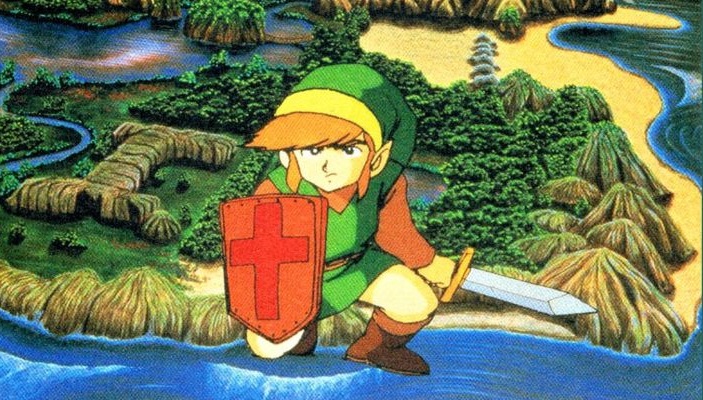
The Legend of Zelda: A Link to the Past 3DS Port Unlocks Dual-Screen Play
A new fan-made port of The Legend of Zelda: A Link to the Past brings the SNES classic to Nintendo 3DS hardware with native dual-screen support.
The original A Link to the Past debuted on the Super Nintendo in 1991 (Japan) and 1992 (North America) and has since been re-released on multiple Nintendo platforms, including a Virtual Console release for Nintendo 3DS in 2016.
This latest effort, developed by GitHub user EstebanPdN, adapts community-driven, reverse-engineered code to make fuller use of the 3DS’ two displays.
Port lineage and technical details
The port is derived from a chain of open-source projects: a reverse-engineered Zelda 3 engine, an existing Android port, and a dual-screen Android branch.
According to project documentation, the top display runs the game at 400x240 resolution, while the bottom screen presents a live map, dungeon maps, a gear view, an item section and settings.
Those design choices aim to replicate the utility of modern handheld mappings while preserving the original SNES gameplay on the primary display.
Developer disclosure and AI assistance
On the project’s GitHub page, the developer states the port was “built with help from Codex.” Project credits also list Anthropic’s Claude as a contributor.
In clear, journalistic terms: the developer acknowledges using AI coding tools during development and lists AI-related contributions alongside human collaborators in the repository.
Community reaction and broader context
The use of AI-assisted tooling in fan projects has become a point of discussion across the modding and developer communities.
Some creators and observers welcome tools that accelerate development and help integrate features like dual-screen mapping, while others express concern about the implications for craftsmanship and the sustainability of volunteer-driven reverse-engineering efforts.
Those debates mirror wider industry conversations about AI-assisted coding tools and their role in software creation.
Availability and legal status
This port is distributed through community channels and available on the project’s GitHub page.
It is not an official Nintendo product nor listed on the Nintendo eShop.
As with many fan-led reverse-engineering projects, users should be aware of intellectual property considerations and the differences between official releases—such as Nintendo’s 2016 3DS Virtual Console version—and community ports.
For readers tracking Zelda preservation and fan engineering, the EstebanPdN port is a notable example of how open-source engines and modern tooling are being used to update classic titles for legacy handheld hardware.
A new fan-made port of The Legend of Zelda: A Link to the Past brings the SNES classic to Nintendo 3DS hardware with native dual-screen support.
The original A Link to the Past debuted on the Super Nintendo in 1991 (Japan) and 1992 (North America) and has since been re-released on multiple Nintendo platforms, including a Virtual Console release for Nintendo 3DS in 2016.
This latest effort, developed by GitHub user EstebanPdN, adapts community-driven, reverse-engineered code to make fuller use of the 3DS’ two displays.
Port lineage and technical details
The port is derived from a chain of open-source projects: a reverse-engineered Zelda 3 engine, an existing Android port, and a dual-screen Android branch.
According to project documentation, the top display runs the game at 400x240 resolution, while the bottom screen presents a live map, dungeon maps, a gear view, an item section and settings.
Those design choices aim to replicate the utility of modern handheld mappings while preserving the original SNES gameplay on the primary display.
Developer disclosure and AI assistance
On the project’s GitHub page, the developer states the port was “built with help from Codex.” Project credits also list Anthropic’s Claude as a contributor.
In clear, journalistic terms: the developer acknowledges using AI coding tools during development and lists AI-related contributions alongside human collaborators in the repository.
Community reaction and broader context
The use of AI-assisted tooling in fan projects has become a point of discussion across the modding and developer communities.
Some creators and observers welcome tools that accelerate development and help integrate features like dual-screen mapping, while others express concern about the implications for craftsmanship and the sustainability of volunteer-driven reverse-engineering efforts.
Those debates mirror wider industry conversations about AI-assisted coding tools and their role in software creation.
Availability and legal status
This port is distributed through community channels and available on the project’s GitHub page.
It is not an official Nintendo product nor listed on the Nintendo eShop.
As with many fan-led reverse-engineering projects, users should be aware of intellectual property considerations and the differences between official releases—such as Nintendo’s 2016 3DS Virtual Console version—and community ports.
For readers tracking Zelda preservation and fan engineering, the EstebanPdN port is a notable example of how open-source engines and modern tooling are being used to update classic titles for legacy handheld hardware.