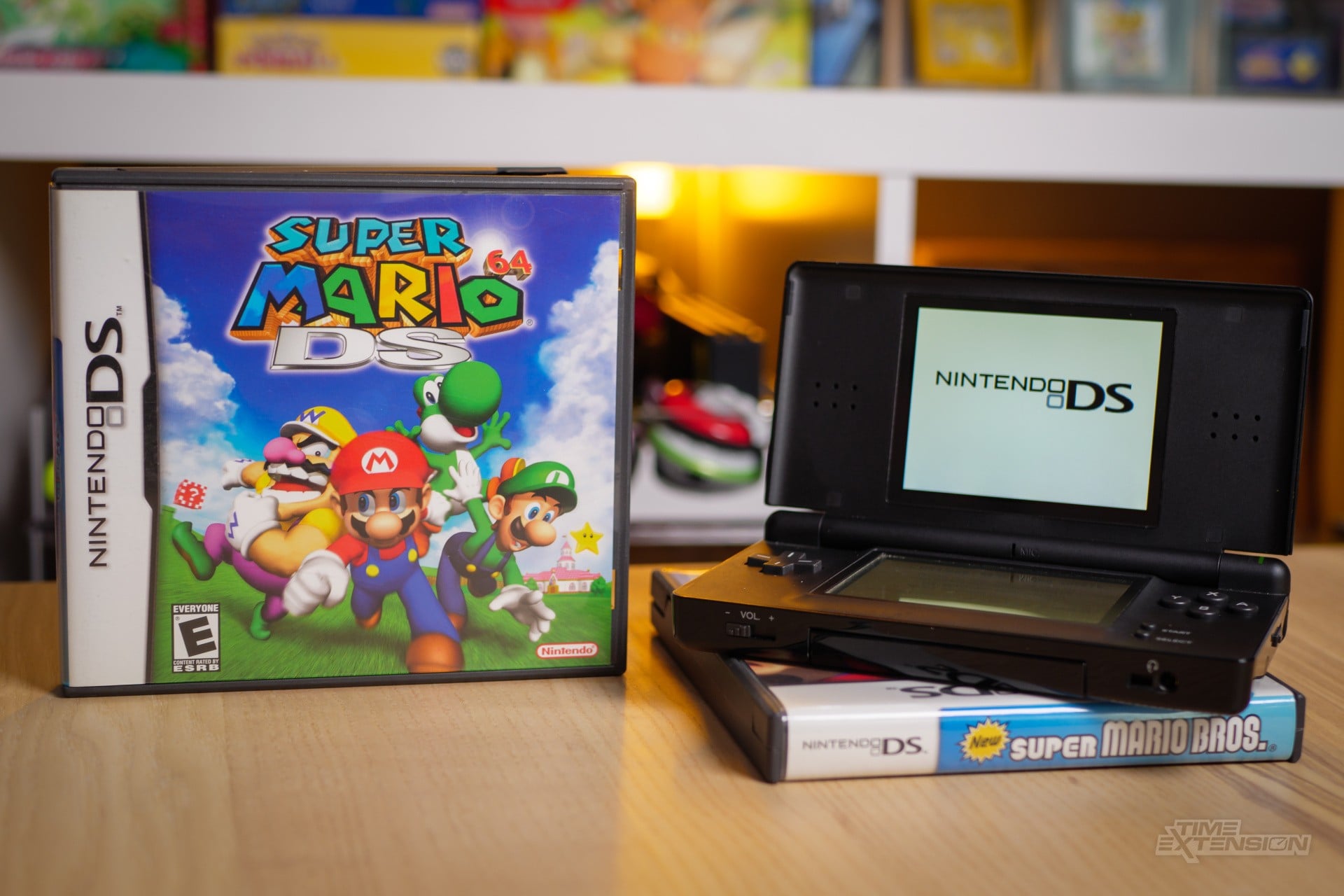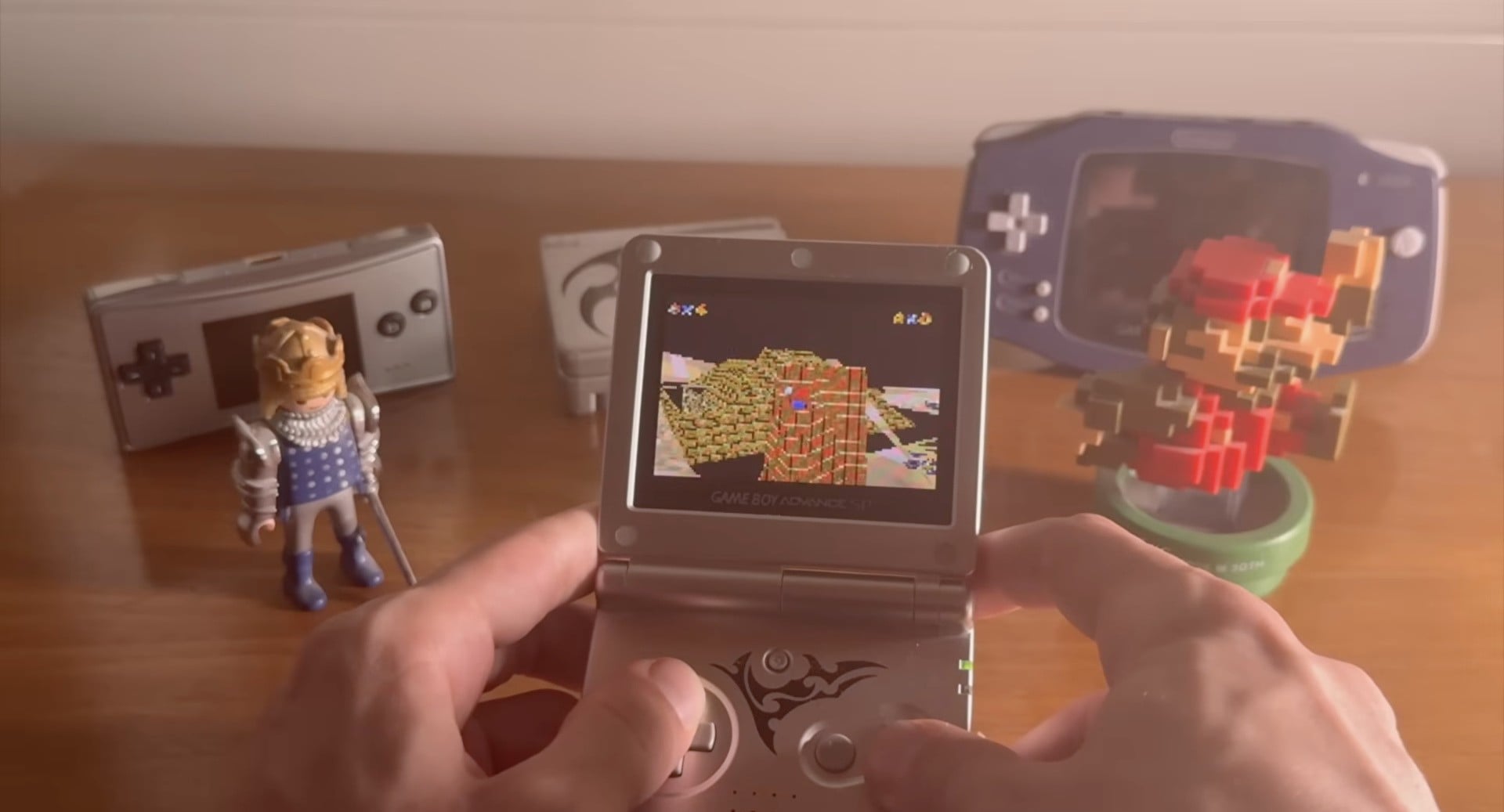
Brendan Tobias Friedly, better known in the modding community as Game of Tobi, has published a new video demonstrating a port of Super Mario 64 running on the Game Boy Advance (GBA).
The project follows an earlier effort by Joshua Barretto to reproduce the Nintendo 64 classic on the handheld, and Friedly credits Barretto’s work as a core inspiration for his own attempt.
Super Mario 64 originally launched on Nintendo 64 in 1996 and remains one of the most influential 3D platformers in gaming history.
Background and hardware context
The Game Boy Advance was released in 2001 and is powered by an ARM7TDMI CPU running at approximately 16.78 MHz.
Friedly’s video and accompanying commentary focus on the extreme optimization and memory management required to render a 3D N64 game on hardware that was never designed for real-time polygonal 3D at that scale.
He explains that the GBA’s clock budget is measured in tens of millions of cycles per second, so naïvely assigning millions of cycles to render a single frame would reduce output to only one frame per second.
As a result, the team has had to drastically reduce the number of CPU cycles used per frame; achieving even a single-frame-per-second render at first required enormous effort, and subsequent optimization work grew substantially more complex.
Technical progress and current performance
Footage from Game of Tobi shows the port running at frame rates that vary by level, typically between roughly 5 and 15 frames per second depending on scene complexity.
Friedly describes the build as playable despite its rough visuals, and he says development will continue with the goal of making the entire game reachable on GBA hardware.
The modder also references the possibility of reproducing collections akin to Nintendo’s Super Mario 3D All-Stars—the official compilation released for Nintendo Switch on September 18, 2020—on the handheld, though his comments center on feasibility given the GBA’s constraints.
Community context and developer background
Game of Tobi has previously demonstrated a GBA port of Super Mario Maker, and modding activity around bringing 3D Nintendo titles to legacy handhelds has gained attention in recent years.
Joshua Barretto’s prior replication efforts of Super Mario 64 on GBA are credited by Friedly as the catalyst for the current project, highlighting how community work builds iteratively across independent developers.
What this means for players
At present, the port is a technical proof of concept showing that with intensive optimization, significant portions of Super Mario 64 can run on Game Boy Advance hardware.
The project documents both the severe performance trade-offs required by a 16 MHz class CPU and the ingenuity of modern modders in squeezing 3D experiences from older platforms.
Friedly’s ongoing work will be of interest to retro enthusiasts, GBA homebrew developers, and fans of Super Mario 64 tracking how classic titles are being adapted outside official releases.
The project follows an earlier effort by Joshua Barretto to reproduce the Nintendo 64 classic on the handheld, and Friedly credits Barretto’s work as a core inspiration for his own attempt.
Super Mario 64 originally launched on Nintendo 64 in 1996 and remains one of the most influential 3D platformers in gaming history.
Background and hardware context
The Game Boy Advance was released in 2001 and is powered by an ARM7TDMI CPU running at approximately 16.78 MHz.
Friedly’s video and accompanying commentary focus on the extreme optimization and memory management required to render a 3D N64 game on hardware that was never designed for real-time polygonal 3D at that scale.
He explains that the GBA’s clock budget is measured in tens of millions of cycles per second, so naïvely assigning millions of cycles to render a single frame would reduce output to only one frame per second.
As a result, the team has had to drastically reduce the number of CPU cycles used per frame; achieving even a single-frame-per-second render at first required enormous effort, and subsequent optimization work grew substantially more complex.
Technical progress and current performance
Footage from Game of Tobi shows the port running at frame rates that vary by level, typically between roughly 5 and 15 frames per second depending on scene complexity.
Friedly describes the build as playable despite its rough visuals, and he says development will continue with the goal of making the entire game reachable on GBA hardware.
The modder also references the possibility of reproducing collections akin to Nintendo’s Super Mario 3D All-Stars—the official compilation released for Nintendo Switch on September 18, 2020—on the handheld, though his comments center on feasibility given the GBA’s constraints.
Community context and developer background
Game of Tobi has previously demonstrated a GBA port of Super Mario Maker, and modding activity around bringing 3D Nintendo titles to legacy handhelds has gained attention in recent years.
Joshua Barretto’s prior replication efforts of Super Mario 64 on GBA are credited by Friedly as the catalyst for the current project, highlighting how community work builds iteratively across independent developers.
What this means for players
At present, the port is a technical proof of concept showing that with intensive optimization, significant portions of Super Mario 64 can run on Game Boy Advance hardware.
The project documents both the severe performance trade-offs required by a 16 MHz class CPU and the ingenuity of modern modders in squeezing 3D experiences from older platforms.
Friedly’s ongoing work will be of interest to retro enthusiasts, GBA homebrew developers, and fans of Super Mario 64 tracking how classic titles are being adapted outside official releases.