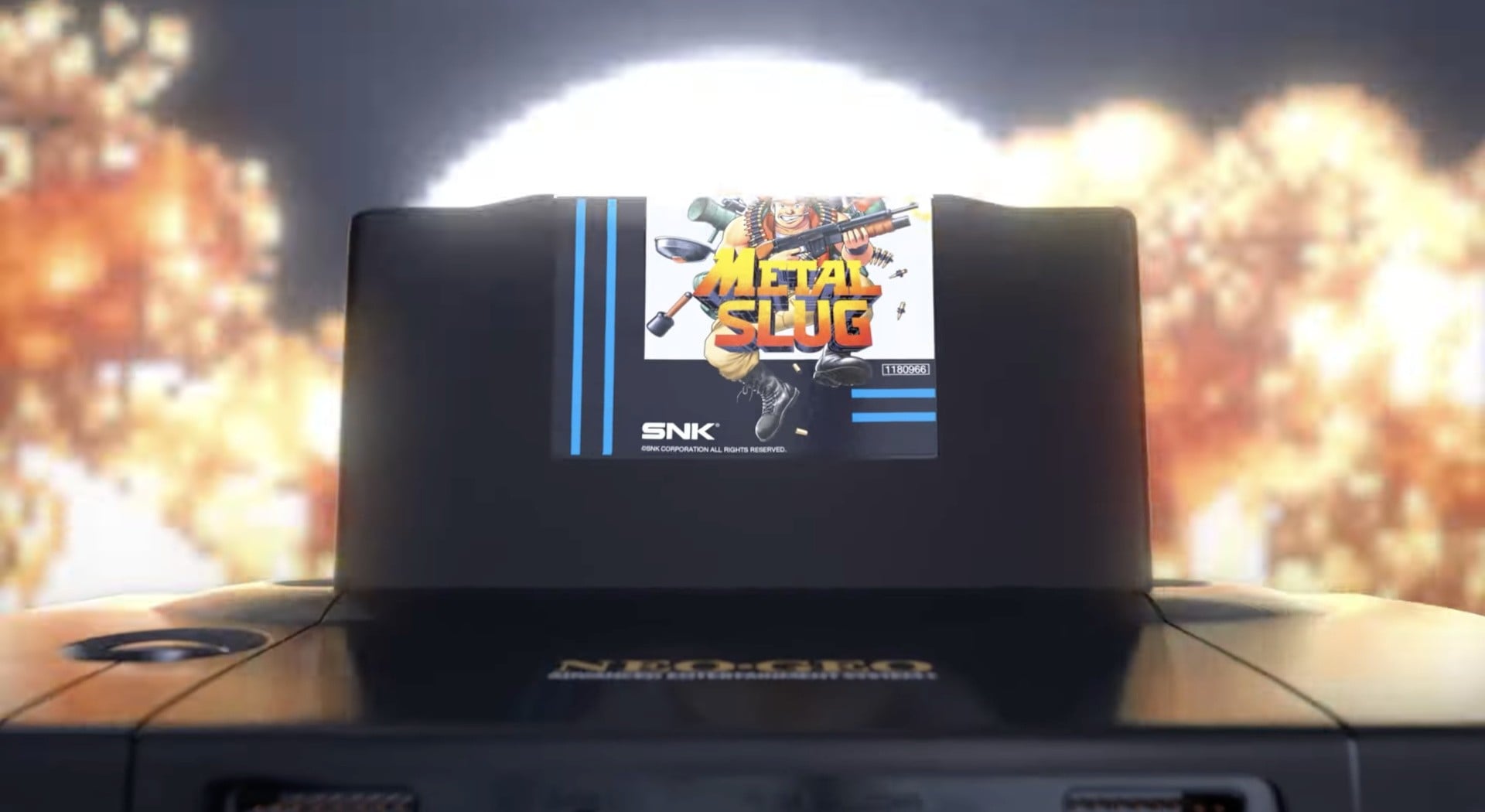
Plaion’s Neo Geo+ replica has reignited discussion about authentic hardware reproduction for classic consoles.
Announced as a modern recreation of SNK’s original AES hardware, Plaion has told press the Neo Geo+ will not rely on software emulation.
The publisher says the device is powered by newly manufactured chips based on the originals, re-engineered to modern standards to replicate the Neo Geo’s hardware and software behaviour, and that the system will natively play cartridges from both new and old releases for an authentic experience.
Reporting from April 18, 2026, has linked FPGA specialists Jotego and Furrtek to the Neo Geo+ project.
Those associations have encouraged expectations within the retro community, because both teams are known for deep technical work on classic platforms.
Furrtek, which has previously produced tools such as the Neo CD SD Loader and the Fusion Converter (used to play MVS arcade boards on AES hardware), briefly posted and then deleted commentary on the project.
In a later clarification, Furrtek said in essence that, while perfection cannot be promised, the Neo Geo+ shows the kind of ambition to outperform emulation, honour the Neo Geo brand, and respect fans’ expectations — in their view giving the hardware “every chance” to be the best Neo Geo reproduction since SNK ceased making its own consoles.
Not all technical voices share that optimism.
FPGA developer Pramod Somashekar warned that the approach described by Plaion and commentators could amount to splitting a MiSTer-style core across multiple ASICs, which he characterised as effectively a “bait and switch” relative to expectations of an FPGA-based solution.
Somashekar also emphasised a practical difference between ASIC and FPGA implementations: ASICs are fixed-function once manufactured, whereas FPGAs can be dynamically reconfigured and updated.
That means, he argued, that an ASIC-based recreation would be less amendable to post-production fixes or refinements if issues are discovered.
Plaion’s public statements focus on hardware-level fidelity, and the involvement of recognised retro engineers has provoked both cautious enthusiasm and technical scrutiny.
Furrtek’s established contributions to Neo Geo tooling lend credibility to their praise, while Somashekar’s comments underscore the trade-offs between updateable FPGA designs and fixed silicon.
As the Neo Geo+ story develops, observers in the retro and preservation communities will be watching for technical confirmations from Plaion, and for any official specifications or launch details that clarify whether the final product prioritises immutable original-accurate silicon or flexibility through reconfigurable logic.
Announced as a modern recreation of SNK’s original AES hardware, Plaion has told press the Neo Geo+ will not rely on software emulation.
The publisher says the device is powered by newly manufactured chips based on the originals, re-engineered to modern standards to replicate the Neo Geo’s hardware and software behaviour, and that the system will natively play cartridges from both new and old releases for an authentic experience.
Reporting from April 18, 2026, has linked FPGA specialists Jotego and Furrtek to the Neo Geo+ project.
Those associations have encouraged expectations within the retro community, because both teams are known for deep technical work on classic platforms.
Furrtek, which has previously produced tools such as the Neo CD SD Loader and the Fusion Converter (used to play MVS arcade boards on AES hardware), briefly posted and then deleted commentary on the project.
In a later clarification, Furrtek said in essence that, while perfection cannot be promised, the Neo Geo+ shows the kind of ambition to outperform emulation, honour the Neo Geo brand, and respect fans’ expectations — in their view giving the hardware “every chance” to be the best Neo Geo reproduction since SNK ceased making its own consoles.
Not all technical voices share that optimism.
FPGA developer Pramod Somashekar warned that the approach described by Plaion and commentators could amount to splitting a MiSTer-style core across multiple ASICs, which he characterised as effectively a “bait and switch” relative to expectations of an FPGA-based solution.
Somashekar also emphasised a practical difference between ASIC and FPGA implementations: ASICs are fixed-function once manufactured, whereas FPGAs can be dynamically reconfigured and updated.
That means, he argued, that an ASIC-based recreation would be less amendable to post-production fixes or refinements if issues are discovered.
Plaion’s public statements focus on hardware-level fidelity, and the involvement of recognised retro engineers has provoked both cautious enthusiasm and technical scrutiny.
Furrtek’s established contributions to Neo Geo tooling lend credibility to their praise, while Somashekar’s comments underscore the trade-offs between updateable FPGA designs and fixed silicon.
As the Neo Geo+ story develops, observers in the retro and preservation communities will be watching for technical confirmations from Plaion, and for any official specifications or launch details that clarify whether the final product prioritises immutable original-accurate silicon or flexibility through reconfigurable logic.