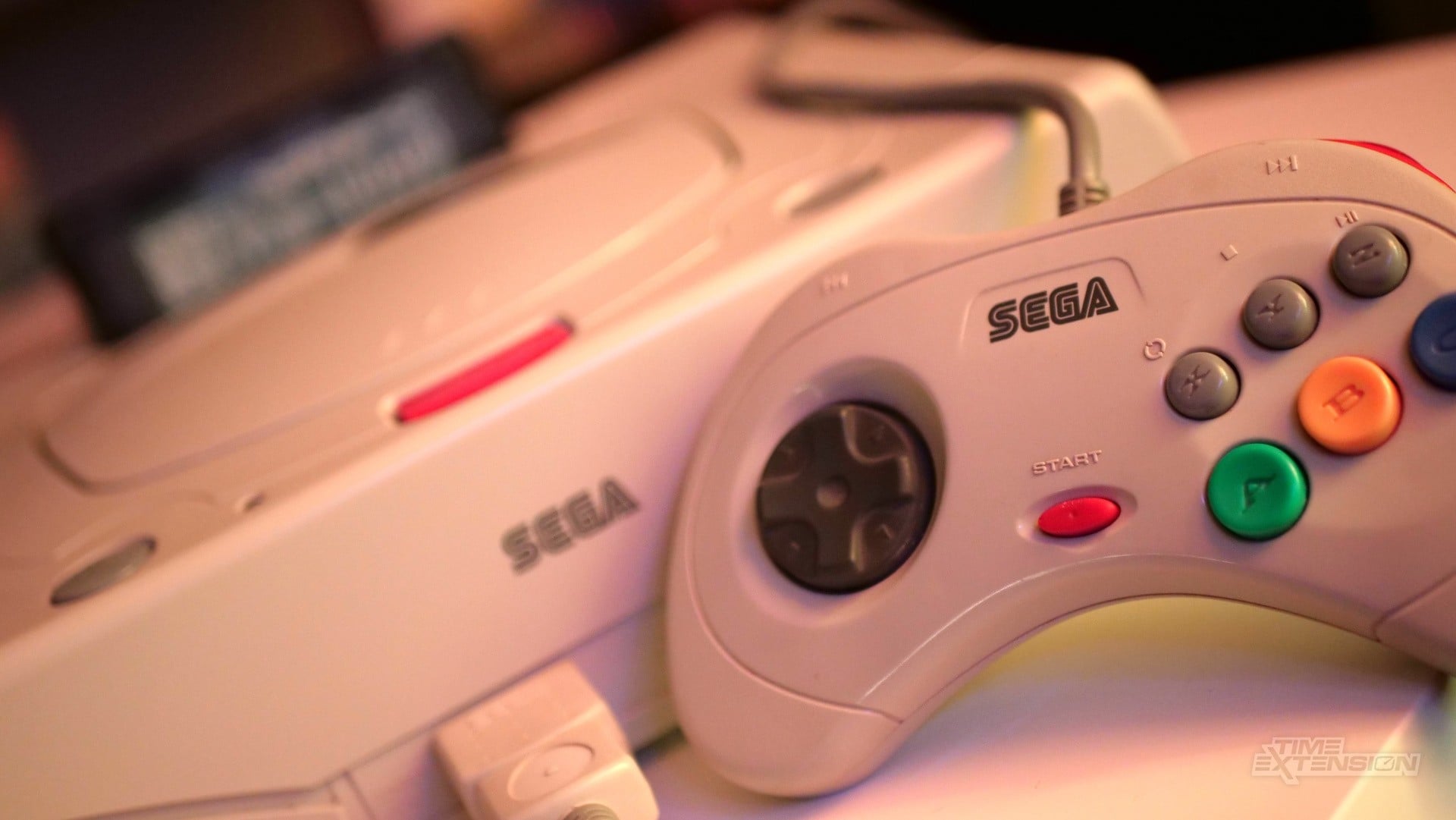
During the fiercely competitive era of the mid-1990s, the Sega Saturn stood as one of the key players in the console race alongside Nintendo and Sony’s PlayStation.
While fierce rumors abounded regarding potential hardware enhancements for the Saturn, a recent interview finally confirms what many had long suspected: Sega did, in fact, develop a graphics accelerator for its 32-bit console.
In a newly published discussion with gaming outlet Beep21, former Sega employee Junichi Naoi revealed that the Saturn graphics accelerator project—codenamed 'TRIP'—was not just industry hearsay but a tangible piece of hardware in development.
The unit was designed to utilize the powerful Hitachi SH-3 chipset, which would have significantly bolstered the Saturn's graphical capabilities, better positioning the platform to rival emergent arcade standards and home consoles of the time.
Naoi explained that as Sega’s Model 3 arcade board began delivering cutting-edge visuals far beyond Saturn’s reach, it became evident within Sega that a hardware upgrade would be necessary to close the gap.
Inspired by these developments, he pitched the concept for the TRIP accelerator, aiming to enable the Saturn to handle ambitious projects, including an advanced port of Sega's renowned arcade title, Virtua Fighter 3.
The hardware was also intended to help bring to life an early version of "Shenmue," which was initially developed for the Saturn before its transition to Dreamcast.
Despite the promise of the TRIP accelerator project, development was ultimately halted.
Sega shifted its focus to its next-generation hardware, culminating in the 1998 release of the Dreamcast, and the pioneering plans for Saturn’s graphical enhancement were abandoned.
Naoi subsequently joined Sega’s AM Hardware Research and Development Department, contributing to the HIKARU arcade architecture, before later transitioning to Sony Computer Entertainment to work on the PlayStation 3.
This confirmation not only provides critical insight into Sega’s ambitious hardware strategies during the late '90s but also helps demystify a persistent topic of speculation among classic gaming enthusiasts.
It underscores the continual innovation and high-stakes decision-making that defined the era’s console wars, as companies like Sega, Nintendo, and Sony pushed technological limits to capture the gaming market.
For those interested in the detailed history of the Sega Saturn and the canceled graphics accelerator project, the full interview with Junichi Naoi is available via Beep21 (subscription required).
While fierce rumors abounded regarding potential hardware enhancements for the Saturn, a recent interview finally confirms what many had long suspected: Sega did, in fact, develop a graphics accelerator for its 32-bit console.
In a newly published discussion with gaming outlet Beep21, former Sega employee Junichi Naoi revealed that the Saturn graphics accelerator project—codenamed 'TRIP'—was not just industry hearsay but a tangible piece of hardware in development.
The unit was designed to utilize the powerful Hitachi SH-3 chipset, which would have significantly bolstered the Saturn's graphical capabilities, better positioning the platform to rival emergent arcade standards and home consoles of the time.
Naoi explained that as Sega’s Model 3 arcade board began delivering cutting-edge visuals far beyond Saturn’s reach, it became evident within Sega that a hardware upgrade would be necessary to close the gap.
Inspired by these developments, he pitched the concept for the TRIP accelerator, aiming to enable the Saturn to handle ambitious projects, including an advanced port of Sega's renowned arcade title, Virtua Fighter 3.
The hardware was also intended to help bring to life an early version of "Shenmue," which was initially developed for the Saturn before its transition to Dreamcast.
Despite the promise of the TRIP accelerator project, development was ultimately halted.
Sega shifted its focus to its next-generation hardware, culminating in the 1998 release of the Dreamcast, and the pioneering plans for Saturn’s graphical enhancement were abandoned.
Naoi subsequently joined Sega’s AM Hardware Research and Development Department, contributing to the HIKARU arcade architecture, before later transitioning to Sony Computer Entertainment to work on the PlayStation 3.
This confirmation not only provides critical insight into Sega’s ambitious hardware strategies during the late '90s but also helps demystify a persistent topic of speculation among classic gaming enthusiasts.
It underscores the continual innovation and high-stakes decision-making that defined the era’s console wars, as companies like Sega, Nintendo, and Sony pushed technological limits to capture the gaming market.
For those interested in the detailed history of the Sega Saturn and the canceled graphics accelerator project, the full interview with Junichi Naoi is available via Beep21 (subscription required).