

Introduction
Woodo is a story-driven puzzle game from indie developer Tiny Monks Tales that adopts a picture-book aesthetic on Nintendo Switch platforms, including the Switch 2 version the reviewer played.
The title blends 3D diorama-based object-placement puzzles with narrated story beats, presenting a calm, visual storytelling approach aimed at players who favor cozy, low-pressure experiences.
Gameplay and Mechanics
The core gameplay revolves around identifying and placing objects from an inventory tray into a colorless diorama.
Using the Joy-Con controls, players select items and drag them into the scene; the reviewer noted that Switch mouse support appears to be planned.
Objects rotate with the camera as you spin the scene, a mechanic the reviewer singled out as a helpful aid when matching oriented pieces such as leaves or tiles.
The game uses snapping and tactile feedback when pieces are placed, and adding elements not only colors the diorama but also animates the scene with small, charming movements.
Many placements complete entire sections—placing a single leaf or tile typically finishes that cluster—so puzzles emphasize finding correct positions over exhaustive searches.
Some dioramas contain nested puzzles that zoom in for close-up assembly when interacting with specific props like potted plants or desserts.
Narrative, Voice Work, and Presentation
Woodo follows Foxy, a young fox who has moved from the city to a small town and struggles to settle in.
The story is delivered via Foxy’s narration, which is available in multiple languages; the English voice track was described by the reviewer as comforting and reminiscent of a teacher reading aloud.
The narrative is woven into puzzle progression, with early puzzles establishing Foxy’s character and later scenes expanding the diorama scope to convey growing activity and warmth in her new environment.
Visuals and Performance
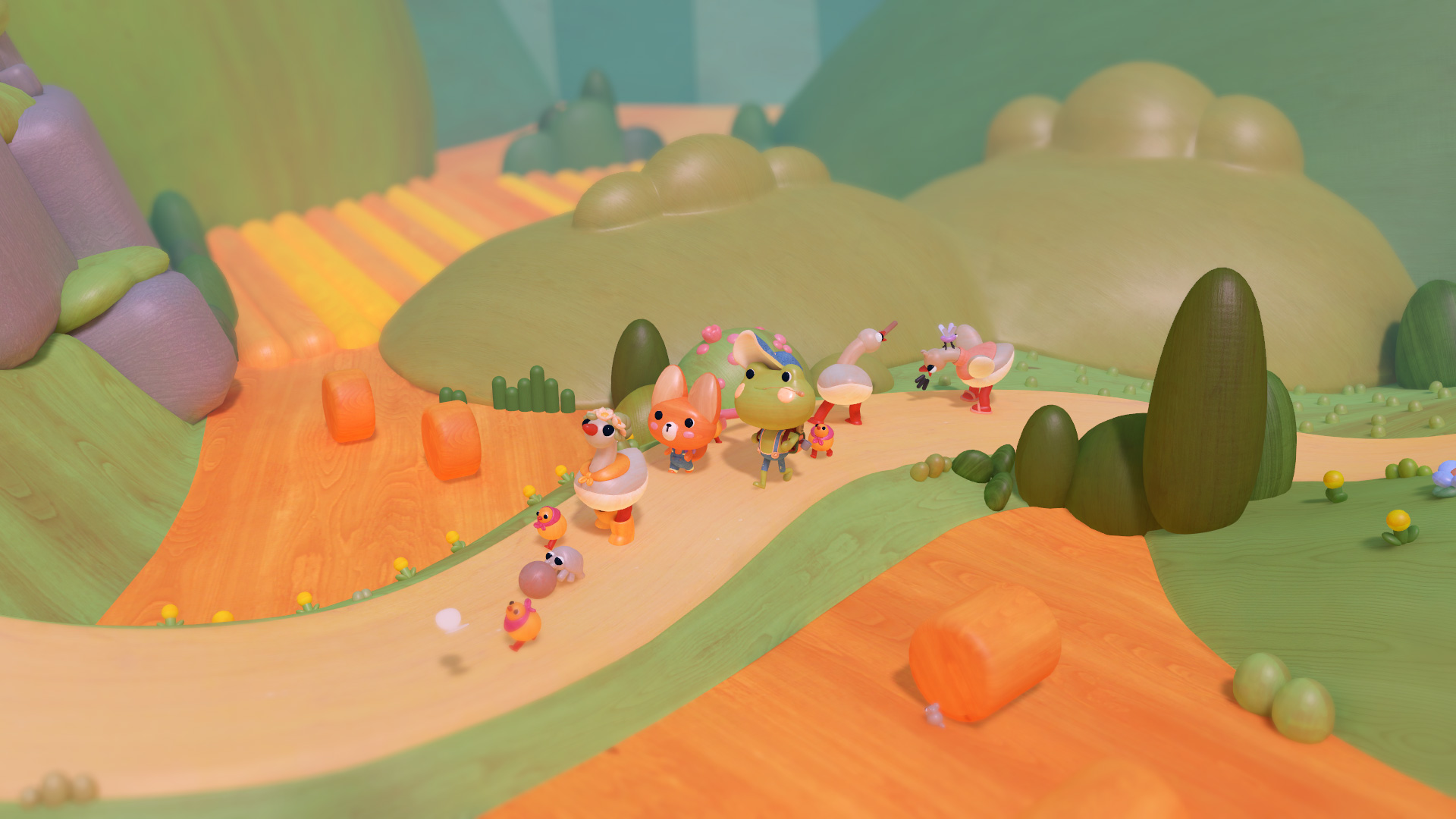
The game employs an earthy color palette and wood-grain textures to reinforce its outdoorsy, autumnal tone.
Animations and incremental colorization of dioramas function as both visual feedback and a metaphor for Foxy’s emotional journey.
The reviewer played the Switch 2 version and recommended it if available, though they noted the game is still enjoyable on standard Switch hardware.
Limitations and Verdict
The primary critique is length and challenge: Woodo can be completed in a few hours and does not present significant difficulty, making repeat playthroughs optional.
The reviewer summarized the experience as feeling ‘‘more like an interactive picture book than a traditional video game’’ and awarded Woodo an 8/10 (Very Good).
Tiny Monks Tales’ approach shows promise for future projects that apply this visual and gameplay idiom to new stories.
Woodo is a story-driven puzzle game from indie developer Tiny Monks Tales that adopts a picture-book aesthetic on Nintendo Switch platforms, including the Switch 2 version the reviewer played.
The title blends 3D diorama-based object-placement puzzles with narrated story beats, presenting a calm, visual storytelling approach aimed at players who favor cozy, low-pressure experiences.
Gameplay and Mechanics
The core gameplay revolves around identifying and placing objects from an inventory tray into a colorless diorama.
Using the Joy-Con controls, players select items and drag them into the scene; the reviewer noted that Switch mouse support appears to be planned.
Objects rotate with the camera as you spin the scene, a mechanic the reviewer singled out as a helpful aid when matching oriented pieces such as leaves or tiles.
The game uses snapping and tactile feedback when pieces are placed, and adding elements not only colors the diorama but also animates the scene with small, charming movements.
Many placements complete entire sections—placing a single leaf or tile typically finishes that cluster—so puzzles emphasize finding correct positions over exhaustive searches.
Some dioramas contain nested puzzles that zoom in for close-up assembly when interacting with specific props like potted plants or desserts.
Narrative, Voice Work, and Presentation
Woodo follows Foxy, a young fox who has moved from the city to a small town and struggles to settle in.
The story is delivered via Foxy’s narration, which is available in multiple languages; the English voice track was described by the reviewer as comforting and reminiscent of a teacher reading aloud.
The narrative is woven into puzzle progression, with early puzzles establishing Foxy’s character and later scenes expanding the diorama scope to convey growing activity and warmth in her new environment.
Visuals and Performance
The game employs an earthy color palette and wood-grain textures to reinforce its outdoorsy, autumnal tone.
Animations and incremental colorization of dioramas function as both visual feedback and a metaphor for Foxy’s emotional journey.
The reviewer played the Switch 2 version and recommended it if available, though they noted the game is still enjoyable on standard Switch hardware.
Limitations and Verdict
The primary critique is length and challenge: Woodo can be completed in a few hours and does not present significant difficulty, making repeat playthroughs optional.
The reviewer summarized the experience as feeling ‘‘more like an interactive picture book than a traditional video game’’ and awarded Woodo an 8/10 (Very Good).
Tiny Monks Tales’ approach shows promise for future projects that apply this visual and gameplay idiom to new stories.