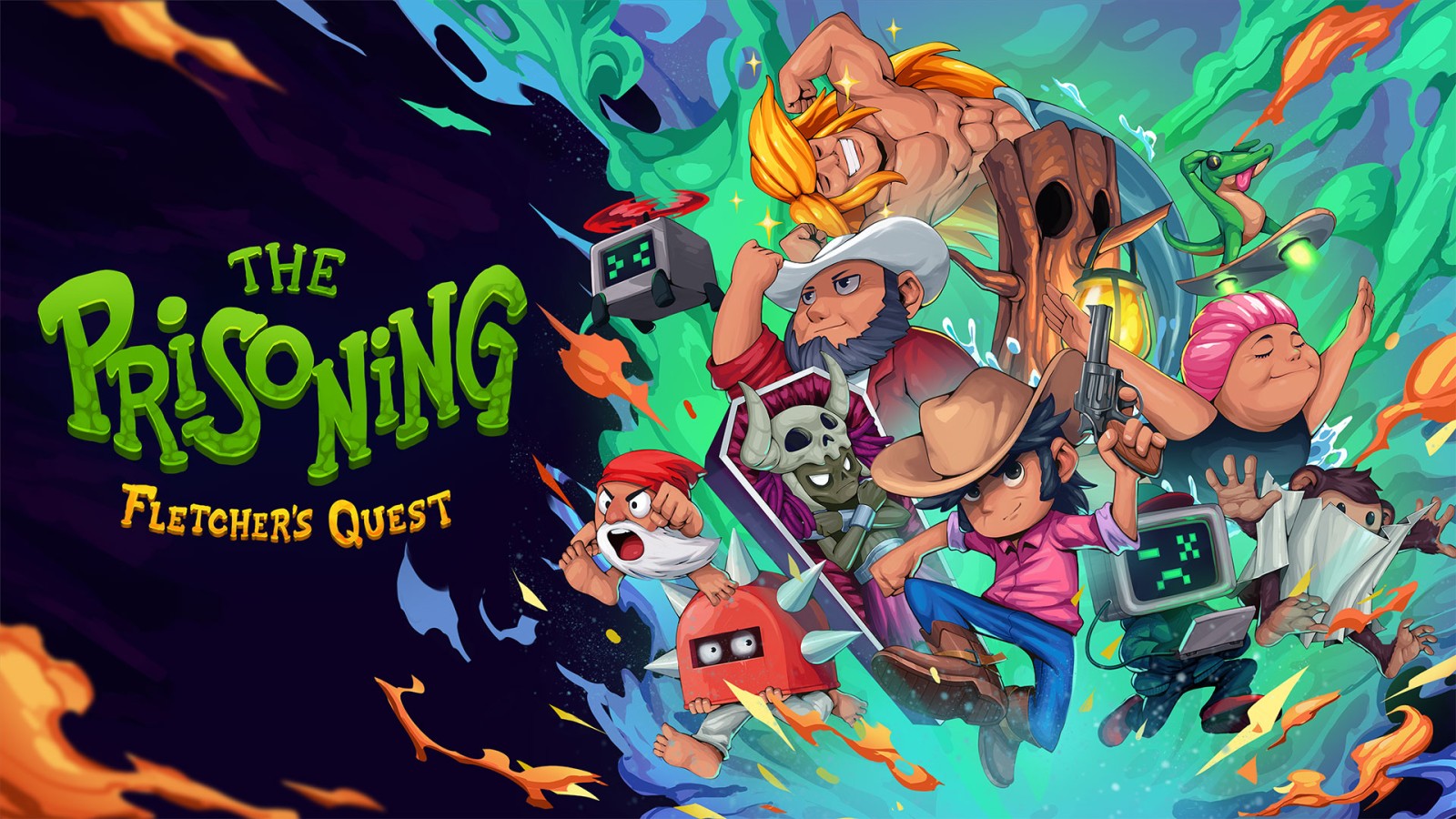

Introduction: The Prisoning: Fletcher’s Quest arrives on Nintendo Switch as a compact metroidvania-lite that emphasizes exploration, platforming, and challenging boss encounters.
Framed around a surreal narrative sequence in which the protagonist Fletcher enters an altered state, the game funnels classic genre staples — a sprawling map, unlockable abilities, and upgradeable weapons — into a shorter, self-contained adventure.
Gameplay and Design: Review coverage consistently characterizes The Prisoning: Fletcher’s Quest as a lighter entry in the metroidvania family.
The game pairs a 2D, 16-bit pixel-art aesthetic with run ’n’ gun shooting mechanics; the player quickly gains a weapon that features unlimited ammo, making standard encounters straightforward while reserving challenge for set-piece fights.
The world is divided into rooms connected by up to four cardinal access points; rooms appear on the map only after they are visited, which helps players track unexplored areas.
Controls and Progression: Controls are tight and responsive.
Fletcher can perform high jumps and acquire abilities such as double jump to reach previously inaccessible areas.
Warp points and generous save locations reduce excessive backtracking and keep pacing brisk.
The in-game map provides a clear sense of direction, and warp points near key encounters reduce repetitive traversal.
Bosses and Difficulty: The Prisoning: Fletcher’s Quest contains four major boss fights, each with distinct attack patterns and defensive windows to learn.
Fletcher’s survivability is limited — the protagonist can survive just two hits before returning to the last save point, which underlines how the game reserves most of its difficulty for boss encounters.
Save points placed near bosses make repeated attempts manageable, and defeating each boss yields a pronounced sense of accomplishment.
Presentation and Tone: The title leans into tongue-in-cheek humor and self-referential jokes about gaming tropes, including fetchable items and genre nods that will resonate with seasoned players.
The pixel visuals are faithful to a 16-bit aesthetic, though occasional background/platform readability issues can momentarily obscure jump targets, especially in handheld play.
Verdict: The Prisoning: Fletcher’s Quest is well executed as a short-form metroidvania-lite on Nintendo Switch.
It may feel brief to veterans of expansive metroidvanias, but its compact design, satisfying boss encounters, and clear navigation make it an effective, memorable diversion for players seeking a focused exploration experience.
Framed around a surreal narrative sequence in which the protagonist Fletcher enters an altered state, the game funnels classic genre staples — a sprawling map, unlockable abilities, and upgradeable weapons — into a shorter, self-contained adventure.
Gameplay and Design: Review coverage consistently characterizes The Prisoning: Fletcher’s Quest as a lighter entry in the metroidvania family.
The game pairs a 2D, 16-bit pixel-art aesthetic with run ’n’ gun shooting mechanics; the player quickly gains a weapon that features unlimited ammo, making standard encounters straightforward while reserving challenge for set-piece fights.
The world is divided into rooms connected by up to four cardinal access points; rooms appear on the map only after they are visited, which helps players track unexplored areas.
Controls and Progression: Controls are tight and responsive.
Fletcher can perform high jumps and acquire abilities such as double jump to reach previously inaccessible areas.
Warp points and generous save locations reduce excessive backtracking and keep pacing brisk.
The in-game map provides a clear sense of direction, and warp points near key encounters reduce repetitive traversal.
Bosses and Difficulty: The Prisoning: Fletcher’s Quest contains four major boss fights, each with distinct attack patterns and defensive windows to learn.
Fletcher’s survivability is limited — the protagonist can survive just two hits before returning to the last save point, which underlines how the game reserves most of its difficulty for boss encounters.
Save points placed near bosses make repeated attempts manageable, and defeating each boss yields a pronounced sense of accomplishment.
Presentation and Tone: The title leans into tongue-in-cheek humor and self-referential jokes about gaming tropes, including fetchable items and genre nods that will resonate with seasoned players.
The pixel visuals are faithful to a 16-bit aesthetic, though occasional background/platform readability issues can momentarily obscure jump targets, especially in handheld play.
Verdict: The Prisoning: Fletcher’s Quest is well executed as a short-form metroidvania-lite on Nintendo Switch.
It may feel brief to veterans of expansive metroidvanias, but its compact design, satisfying boss encounters, and clear navigation make it an effective, memorable diversion for players seeking a focused exploration experience.


