


Saborus Review: Disappointing Puzzle Platformer Stumbles on Nintendo Switch
Saborus, newly released on Nintendo Switch, arrives with a striking opening: a commercial celebrating wholesome, fresh food, juxtaposed with scenes of contented animals happily grazing under the sun.
A soft-spoken narrator details the journey from farm to table, yet as the narration intensifies, the reality shifts—revealing the grim fate awaiting these animals.
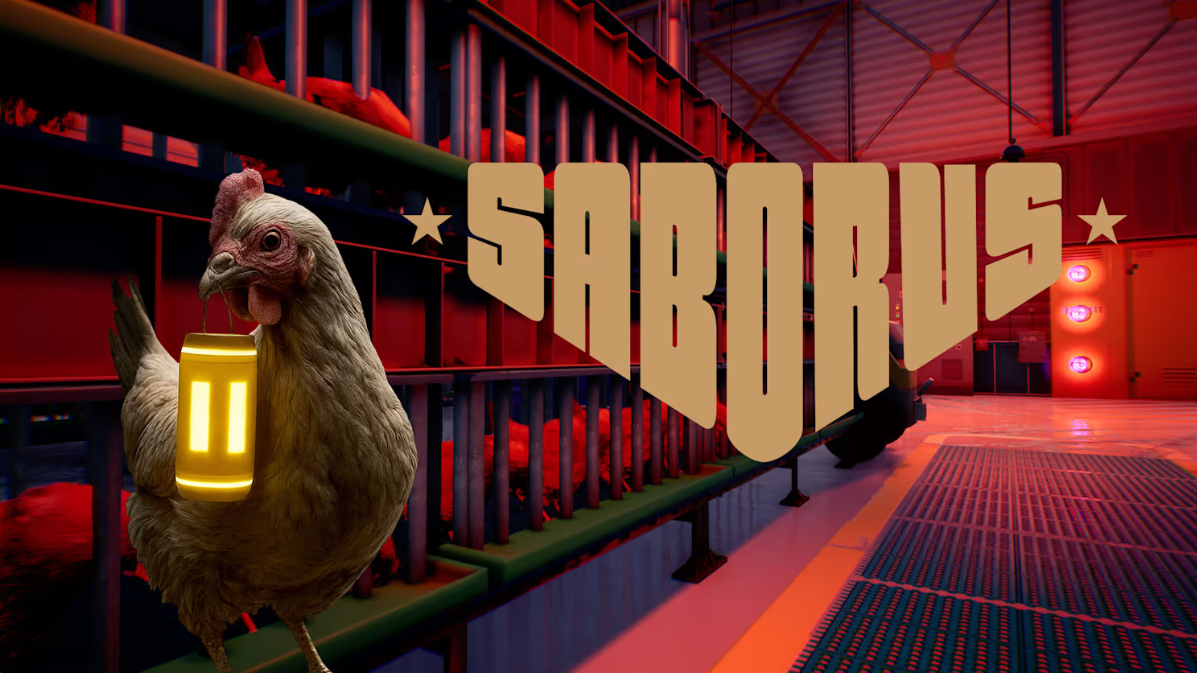
The sequence suddenly cuts to a harrowing slaughterhouse, casting the player as a chicken that narrowly escapes the conveyor belt, setting the stage for a unique blend of puzzle platformer and stealth horror experience.
This premise hints at a noble yet unsettling exploration of industrial farming’s darker side.
However, Saborus ultimately fails to deliver on its compelling concept.
As players attempt to guide their chicken protagonist through the perilous factory setting, any initial tension dissipates rapidly.
Despite being surrounded by slaughterhouse staff, the player’s actions go entirely unnoticed; even close encounters elicit no reaction, significantly undermining the intended suspense.
Gameplay suffers from a lack of polish.
The chicken’s interaction with the environment often feels cumbersome, with invisible barriers and unrealistic collision detection regularly stalling progress.
Pathways that appear traversable—such as angled pallets or inviting gaps—often prove impassable, frustrating exploration.
Puzzles consist mostly of simple fetch quests: pick up an object, move it elsewhere, and unlock the next section.
Yet technical issues abound, with multiple instances where critical items phase through walls or floors, forcing players to restart due to the absence of a robust save system or checkpoint functionality.
Stealth elements, intended to add challenge and tension, instead contribute confusion.
Guard patrols are unpredictable: on some levels NPCs are entirely oblivious, while in designated sections they chase the player along fixed, easily avoidable routes.
The lack of differentiated sound design means that player and enemy footsteps sound identical, making it difficult to gauge the level of threat or anticipate nearby guards.
If detected outside of specifically scripted sequences, escape is impossible, and the protagonist meets a grisly end.
Notably, the game displays a clear imitation of the iconic Dark Souls "You Died" overlay, detracting from its originality and casting doubt on whether it is intended as parody or simple plagiarism.
The slaughterhouse’s visual design—replete with deep shadows and caged animals—offers a chilling atmosphere, but interaction with this world remains shallow.
While there is clear potential for meaningful narrative depth or emergent gameplay involving fellow captive animals, Saborus instead relies on surface-level shock tactics and missed opportunities for collaboration or story richness.
Attempts at humor undermine the intended message.
The game awards tongue-in-cheek achievements for dying in particular ways, which, coupled with repeated instances of the protagonist’s brutal demise, clash with any sense of empathy the premise seeks to evoke.
Dialogue and voice acting contribute to the inconsistency, featuring unnatural pacing and a curious variability in pronouncing the game’s title.
These issues lend the impression that minimal care or creative oversight went into the production, further diminishing the overall experience.
In summary, while Saborus aims to offer an important, provocative commentary on factory farming within an accessible video game format for the Nintendo Switch, it stumbles under the weight of unrefined mechanics, questionable design choices, and a jarring tone.
The result is a puzzle platformer that neither entertains nor effectively communicates its intended message, leaving both fans and critics disappointed.
Saborus, newly released on Nintendo Switch, arrives with a striking opening: a commercial celebrating wholesome, fresh food, juxtaposed with scenes of contented animals happily grazing under the sun.
A soft-spoken narrator details the journey from farm to table, yet as the narration intensifies, the reality shifts—revealing the grim fate awaiting these animals.
The sequence suddenly cuts to a harrowing slaughterhouse, casting the player as a chicken that narrowly escapes the conveyor belt, setting the stage for a unique blend of puzzle platformer and stealth horror experience.
This premise hints at a noble yet unsettling exploration of industrial farming’s darker side.
However, Saborus ultimately fails to deliver on its compelling concept.
As players attempt to guide their chicken protagonist through the perilous factory setting, any initial tension dissipates rapidly.
Despite being surrounded by slaughterhouse staff, the player’s actions go entirely unnoticed; even close encounters elicit no reaction, significantly undermining the intended suspense.
Gameplay suffers from a lack of polish.
The chicken’s interaction with the environment often feels cumbersome, with invisible barriers and unrealistic collision detection regularly stalling progress.
Pathways that appear traversable—such as angled pallets or inviting gaps—often prove impassable, frustrating exploration.
Puzzles consist mostly of simple fetch quests: pick up an object, move it elsewhere, and unlock the next section.
Yet technical issues abound, with multiple instances where critical items phase through walls or floors, forcing players to restart due to the absence of a robust save system or checkpoint functionality.
Stealth elements, intended to add challenge and tension, instead contribute confusion.
Guard patrols are unpredictable: on some levels NPCs are entirely oblivious, while in designated sections they chase the player along fixed, easily avoidable routes.
The lack of differentiated sound design means that player and enemy footsteps sound identical, making it difficult to gauge the level of threat or anticipate nearby guards.
If detected outside of specifically scripted sequences, escape is impossible, and the protagonist meets a grisly end.
Notably, the game displays a clear imitation of the iconic Dark Souls "You Died" overlay, detracting from its originality and casting doubt on whether it is intended as parody or simple plagiarism.
The slaughterhouse’s visual design—replete with deep shadows and caged animals—offers a chilling atmosphere, but interaction with this world remains shallow.
While there is clear potential for meaningful narrative depth or emergent gameplay involving fellow captive animals, Saborus instead relies on surface-level shock tactics and missed opportunities for collaboration or story richness.
Attempts at humor undermine the intended message.
The game awards tongue-in-cheek achievements for dying in particular ways, which, coupled with repeated instances of the protagonist’s brutal demise, clash with any sense of empathy the premise seeks to evoke.
Dialogue and voice acting contribute to the inconsistency, featuring unnatural pacing and a curious variability in pronouncing the game’s title.
These issues lend the impression that minimal care or creative oversight went into the production, further diminishing the overall experience.
In summary, while Saborus aims to offer an important, provocative commentary on factory farming within an accessible video game format for the Nintendo Switch, it stumbles under the weight of unrefined mechanics, questionable design choices, and a jarring tone.
The result is a puzzle platformer that neither entertains nor effectively communicates its intended message, leaving both fans and critics disappointed.