

Montezuma’s Revenge – 40th Anniversary Edition Offers Retro Challenge on Nintendo Switch
Originally launched in 1984, Montezuma’s Revenge stands as a touchstone of platformer history, famed for its challenging gameplay and intricate tomb-raiding mechanics.
Developed initially for hardware such as the ColecoVision and Commodore 64, the game has left a lasting impression among classic gaming enthusiasts.
Four decades later, Montezuma’s Revenge – 40th Anniversary Edition arrives on the Nintendo Switch via the eShop, promising upgraded visuals and new features for a contemporary audience while striving to rekindle the old-school challenge that made it a cult favorite.
Gameplay: A Tough Tribute to Classic Platforming
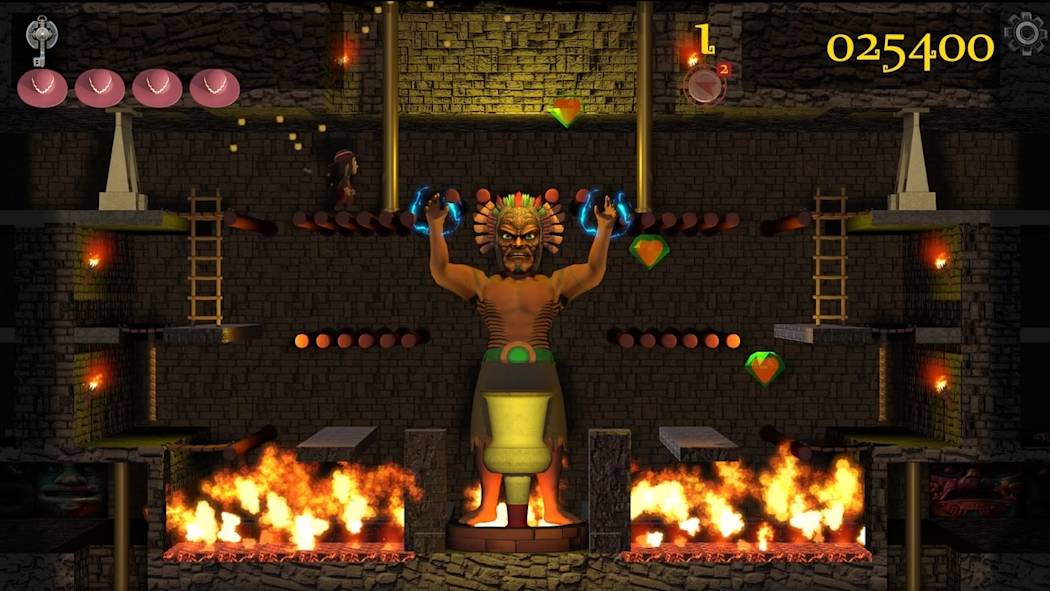
In this enhanced edition, players guide Pedro—or the newly introduced Rosita—through nearly 100 treacherous screens inside an ancient tomb.
The mission is simple in concept: gather treasures while dodging an arsenal of hazards including snakes, fire pits, trap doors, and skulls.
However, as any platforming veteran will attest, Montezuma’s Revenge does not make this task easy.
Players are given minimal resources—limited-use weapons, no map function, and a constrained inventory system.
As a result, each decision between arming oneself or collecting progression items becomes crucial to survival.
One notable gameplay element retained in the 40th Anniversary Edition is that when a player is defeated by an enemy, that foe is also removed from the screen.
This choice, which harks back to the original, provides a small mercy amid the relentless difficulty.
The abundance of unlimited restarts in this edition further helps modern players tackle the infamous learning curve without facing permanent setbacks.
Platform Physics and Visual Updates
Despite the anniversary edition offering updated visuals, the graphical enhancements recall a style more akin to the mid-1990s than a true modernization.
The game retains a simple, retro aesthetic—a decision that may appeal to purists but could deter those expecting contemporary visuals.
In terms of controls, both Pedro and Rosita move with a floaty imprecision.
Jumping and traversal can often feel heavy and awkward, with hazards like conveyor belts and sudden drops quickly ending a run.
These physics have drawn particular criticism, as they differ from the weightier, more grounded feel found in other modern platformers.
A Vintage Experience With Renewed Accessibility
For veteran players drawn by nostalgia, the 40th Anniversary Edition provides an authentic, if challenging, foray through a classic adventure.
The inclusion of the original 8-bit version on Nintendo Switch via the eShop offers a unique point of comparison for fans and newcomers alike.
While the updated edition finally gives players the opportunity to complete the perilous tomb—an elusive achievement for many during the original release—the experience is one that underscores the toughness and sometimes unforgiving nature of early platform games.
Final Verdict
Montezuma’s Revenge – 40th Anniversary Edition on Nintendo Switch is rigidly faithful to its brutally challenging roots.
Its updates deliver some accessibility improvements, such as unlimited restarts, but the enhanced visuals and physics feel dated compared to modern platforming expectations.
Ultimately, this edition is geared toward players who value authenticity and perseverance over ease of play, making it a noteworthy, if divisive, homage to a pivotal moment in platforming history.
Originally launched in 1984, Montezuma’s Revenge stands as a touchstone of platformer history, famed for its challenging gameplay and intricate tomb-raiding mechanics.
Developed initially for hardware such as the ColecoVision and Commodore 64, the game has left a lasting impression among classic gaming enthusiasts.
Four decades later, Montezuma’s Revenge – 40th Anniversary Edition arrives on the Nintendo Switch via the eShop, promising upgraded visuals and new features for a contemporary audience while striving to rekindle the old-school challenge that made it a cult favorite.
Gameplay: A Tough Tribute to Classic Platforming
In this enhanced edition, players guide Pedro—or the newly introduced Rosita—through nearly 100 treacherous screens inside an ancient tomb.
The mission is simple in concept: gather treasures while dodging an arsenal of hazards including snakes, fire pits, trap doors, and skulls.
However, as any platforming veteran will attest, Montezuma’s Revenge does not make this task easy.
Players are given minimal resources—limited-use weapons, no map function, and a constrained inventory system.
As a result, each decision between arming oneself or collecting progression items becomes crucial to survival.
One notable gameplay element retained in the 40th Anniversary Edition is that when a player is defeated by an enemy, that foe is also removed from the screen.
This choice, which harks back to the original, provides a small mercy amid the relentless difficulty.
The abundance of unlimited restarts in this edition further helps modern players tackle the infamous learning curve without facing permanent setbacks.
Platform Physics and Visual Updates
Despite the anniversary edition offering updated visuals, the graphical enhancements recall a style more akin to the mid-1990s than a true modernization.
The game retains a simple, retro aesthetic—a decision that may appeal to purists but could deter those expecting contemporary visuals.
In terms of controls, both Pedro and Rosita move with a floaty imprecision.
Jumping and traversal can often feel heavy and awkward, with hazards like conveyor belts and sudden drops quickly ending a run.
These physics have drawn particular criticism, as they differ from the weightier, more grounded feel found in other modern platformers.
A Vintage Experience With Renewed Accessibility
For veteran players drawn by nostalgia, the 40th Anniversary Edition provides an authentic, if challenging, foray through a classic adventure.
The inclusion of the original 8-bit version on Nintendo Switch via the eShop offers a unique point of comparison for fans and newcomers alike.
While the updated edition finally gives players the opportunity to complete the perilous tomb—an elusive achievement for many during the original release—the experience is one that underscores the toughness and sometimes unforgiving nature of early platform games.
Final Verdict
Montezuma’s Revenge – 40th Anniversary Edition on Nintendo Switch is rigidly faithful to its brutally challenging roots.
Its updates deliver some accessibility improvements, such as unlimited restarts, but the enhanced visuals and physics feel dated compared to modern platforming expectations.
Ultimately, this edition is geared toward players who value authenticity and perseverance over ease of play, making it a noteworthy, if divisive, homage to a pivotal moment in platforming history.