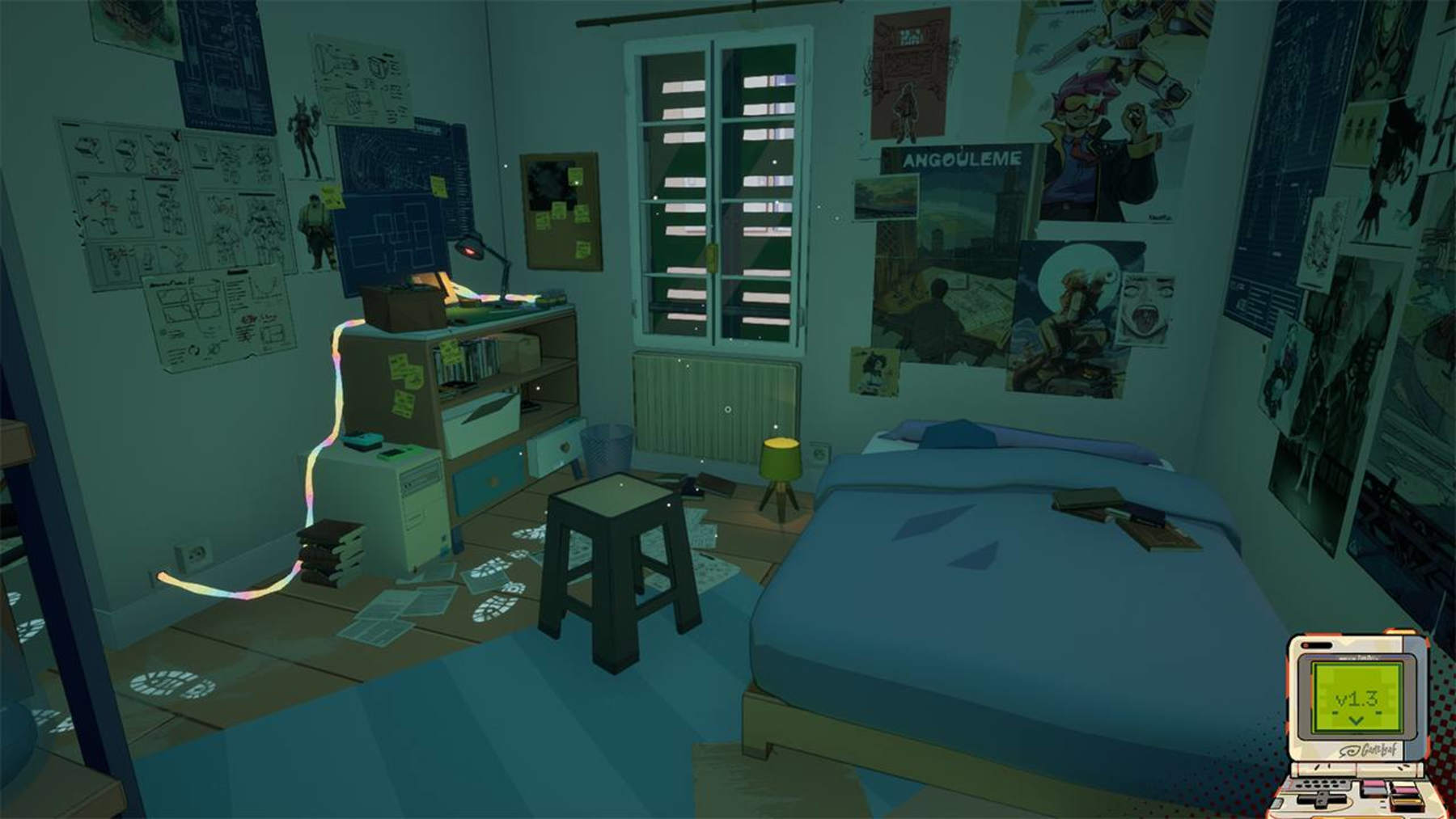


Looking for Fael on Nintendo Switch positions itself as a compact, exploration-led puzzle adventure that sends players hunting for a missing roommate across shifting, alternate versions of a single apartment.
Developed by an independent studio and distributed on the Nintendo eShop for Switch, the game blends inventory-light puzzle mechanics with a layered environment design and a small catalogue of mini-games.
The premise is straightforward: your roommate Fael leaves a garbled voicemail claiming he’s lost somewhere in the apartment, and your job is to find him.
Early scenes establish a quiet, slightly uncanny building; the elevator is out of service, a large black cable runs through the halls, and by the time you reach your flat, Fael is nowhere to be seen.
Progression hinges on exploration, careful observation, and repeated attempts to align moves and sequences until puzzles unlock new, alternate versions of the apartment.
On presentation, the review-grade assessment given in the original coverage judged visuals and audio both at a B level.
The environments are coherent and smooth, but camera scale and perspective occasionally feel off — doorframes can feel too close and ceiling heights oddly exaggerated, which may cause discomfort for some players.
Audio is deliberately sparse in places, with footstep cadence noted as slightly irregular; that sparseness supports mood but can at times pull players out of immersion.
Movement is intentionally limited: the game operates in two dimensions with camera-angle adjustments via the joystick.
There is no jumping, climbing, or complex platforming — stairs function as simple elevation changes rather than distinct traversal mechanics.
Puzzles generally avoid high mechanical complexity but are designed to be enigmatic; the game offers little direct guidance, so players should expect to dedicate time to observation, note-taking, and trial-and-error execution.
The review recommended keeping a notepad handy because there’s no in-game breadcrumb system for long-form puzzle tracking.
A standout moment is the GameLeaf mini-game introduced in the opening level, a block-placement puzzler with Tetris-like motions that allows undoing moves until pieces fit correctly.
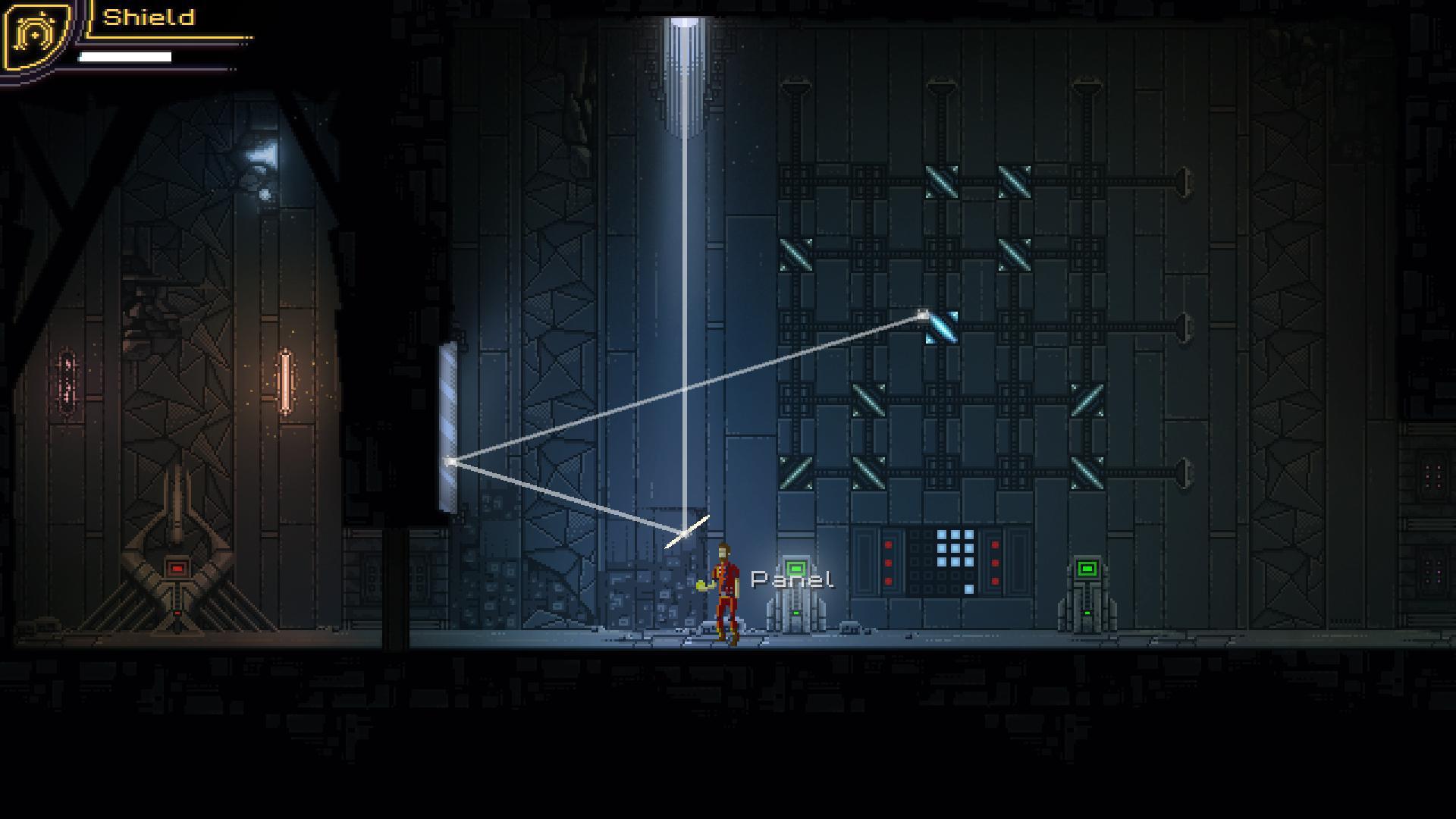
Other puzzle types include combination locks, switch sequences, and multi-step interactions that require back-and-forth between apartment variants.
Rewriting standout lines from the original coverage into journalistic language: the reviewer framed the project decisively — failure is not treated as an option — and noted that with a different musical approach and heightened suspense the title could lean further into thriller territory; as released, it remains a “trippy” mind-bender well-suited to puzzle enthusiasts.
The original assessment scored the game an 8 out of 10, summarizing Looking for Fael as a thoughtful, patient-focused puzzle experience with intriguing concepts and room for polish.
Developed by an independent studio and distributed on the Nintendo eShop for Switch, the game blends inventory-light puzzle mechanics with a layered environment design and a small catalogue of mini-games.
The premise is straightforward: your roommate Fael leaves a garbled voicemail claiming he’s lost somewhere in the apartment, and your job is to find him.
Early scenes establish a quiet, slightly uncanny building; the elevator is out of service, a large black cable runs through the halls, and by the time you reach your flat, Fael is nowhere to be seen.
Progression hinges on exploration, careful observation, and repeated attempts to align moves and sequences until puzzles unlock new, alternate versions of the apartment.
On presentation, the review-grade assessment given in the original coverage judged visuals and audio both at a B level.
The environments are coherent and smooth, but camera scale and perspective occasionally feel off — doorframes can feel too close and ceiling heights oddly exaggerated, which may cause discomfort for some players.
Audio is deliberately sparse in places, with footstep cadence noted as slightly irregular; that sparseness supports mood but can at times pull players out of immersion.
Movement is intentionally limited: the game operates in two dimensions with camera-angle adjustments via the joystick.
There is no jumping, climbing, or complex platforming — stairs function as simple elevation changes rather than distinct traversal mechanics.
Puzzles generally avoid high mechanical complexity but are designed to be enigmatic; the game offers little direct guidance, so players should expect to dedicate time to observation, note-taking, and trial-and-error execution.
The review recommended keeping a notepad handy because there’s no in-game breadcrumb system for long-form puzzle tracking.
A standout moment is the GameLeaf mini-game introduced in the opening level, a block-placement puzzler with Tetris-like motions that allows undoing moves until pieces fit correctly.
Other puzzle types include combination locks, switch sequences, and multi-step interactions that require back-and-forth between apartment variants.
Rewriting standout lines from the original coverage into journalistic language: the reviewer framed the project decisively — failure is not treated as an option — and noted that with a different musical approach and heightened suspense the title could lean further into thriller territory; as released, it remains a “trippy” mind-bender well-suited to puzzle enthusiasts.
The original assessment scored the game an 8 out of 10, summarizing Looking for Fael as a thoughtful, patient-focused puzzle experience with intriguing concepts and room for polish.