

Living Dead House Review: Retro Arcade Action Thrives on the Nintendo Switch
In the ever-expanding library of Nintendo Switch retro titles, Flynn's Arcade continues its impressive streak with Living Dead House.
Launched on the Nintendo Switch eShop, this title delivers a punch of classic arcade nostalgia, calling to mind the golden age of '80s cabinets while injecting modern design sensibilities for today’s gamers.
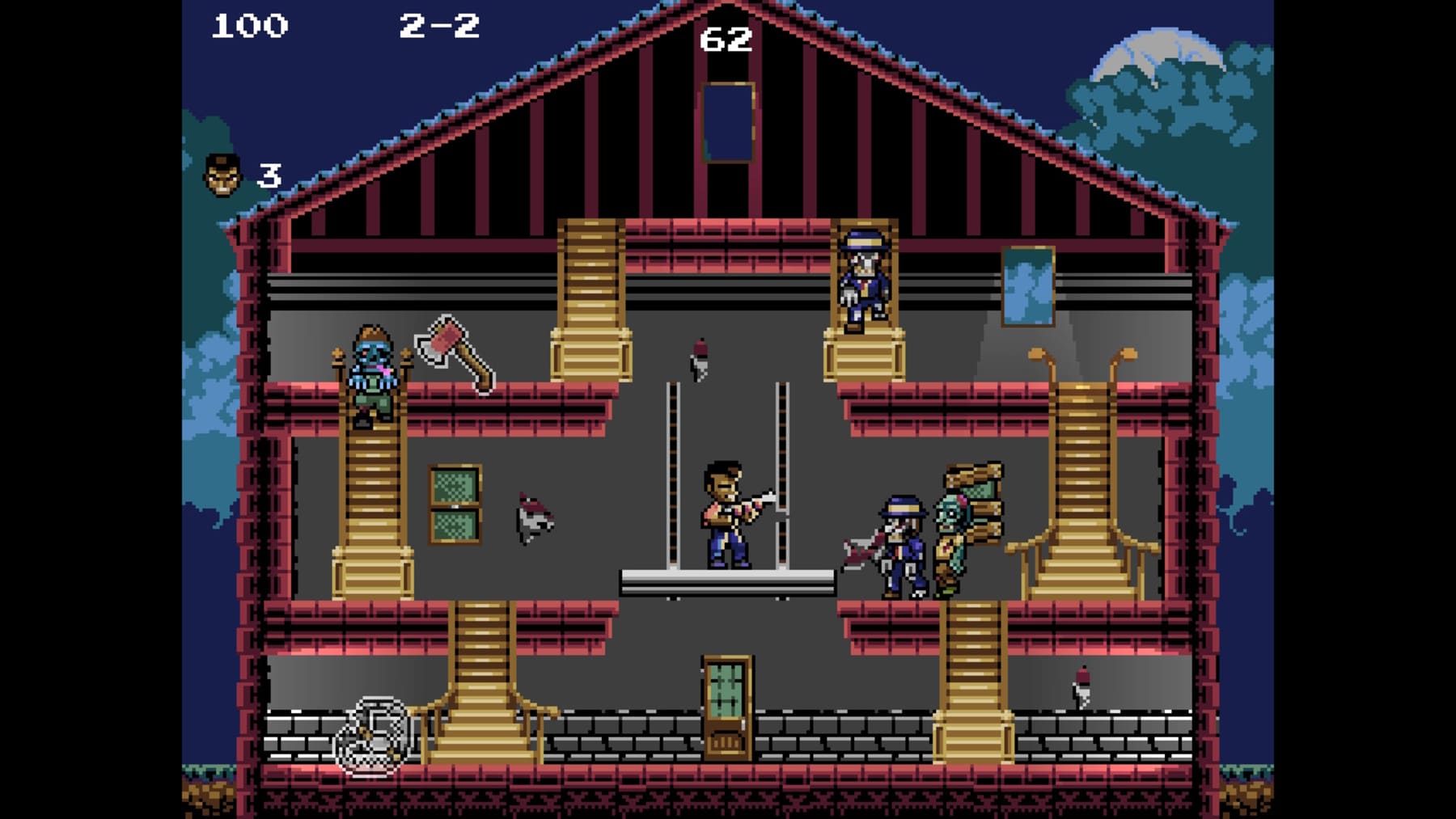
Mixing the desperate survival of Night of the Living Dead with the frenetic fun of Burger Time, Living Dead House drops players into a zombie-infested home with one simple task: survive until dawn.
Unlike traditional arcade experiences that reward clearing all enemies, here your goal is to simply outlast the relentless undead horde.
As explained by a representative from Flynn’s Arcade, players must use their wits and limited weaponry to stay alive, rather than focusing solely on extermination.
The game embraces classic arcade mechanics with little compromise.
As soon as the round starts, zombies begin smashing into the house.
Touching a zombie is an instant game over.
Weapons—the likes of shotguns and axes—sporadically spawn in the environment, but almost all of them, except for the trusty bear trap, offer just one use before needing to be replaced.
This limited arsenal compels players to think strategically about when and how to confront enemies, sometimes making escape and evasion the smarter option.
Progression brings more powerful weapons and environmental hazards.
Certain house features, like faulty wiring, can be triggered to electrify sections swarming with zombies, providing brief respite for creative players.
Level layouts take inspiration from labyrinthine locales, offering plenty of staircases, elevator warps, and even wraparound hallways that let players loop from one side to the other—an ode to arcade classics of decades past.
Gameplay pacing is deliberately measured; neither the protagonist nor zombies move particularly fast, which encourages calculated escapes rather than frantic darting.
Difficulty scales gently, introducing tougher enemies (some have mastered the use of dynamite) and expanding the complexity of room layouts to keep the gameplay feeling fresh.
Living Dead House truly shines with its local co-op mode.
Surviving the undead frenzy with a friend adds layers of excitement—and a little friendly competition for resources.
According to Flynn's Arcade, sharing the survival challenge is core to their philosophy of bringing people together through arcade experiences.
To round out the package, Living Dead House offers both arcade and survival modes, along with leaderboards that keep high-score chasers coming back for just one more run.
The visual presentation is notable as well; fans can toggle between an authentic CRT filter for the classic ’80s arcade feel or opt for a black-and-white mode that invokes the spirit of 1950s horror films.
While the repetitive nature of wave-based encounters may tire some players over longer sessions, Living Dead House capably recreates the quick-reflex, pick-up-and-play ethos of the arcade era.
Its appeal is strongest in short bursts, making it a perfect addition for Nintendo Switch owners who enjoy cycling through Arcade Archives, Taito Milestones, or other Flynn’s Arcade releases like Donut Dodo.
For fans of retro games and arcade survival challenges, Living Dead House on Nintendo Switch stands as a testament to Flynn's Arcade’s commitment to recapturing arcade magic—making it a worthy contender for your next high-score obsession.
In the ever-expanding library of Nintendo Switch retro titles, Flynn's Arcade continues its impressive streak with Living Dead House.
Launched on the Nintendo Switch eShop, this title delivers a punch of classic arcade nostalgia, calling to mind the golden age of '80s cabinets while injecting modern design sensibilities for today’s gamers.
Mixing the desperate survival of Night of the Living Dead with the frenetic fun of Burger Time, Living Dead House drops players into a zombie-infested home with one simple task: survive until dawn.
Unlike traditional arcade experiences that reward clearing all enemies, here your goal is to simply outlast the relentless undead horde.
As explained by a representative from Flynn’s Arcade, players must use their wits and limited weaponry to stay alive, rather than focusing solely on extermination.
The game embraces classic arcade mechanics with little compromise.
As soon as the round starts, zombies begin smashing into the house.
Touching a zombie is an instant game over.
Weapons—the likes of shotguns and axes—sporadically spawn in the environment, but almost all of them, except for the trusty bear trap, offer just one use before needing to be replaced.
This limited arsenal compels players to think strategically about when and how to confront enemies, sometimes making escape and evasion the smarter option.
Progression brings more powerful weapons and environmental hazards.
Certain house features, like faulty wiring, can be triggered to electrify sections swarming with zombies, providing brief respite for creative players.
Level layouts take inspiration from labyrinthine locales, offering plenty of staircases, elevator warps, and even wraparound hallways that let players loop from one side to the other—an ode to arcade classics of decades past.
Gameplay pacing is deliberately measured; neither the protagonist nor zombies move particularly fast, which encourages calculated escapes rather than frantic darting.
Difficulty scales gently, introducing tougher enemies (some have mastered the use of dynamite) and expanding the complexity of room layouts to keep the gameplay feeling fresh.
Living Dead House truly shines with its local co-op mode.
Surviving the undead frenzy with a friend adds layers of excitement—and a little friendly competition for resources.
According to Flynn's Arcade, sharing the survival challenge is core to their philosophy of bringing people together through arcade experiences.
To round out the package, Living Dead House offers both arcade and survival modes, along with leaderboards that keep high-score chasers coming back for just one more run.
The visual presentation is notable as well; fans can toggle between an authentic CRT filter for the classic ’80s arcade feel or opt for a black-and-white mode that invokes the spirit of 1950s horror films.
While the repetitive nature of wave-based encounters may tire some players over longer sessions, Living Dead House capably recreates the quick-reflex, pick-up-and-play ethos of the arcade era.
Its appeal is strongest in short bursts, making it a perfect addition for Nintendo Switch owners who enjoy cycling through Arcade Archives, Taito Milestones, or other Flynn’s Arcade releases like Donut Dodo.
For fans of retro games and arcade survival challenges, Living Dead House on Nintendo Switch stands as a testament to Flynn's Arcade’s commitment to recapturing arcade magic—making it a worthy contender for your next high-score obsession.