

Dread Delusion arrives as an idiosyncratic first-person action RPG from Lonely Hellplace, the solo studio led by developer James Wragg.
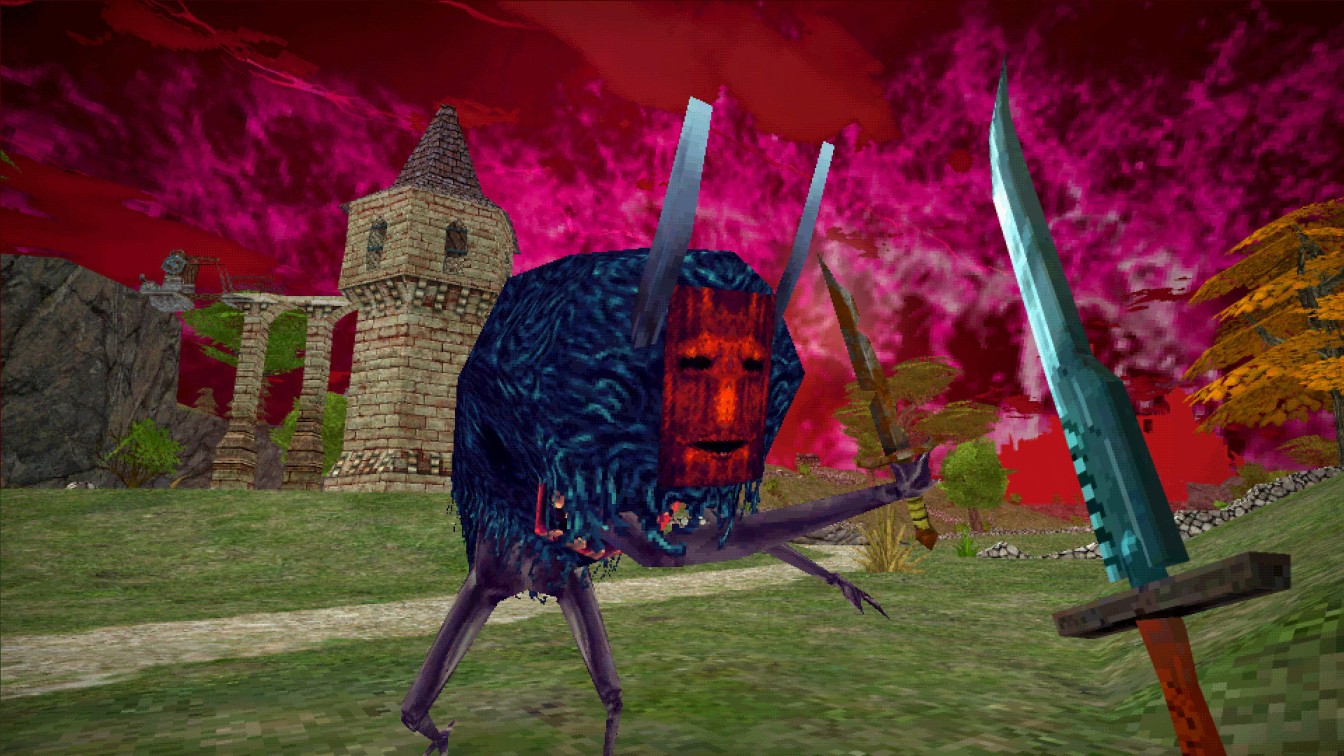
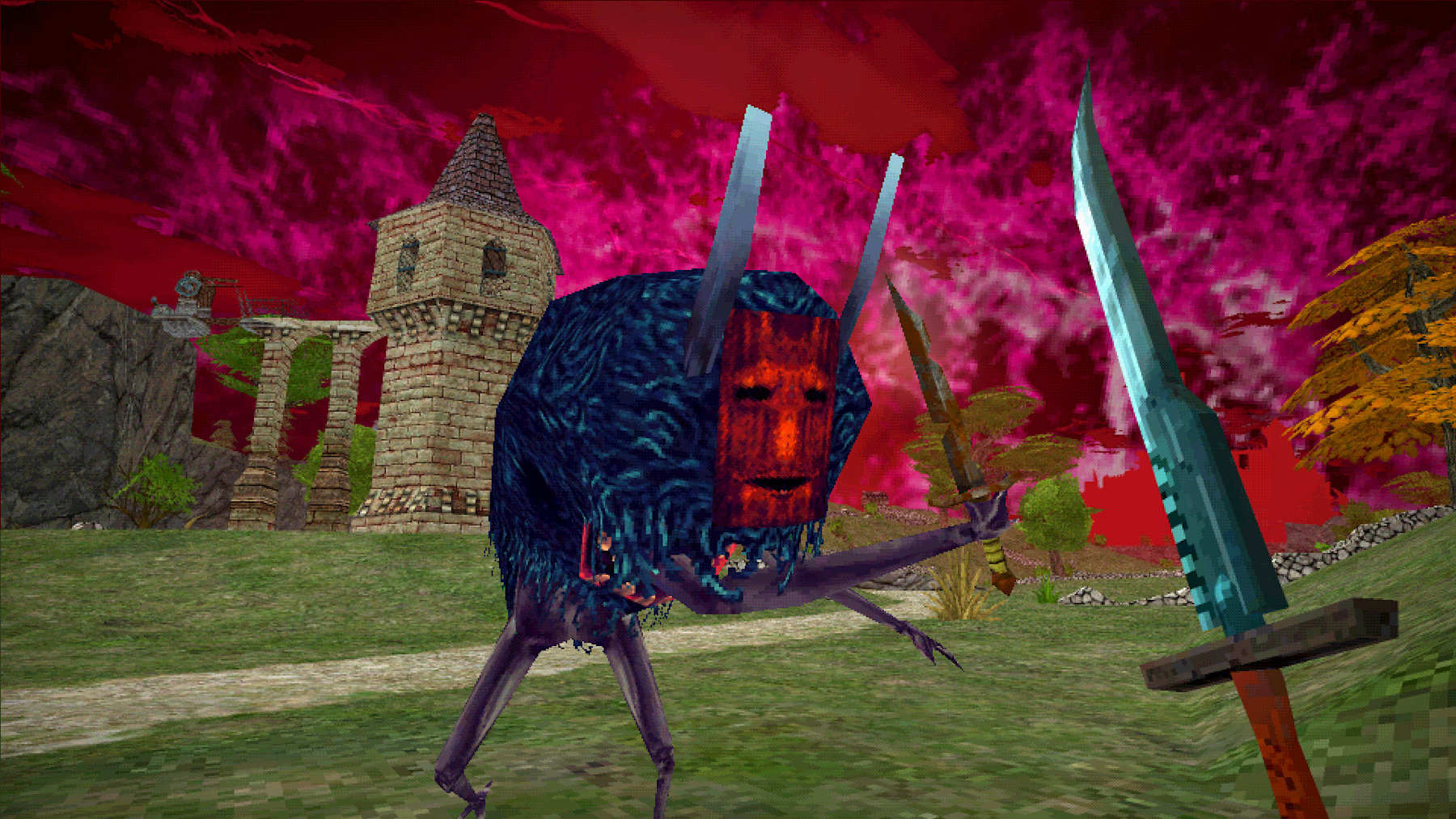
The game leans hard on ’90s bitmappy FPS aesthetics and a sprawling open world built from that visual language.
The result is a title that will immediately signal its influences to players familiar with retro shooters, while also delivering an RPG structure centered on stats, choice-driven progression, and exploration.
The experience opens with a conventional RPG setup — you begin imprisoned, pick initial stats, and are sent into a fractured world with a mission: suppress a rebellion.
The game outfits you with only a basic sword and a standard upgrade tree, leaving the rest to player choice and emergent systems.
The reviewer noted that the world is inviting for exploration but distinctly inhospitable as a place to settle, capturing the tension between visual charm and unsettling design.
Gameplay hinges on role-playing decisions more than tight, continuous combat.
Players can specialize in skills such as lockpicking to access alternate routes, lean on persuasive dialogue to get what they need, or attempt a direct combat approach.
The critic acknowledged that personal taste colors the enjoyment: for some players the stat-driven, choice-focused loops will be compelling, while others will find the sporadic and lightly-weighted combat unsatisfying.
Exploration is the title’s strongest suit.
Seemingly decorative objects often conceal keys or paths; environmental puzzles and clever access points reward curiosity.
NPC and creature design skews toward the bizarre — what might read as grotesque in modern high-fidelity graphics instead feels appropriately strange in Dread Delusion’s stylized palette.
The game’s story is delivered largely through found documents and conversations, emphasizing lore over a tightly directed narrative.
Audio and atmosphere receive high marks: ambient soundtrack and evocative sound design reinforce the sensation of wandering disconnected floating islands.
The reviewer questioned the rationale behind the game’s current hardware compatibility, observing that nothing about the design appears to demand the Nintendo Switch 2’s capabilities.
They summarized their position by saying they would not recommend Dread Delusion to every player, but for the subset who connect with its aesthetic and systems, they would recommend it enthusiastically.
Dread Delusion is a notable example of how solo developers like James Wragg and small studios such as Lonely Hellplace can craft distinctive experiences that provoke strong reactions.
Its niche appeal and unusual platform positioning make it a title worth watching for players and industry observers interested in retro-inspired indie RPG design.
The game leans hard on ’90s bitmappy FPS aesthetics and a sprawling open world built from that visual language.
The result is a title that will immediately signal its influences to players familiar with retro shooters, while also delivering an RPG structure centered on stats, choice-driven progression, and exploration.
The experience opens with a conventional RPG setup — you begin imprisoned, pick initial stats, and are sent into a fractured world with a mission: suppress a rebellion.
The game outfits you with only a basic sword and a standard upgrade tree, leaving the rest to player choice and emergent systems.
The reviewer noted that the world is inviting for exploration but distinctly inhospitable as a place to settle, capturing the tension between visual charm and unsettling design.
Gameplay hinges on role-playing decisions more than tight, continuous combat.
Players can specialize in skills such as lockpicking to access alternate routes, lean on persuasive dialogue to get what they need, or attempt a direct combat approach.
The critic acknowledged that personal taste colors the enjoyment: for some players the stat-driven, choice-focused loops will be compelling, while others will find the sporadic and lightly-weighted combat unsatisfying.
Exploration is the title’s strongest suit.
Seemingly decorative objects often conceal keys or paths; environmental puzzles and clever access points reward curiosity.
NPC and creature design skews toward the bizarre — what might read as grotesque in modern high-fidelity graphics instead feels appropriately strange in Dread Delusion’s stylized palette.
The game’s story is delivered largely through found documents and conversations, emphasizing lore over a tightly directed narrative.
Audio and atmosphere receive high marks: ambient soundtrack and evocative sound design reinforce the sensation of wandering disconnected floating islands.
The reviewer questioned the rationale behind the game’s current hardware compatibility, observing that nothing about the design appears to demand the Nintendo Switch 2’s capabilities.
They summarized their position by saying they would not recommend Dread Delusion to every player, but for the subset who connect with its aesthetic and systems, they would recommend it enthusiastically.
Dread Delusion is a notable example of how solo developers like James Wragg and small studios such as Lonely Hellplace can craft distinctive experiences that provoke strong reactions.
Its niche appeal and unusual platform positioning make it a title worth watching for players and industry observers interested in retro-inspired indie RPG design.