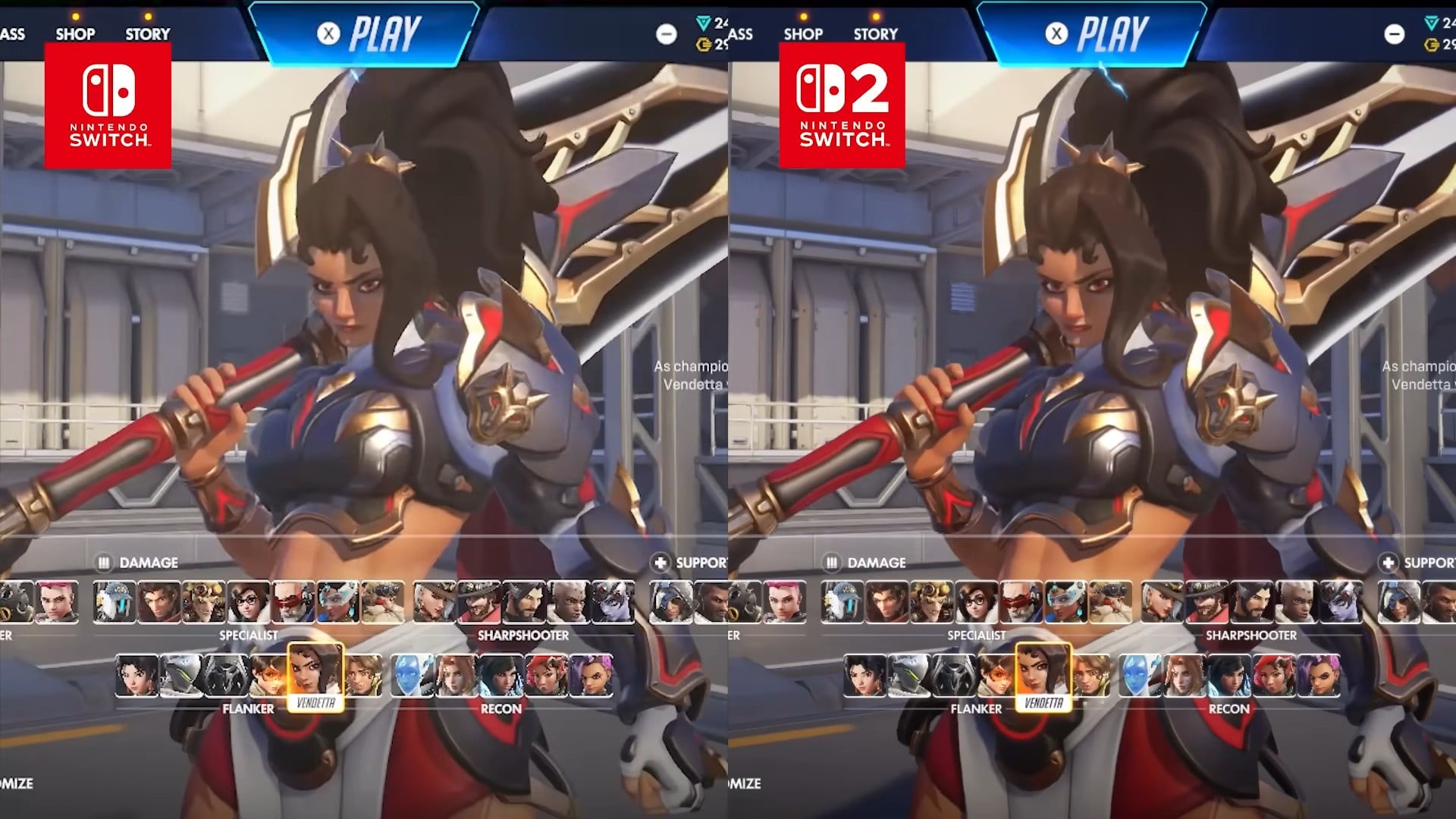
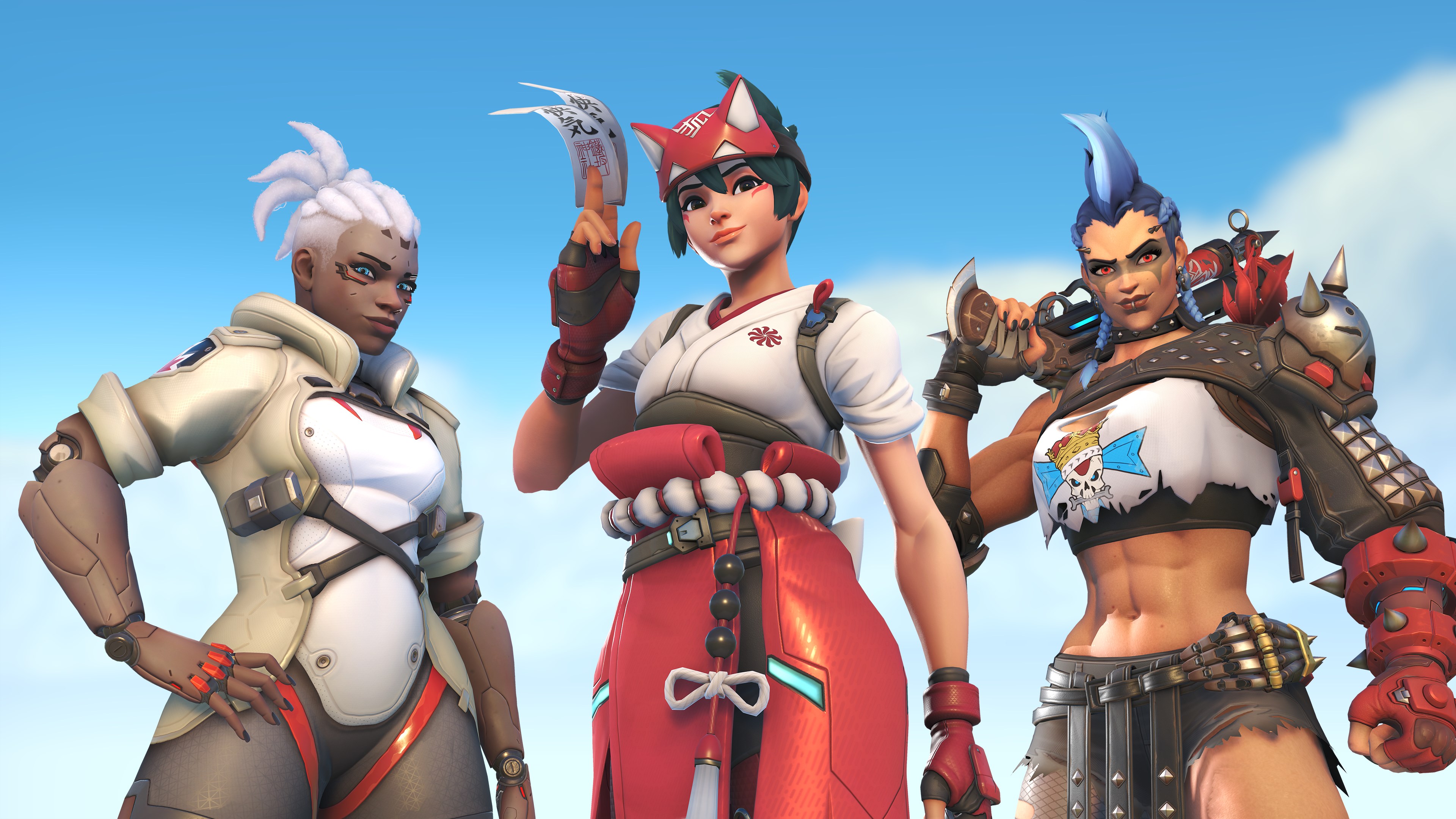
Blizzard has published an official comparison video showing Overwatch running on the Nintendo Switch 2 alongside the original Nintendo Switch.
The footage offers a side-by-side look at how Blizzard’s shooter performs and appears on the newer hardware compared with the longstanding Switch install base.
Background and platform history
Overwatch originally launched in May 2016 from developer Blizzard Entertainment, and the game later arrived on Nintendo Switch in October 2019 as a console release.
Overwatch 2 launched as a free-to-play sequel on October 4, 2022, and Blizzard has continued updating the franchise across platforms.
The recently released comparison video is intended to demonstrate how the title scales on Nintendo’s newer hardware.
Performance and visual differences (rewritten statements)
Blizzard’s comparison makes performance the central point: where the game’s frame pacing and smoothness could be inconsistent on the original Nintendo Switch, the Switch 2 build delivers a much more stable experience.
In journalistic terms, Blizzard shows the game reaching up to 60 frames per second on Nintendo Switch 2, representing a clear uplift in frame rate stability over the older hardware.
Graphical enhancements are also highlighted.
The video demonstrates additional effects on the Switch 2 release that are not present on the original Switch build, including enhanced fire and water rendering in several scenes and an overall increase in resolution.
These visual improvements are presented alongside the frame-rate gains to provide a fuller picture of the hardware differences.
Availability and patch notes
Overwatch is available on the Nintendo eShop, and Blizzard issued a patch addressing an early frame-rate bug reported on the Switch 2 release.
According to Blizzard’s update notes that accompanied the patch, the issue that caused unstable frame rates at launch has been resolved.
Why this matters
For players and industry observers, the comparison offers a useful, developer-provided case study in how a generational hardware step can impact performance and fidelity for an established live-service shooter.
For platform holders and developers, it underscores the practical benefits of increased CPU/GPU headroom when porting or optimizing established titles for new hardware.
The footage offers a side-by-side look at how Blizzard’s shooter performs and appears on the newer hardware compared with the longstanding Switch install base.
Background and platform history
Overwatch originally launched in May 2016 from developer Blizzard Entertainment, and the game later arrived on Nintendo Switch in October 2019 as a console release.
Overwatch 2 launched as a free-to-play sequel on October 4, 2022, and Blizzard has continued updating the franchise across platforms.
The recently released comparison video is intended to demonstrate how the title scales on Nintendo’s newer hardware.
Performance and visual differences (rewritten statements)
Blizzard’s comparison makes performance the central point: where the game’s frame pacing and smoothness could be inconsistent on the original Nintendo Switch, the Switch 2 build delivers a much more stable experience.
In journalistic terms, Blizzard shows the game reaching up to 60 frames per second on Nintendo Switch 2, representing a clear uplift in frame rate stability over the older hardware.
Graphical enhancements are also highlighted.
The video demonstrates additional effects on the Switch 2 release that are not present on the original Switch build, including enhanced fire and water rendering in several scenes and an overall increase in resolution.
These visual improvements are presented alongside the frame-rate gains to provide a fuller picture of the hardware differences.
Availability and patch notes
Overwatch is available on the Nintendo eShop, and Blizzard issued a patch addressing an early frame-rate bug reported on the Switch 2 release.
According to Blizzard’s update notes that accompanied the patch, the issue that caused unstable frame rates at launch has been resolved.
Why this matters
For players and industry observers, the comparison offers a useful, developer-provided case study in how a generational hardware step can impact performance and fidelity for an established live-service shooter.
For platform holders and developers, it underscores the practical benefits of increased CPU/GPU headroom when porting or optimizing established titles for new hardware.