
Intro
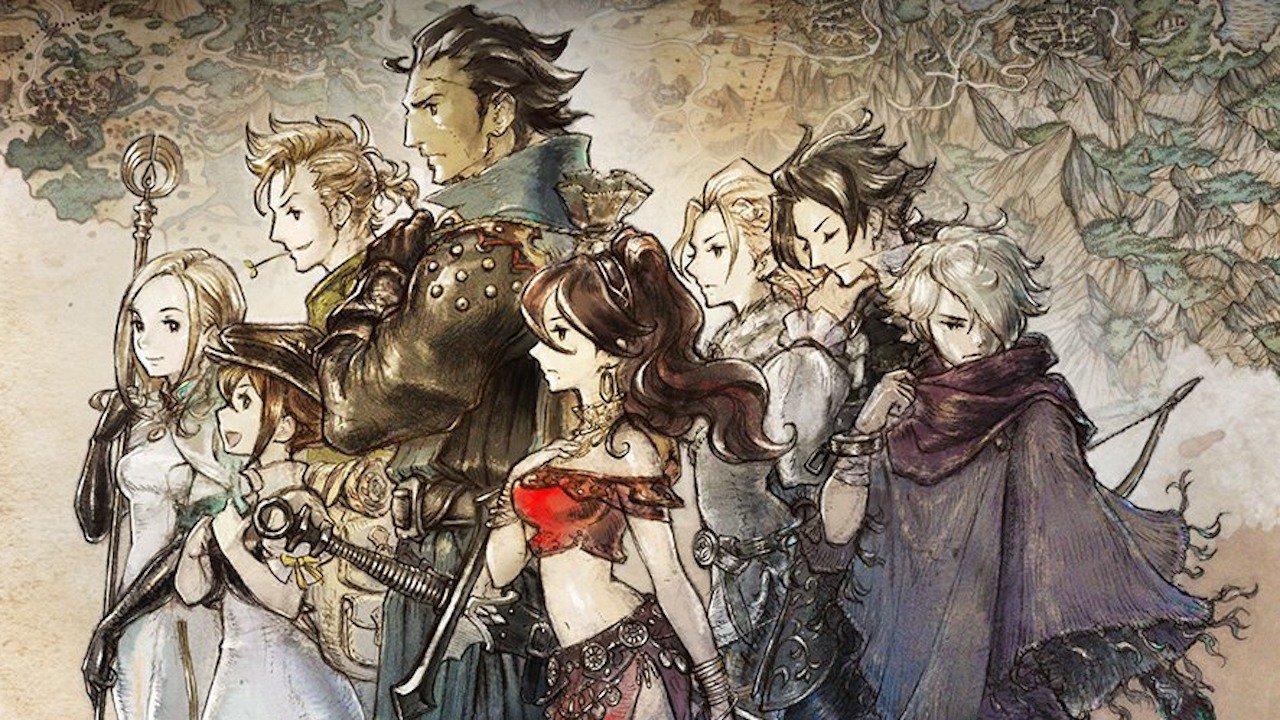
Octopath Traveler launched as a high-profile Nintendo Switch exclusive that married retro sprite work with modern rendering techniques.
Developed by Square Enix in collaboration with Acquire and powered by Unreal Engine 4, the game was first revealed at the Nintendo Switch Presentation in September 2017 and further showcased at Tokyo Game Show 2017.
Octopath Traveler released on the Nintendo Switch on July 13, 2018; a later PC (Steam) version followed on June 7, 2019.
Composer Yasunori Nishiki provided the soundtrack that has been widely praised for complementing the game’s aesthetic.
Paraphrased opening line
The game’s opening message asks what it means to play a role in a broad, open world — describing the places a player visits, the deeds they perform and the heroes whose stories they choose to tell — and invites players to set out on a wholly personal adventure.
Design and visual technology
Square Enix and Acquire promoted the title’s so-called “HD-2D” look: detailed 2D sprites moving over richly lit 3D environments with particle and lighting effects that aim to evoke classic JRPGs while using contemporary tech.
The team intentionally combined old-school sprite animation with Unreal Engine 4 rendering to create a distinct visual signature for the Switch platform.
Structure, narratives and demo
Octopath Traveler’s structure is built around eight protagonists, each with a self-contained storyline.
Players can experience all eight paths in one playthrough, and Square Enix released a Prologue Demo on the Nintendo eShop ahead of launch that allowed players to carry their save into the full game.
The game’s non-linear structure and chapter-based progression were discussed widely by critics and players at release.
Combat and systems
The battle system—centered on turn order, enemy weaknesses, the Break mechanic and Boost Points—received broad acclaim for depth and tactical opportunity.
Players must identify vulnerabilities, reduce enemy shields to trigger Break, and spend Boost Points to amplify actions.
Secondary Jobs, Job Points and status effects expand strategic options across long boss encounters.
Reception and milestones
Octopath Traveler earned strong critical attention for its mechanics, soundtrack and visual design.
Square Enix reported that Octopath Traveler shipped over one million copies worldwide within months of launch, marking a commercial milestone for the title on Nintendo Switch.
Conclusion
As a project that began life as “Project Octopath Traveler,” the game helped define an HD-2D subgenre and demonstrated how legacy JRPG design can be revitalized on modern platforms like the Nintendo Switch and PC.
Its combination of presentation, music by Yasunori Nishiki and deep combat systems keeps Octopath Traveler referenced in discussions about contemporary turn-based design.