Nintendo's balance of remakes and original titles has long been central to the company's release strategy.
Nate Bihldorff, Nintendo's senior vice president of product development and publishing, recently reiterated that both new games and remakes occupy important, complementary roles in Nintendo's catalog — a stance that guides how the company manages legacy IP across hardware platforms such as Nintendo Switch and digital storefronts like the Nintendo eShop.
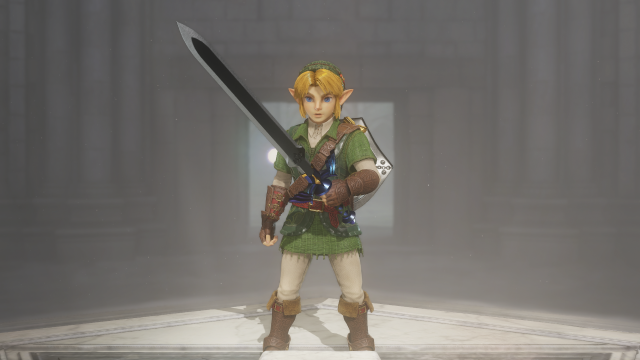
Bihldorff said he enjoys predicting which announcements will energize fandoms and noted that the announcement of Ocarina of Time prompted exactly that kind of excitement.
He added that new games and remakes are “of equal importance,” emphasizing that remakes let longtime fans revisit beloved experiences while also providing a first-time experience for players who never played the originals.
In his words, the remake will present a brand-new, 2026-style experience for those audiences.
The Legend of Zelda: Ocarina of Time is one of Nintendo's most influential titles.
Originally released for the Nintendo 64 in late 1998, the game has been widely cited as a benchmark in 3D action-adventure design.
A high-profile remaster, The Legend of Zelda: Ocarina of Time 3D, was developed by Grezzo and released for the Nintendo 3DS in June 2011; that project is part of Grezzo's established track record of collaborating with Nintendo on remake projects, including The Legend of Zelda: Majora's Mask 3D.
Nintendo has used a mix of first-party development from Nintendo EPD and trusted external partners like Grezzo to refresh classic titles for modern hardware.
The company's digital showcase format, Nintendo Direct — which launched in 2011 — and the Nintendo eShop remain key channels for announcing, distributing, and supporting both new entries and remakes.
From a business perspective, remakes can be an efficient way to leverage proven IP while allocating development resources toward fresh experiences.
Bihldorff's comments underline Nintendo's dual focus: investing in new titles that expand franchises while also updating classics so they remain accessible on current platforms.
For industry observers, that approach reflects Nintendo's long-running strategy of protecting its IP value across console generations, from N64 to Nintendo Switch and beyond.