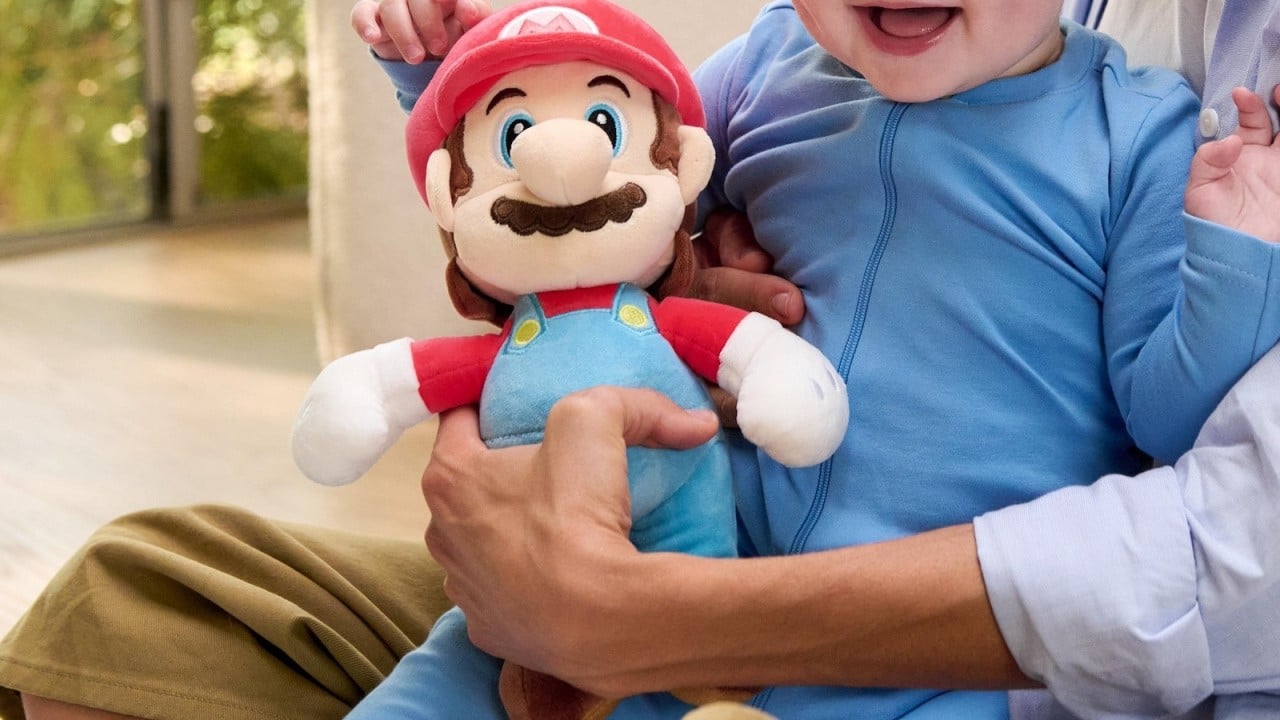

Nintendo has found itself at the center of an ongoing conversation regarding the authenticity of promotional images used in its recent 'My Mario' marketing campaign.
The initiative, which highlights the upcoming Western release of the 'My Mario' collection on Nintendo Switch and other platforms, features a series of cheerful images depicting families enjoying the products.
However, some viewers quickly noticed anomalies in certain photos, particularly involving the appearance of hands and fingers, leading to speculation on social media about the potential use of AI-generated content.
Prominent community figures and fans raised eyebrows after identifying unusual finger placements and seemingly impossible hand angles in the campaign visuals.
These visual quirks prompted widespread debate, as irregularities in hands and fingers have become a recognized indicator of artificial intelligence image generation.
Several users on platforms like X (formerly Twitter) and Bluesky questioned whether Nintendo had resorted to AI-based imagery for its marketing—a practice that remains controversial within the gaming industry.
To address the growing concerns, Nintendo provided an official statement to clarify the situation.
A representative for the company stated that no artificial intelligence was utilized in the creation of any promotional images for the 'My Mario' campaign.
"We can confirm that AI has not been used in the production of our My Mario marketing photos," the spokesperson said, emphasizing the traditional editing methods customary in the preparation of such materials.
Adding further clarity, Brittoni O'myah Sinclair, one of the models featured in the campaign, responded directly to the allegations via Instagram.
Sinclair reassured followers with a candid message: "As one of the models, I can promise you this is not AI, guys." Her statement was highlighted by Jon Cartwright, a respected voice in the Nintendo community, further substantiating Nintendo's official response.
Several independent analyses, conducted using various AI image detection tools such as NoteGBT and ZeroGBT, produced mixed results regarding the authenticity of the photos.
While detection software suggested a range of probabilities for AI usage—63.84% to 82% for one controversial image, but much lower or negligible percentages for others—the prevailing consensus among experts points toward standard digital retouching rather than full-scale generative AI.
Digital post-production with tools like Photoshop remains industry standard for all major game publishers, including Nintendo.
This isn't the first time Nintendo has faced such scrutiny.
In May 2024, similar allegations emerged concerning assets in Mario Kart World, with Nintendo reaffirming to Eurogamer that no AI-generated images were used.
Notably, Shigeru Miyamoto, the company's creative luminary, has previously stated that Nintendo prefers "to go in a different direction" from broader industry trends regarding AI in game development.
The 'My Mario' collection is set for release next month, further expanding Nintendo's robust portfolio on the Nintendo Switch and eShop platforms.
As the company continues to celebrate its legacy franchises with high-quality marketing and engaging campaigns, it remains steadfast in its commitment to authenticity and traditional creative practices.
The initiative, which highlights the upcoming Western release of the 'My Mario' collection on Nintendo Switch and other platforms, features a series of cheerful images depicting families enjoying the products.
However, some viewers quickly noticed anomalies in certain photos, particularly involving the appearance of hands and fingers, leading to speculation on social media about the potential use of AI-generated content.
Prominent community figures and fans raised eyebrows after identifying unusual finger placements and seemingly impossible hand angles in the campaign visuals.
These visual quirks prompted widespread debate, as irregularities in hands and fingers have become a recognized indicator of artificial intelligence image generation.
Several users on platforms like X (formerly Twitter) and Bluesky questioned whether Nintendo had resorted to AI-based imagery for its marketing—a practice that remains controversial within the gaming industry.
To address the growing concerns, Nintendo provided an official statement to clarify the situation.
A representative for the company stated that no artificial intelligence was utilized in the creation of any promotional images for the 'My Mario' campaign.
"We can confirm that AI has not been used in the production of our My Mario marketing photos," the spokesperson said, emphasizing the traditional editing methods customary in the preparation of such materials.
Adding further clarity, Brittoni O'myah Sinclair, one of the models featured in the campaign, responded directly to the allegations via Instagram.
Sinclair reassured followers with a candid message: "As one of the models, I can promise you this is not AI, guys." Her statement was highlighted by Jon Cartwright, a respected voice in the Nintendo community, further substantiating Nintendo's official response.
Several independent analyses, conducted using various AI image detection tools such as NoteGBT and ZeroGBT, produced mixed results regarding the authenticity of the photos.
While detection software suggested a range of probabilities for AI usage—63.84% to 82% for one controversial image, but much lower or negligible percentages for others—the prevailing consensus among experts points toward standard digital retouching rather than full-scale generative AI.
Digital post-production with tools like Photoshop remains industry standard for all major game publishers, including Nintendo.
This isn't the first time Nintendo has faced such scrutiny.
In May 2024, similar allegations emerged concerning assets in Mario Kart World, with Nintendo reaffirming to Eurogamer that no AI-generated images were used.
Notably, Shigeru Miyamoto, the company's creative luminary, has previously stated that Nintendo prefers "to go in a different direction" from broader industry trends regarding AI in game development.
The 'My Mario' collection is set for release next month, further expanding Nintendo's robust portfolio on the Nintendo Switch and eShop platforms.
As the company continues to celebrate its legacy franchises with high-quality marketing and engaging campaigns, it remains steadfast in its commitment to authenticity and traditional creative practices.