
Nintendo has recently found itself at the center of a heated debate concerning the authenticity of its promotional images in the latest 'My Mario' campaign.
Announced yesterday, the 'My Mario' collection is scheduled for release in Western markets next month, bringing with it a family-friendly marketing push that features images of parents and children enjoying the new products.
However, the campaign's visuals, released via the @NintendoStoreUS Twitter account, have come under intense scrutiny by social media users and industry observers, many of whom suggest signs of AI image generation.
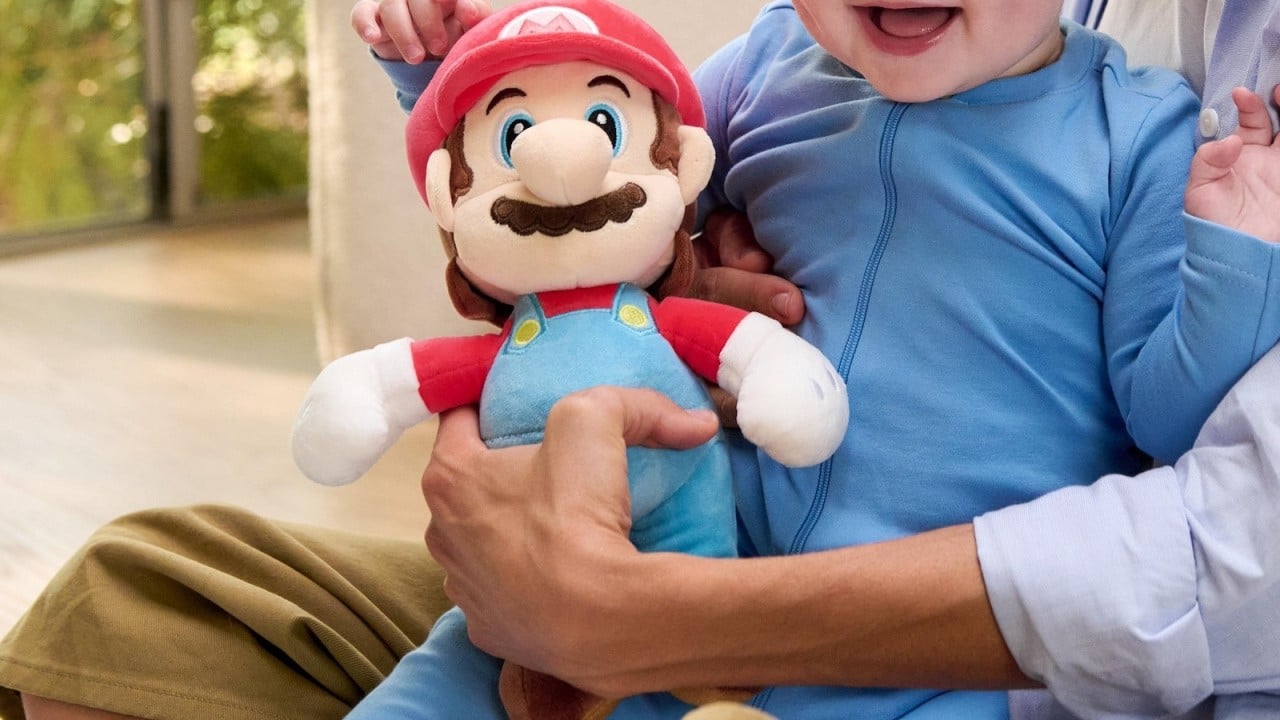
The central point of contention revolves around the depiction of hands and fingers in the promotional materials.
Online commenters were quick to point out several perceived inconsistencies: a thumb appearing at an improbable angle, as well as questionable finger lengths and placements when holding a toddler.
In recent years, hands have become a benchmark for identifying generative AI imagery, as algorithms frequently struggle to render them convincingly.
This history has fueled user claims labeling the campaign as "AI slop," while others defend Nintendo by suggesting human anatomy variation or simple post-production errors.
To objectively assess the claims, several AI image detection tools were utilized.
An analysis using the NoteGBT and Decopy detectors revealed that the "weird thumb" image was likely AI-generated with a probability ranging from 63.84% to 82%, though the remaining three images registered less than 1% AI probability.
In contrast, ZeroGBT, another analysis tool, indicated only a 3% chance of AI-generation for the same image, but suggested a 97% likelihood of digital editing.
These conflicting results highlight the difficulties in distinguishing between traditional digital manipulation and generative AI content.
It is imperative to note that digital editing using software like Adobe Photoshop is standard practice in the game industry for promotional assets, including nearly all Nintendo campaigns.
Post-shoot edits, such as retouching, compositing, and minor anatomical tweaks, are commonplace and may well account for the strange digit appearances in the recent visuals.
As of this report, Nintendo of America has yet to provide an official statement regarding the controversy.
This is not the first instance of similar speculation directed toward Nintendo.
In May, following online theories that Mario Kart World for Nintendo Switch 2 featured AI-generated in-game assets, a company spokesperson clarified to Eurogamer, "AI-generated images were not used in the development of Mario Kart World." Nintendo's long-standing approach, as reiterated by industry icon Shigeru Miyamoto, has been to favor traditional development methods, with Miyamoto previously stating that the company intends to "go in a different direction" compared to broader industry trends in AI-assisted game creation.
As AI image generation becomes increasingly sophisticated, scrutiny over marketing assets will likely persist, especially for companies of Nintendo's stature.
For now, the 'My Mario' collection remains highly anticipated ahead of its Western launch, while the debate over the origins of its promotional images underscores the ongoing challenges in digital content authenticity within the gaming industry.
Announced yesterday, the 'My Mario' collection is scheduled for release in Western markets next month, bringing with it a family-friendly marketing push that features images of parents and children enjoying the new products.
However, the campaign's visuals, released via the @NintendoStoreUS Twitter account, have come under intense scrutiny by social media users and industry observers, many of whom suggest signs of AI image generation.
The central point of contention revolves around the depiction of hands and fingers in the promotional materials.
Online commenters were quick to point out several perceived inconsistencies: a thumb appearing at an improbable angle, as well as questionable finger lengths and placements when holding a toddler.
In recent years, hands have become a benchmark for identifying generative AI imagery, as algorithms frequently struggle to render them convincingly.
This history has fueled user claims labeling the campaign as "AI slop," while others defend Nintendo by suggesting human anatomy variation or simple post-production errors.
To objectively assess the claims, several AI image detection tools were utilized.
An analysis using the NoteGBT and Decopy detectors revealed that the "weird thumb" image was likely AI-generated with a probability ranging from 63.84% to 82%, though the remaining three images registered less than 1% AI probability.
In contrast, ZeroGBT, another analysis tool, indicated only a 3% chance of AI-generation for the same image, but suggested a 97% likelihood of digital editing.
These conflicting results highlight the difficulties in distinguishing between traditional digital manipulation and generative AI content.
It is imperative to note that digital editing using software like Adobe Photoshop is standard practice in the game industry for promotional assets, including nearly all Nintendo campaigns.
Post-shoot edits, such as retouching, compositing, and minor anatomical tweaks, are commonplace and may well account for the strange digit appearances in the recent visuals.
As of this report, Nintendo of America has yet to provide an official statement regarding the controversy.
This is not the first instance of similar speculation directed toward Nintendo.
In May, following online theories that Mario Kart World for Nintendo Switch 2 featured AI-generated in-game assets, a company spokesperson clarified to Eurogamer, "AI-generated images were not used in the development of Mario Kart World." Nintendo's long-standing approach, as reiterated by industry icon Shigeru Miyamoto, has been to favor traditional development methods, with Miyamoto previously stating that the company intends to "go in a different direction" compared to broader industry trends in AI-assisted game creation.
As AI image generation becomes increasingly sophisticated, scrutiny over marketing assets will likely persist, especially for companies of Nintendo's stature.
For now, the 'My Mario' collection remains highly anticipated ahead of its Western launch, while the debate over the origins of its promotional images underscores the ongoing challenges in digital content authenticity within the gaming industry.