
In a recent Famitsu interview highlighted by GamesRadar, Shigeru Miyamoto detailed the origins of The Legend of Zelda and how Nintendo's hardware decisions shaped the game.
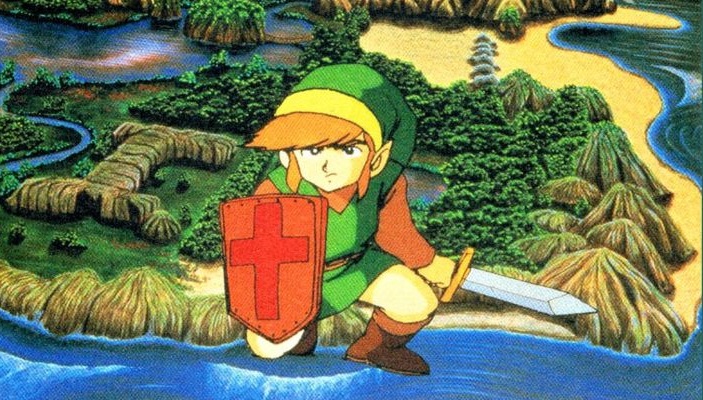
The original Zelda debuted in Japan for the Famicom Disk System in 1986 and arrived on the Nintendo Entertainment System (NES) in international markets in 1987.
Designed by Shigeru Miyamoto and Takashi Tezuka with music by Koji Kondo, the title helped establish Nintendo's approach to non-linear adventure design and persistent save data.
Miyamoto framed Zelda's creation against a mid-1980s Japanese market dominated by arcade-style and score-driven games.
He explained that Nintendo wanted to build a different kind of experience—one not focused on linear progress toward a single goal or on accumulating high scores, but on exploration and a continuing adventure that players could pause and return to later.
To accomplish that, Miyamoto said Nintendo aimed to implement save functionality that would let players keep progress directly on the media.
The company's technical answer was the Famicom Disk System, an add-on for the Japanese Famicom released in 1986 that used rewritable floppy-style disks and enabled in-game saving and larger game content.
Miyamoto said Nintendo took the technology it had developed to that point and combined it with the most compelling elements of Western RPGs to create a new kind of console experience.
He specifically noted that while PC RPGs such as the Wizardry series were gaining traction overseas, those large-scale role-playing structures were not yet common in Japan—so Nintendo adapted and reinterpreted those concepts for the Famicom.
The Legend of Zelda's game design reflected those priorities: persistent save data, a focus on a single playable protagonist, and an open-world structure that encouraged exploration rather than linear stage progression.
The original game went on to become a commercial and critical success, selling millions of copies worldwide and launching one of Nintendo's flagship franchises.
Miyamoto's interview also referenced other recent topics covered in Famitsu, including the company's remake announcements, which he addressed in a separate conversation.
For industry observers, the remarks underline how hardware choices—like the Famicom Disk System—and outside influences helped shape Nintendo's early design philosophy and set the stage for decades of Zelda entries across platforms from the NES and SNES to the Nintendo Switch and the eShop-era digital market.
The original Zelda debuted in Japan for the Famicom Disk System in 1986 and arrived on the Nintendo Entertainment System (NES) in international markets in 1987.
Designed by Shigeru Miyamoto and Takashi Tezuka with music by Koji Kondo, the title helped establish Nintendo's approach to non-linear adventure design and persistent save data.
Miyamoto framed Zelda's creation against a mid-1980s Japanese market dominated by arcade-style and score-driven games.
He explained that Nintendo wanted to build a different kind of experience—one not focused on linear progress toward a single goal or on accumulating high scores, but on exploration and a continuing adventure that players could pause and return to later.
To accomplish that, Miyamoto said Nintendo aimed to implement save functionality that would let players keep progress directly on the media.
The company's technical answer was the Famicom Disk System, an add-on for the Japanese Famicom released in 1986 that used rewritable floppy-style disks and enabled in-game saving and larger game content.
Miyamoto said Nintendo took the technology it had developed to that point and combined it with the most compelling elements of Western RPGs to create a new kind of console experience.
He specifically noted that while PC RPGs such as the Wizardry series were gaining traction overseas, those large-scale role-playing structures were not yet common in Japan—so Nintendo adapted and reinterpreted those concepts for the Famicom.
The Legend of Zelda's game design reflected those priorities: persistent save data, a focus on a single playable protagonist, and an open-world structure that encouraged exploration rather than linear stage progression.
The original game went on to become a commercial and critical success, selling millions of copies worldwide and launching one of Nintendo's flagship franchises.
Miyamoto's interview also referenced other recent topics covered in Famitsu, including the company's remake announcements, which he addressed in a separate conversation.
For industry observers, the remarks underline how hardware choices—like the Famicom Disk System—and outside influences helped shape Nintendo's early design philosophy and set the stage for decades of Zelda entries across platforms from the NES and SNES to the Nintendo Switch and the eShop-era digital market.