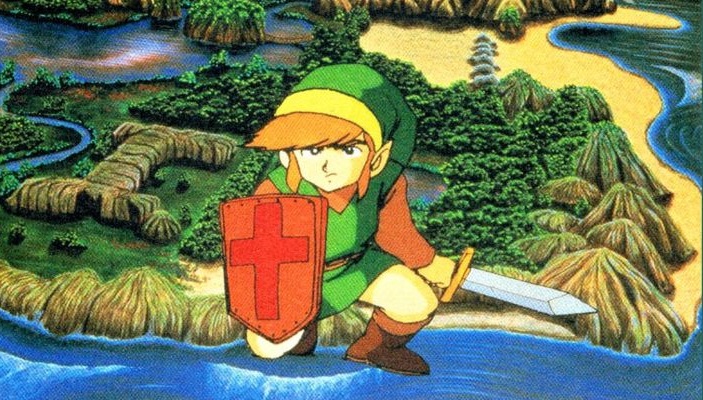
The Legend of Zelda series is one of Nintendo’s most enduring franchises, but one entry—Zelda II: The Adventure of Link—has always stood apart.
Released in 1987 in Japan and 1988 internationally for the Nintendo Entertainment System (NES), Zelda II introduced side-scrolling action and RPG mechanics that diverged from the top-down adventure formula of the original.
The game has been re-released across Nintendo platforms over the years, appearing on Virtual Console services and in the Nintendo Switch Online NES library.
New attention has returned to Zelda II after quotes from a 2003 Superplay Magazine interview with series creator Shigeru Miyamoto resurfaced.
In that interview, Miyamoto said the concept for Zelda II originated with him but the project was handled by a different development team.
He explained that, unlike his other projects that evolve during development, Zelda II largely stayed true to its initial concept and did not undergo the iterative improvements he typically expects.
Miyamoto described that outcome as a shortcoming and characterized the title as falling short of the series' mainline vision.
Miyamoto also positioned A Link to the Past—released for the Super Nintendo Entertainment System in 1991—as the series’ canonical follow-up to the original The Legend of Zelda, treating Zelda II as a narrative sidebar.
Rewriting his remarks in straightforward journalistic terms: Miyamoto acknowledged Zelda II was his idea but developed by another team, observed that it did not grow through development as his other projects often did, and concluded that the final product did not meet his standards.
He added that Nintendo views A Link to the Past as the proper sequel, with Zelda II functioning more as a side story that explores events after the first game.
Facts about the franchise help place that perspective in context.
The Legend of Zelda debuted in 1986 on Nintendo’s Famicom Disk System in Japan before expanding worldwide, and later landmark entries include Ocarina of Time (1998) on Nintendo 64 and The Legend of Zelda: Breath of the Wild (2017) on Nintendo Switch and Wii U.
Zelda II remains notable for its experiment with different gameplay systems and for the passionate, if smaller, cadre of fans who appreciate its distinctive take on Link’s adventures.
For players and preservationists, Zelda II’s status on Nintendo’s digital services ensures the game remains accessible for study and play, while Miyamoto’s candid reflections provide a rare developer perspective on a controversial chapter in a flagship franchise.
Released in 1987 in Japan and 1988 internationally for the Nintendo Entertainment System (NES), Zelda II introduced side-scrolling action and RPG mechanics that diverged from the top-down adventure formula of the original.
The game has been re-released across Nintendo platforms over the years, appearing on Virtual Console services and in the Nintendo Switch Online NES library.
New attention has returned to Zelda II after quotes from a 2003 Superplay Magazine interview with series creator Shigeru Miyamoto resurfaced.
In that interview, Miyamoto said the concept for Zelda II originated with him but the project was handled by a different development team.
He explained that, unlike his other projects that evolve during development, Zelda II largely stayed true to its initial concept and did not undergo the iterative improvements he typically expects.
Miyamoto described that outcome as a shortcoming and characterized the title as falling short of the series' mainline vision.
Miyamoto also positioned A Link to the Past—released for the Super Nintendo Entertainment System in 1991—as the series’ canonical follow-up to the original The Legend of Zelda, treating Zelda II as a narrative sidebar.
Rewriting his remarks in straightforward journalistic terms: Miyamoto acknowledged Zelda II was his idea but developed by another team, observed that it did not grow through development as his other projects often did, and concluded that the final product did not meet his standards.
He added that Nintendo views A Link to the Past as the proper sequel, with Zelda II functioning more as a side story that explores events after the first game.
Facts about the franchise help place that perspective in context.
The Legend of Zelda debuted in 1986 on Nintendo’s Famicom Disk System in Japan before expanding worldwide, and later landmark entries include Ocarina of Time (1998) on Nintendo 64 and The Legend of Zelda: Breath of the Wild (2017) on Nintendo Switch and Wii U.
Zelda II remains notable for its experiment with different gameplay systems and for the passionate, if smaller, cadre of fans who appreciate its distinctive take on Link’s adventures.
For players and preservationists, Zelda II’s status on Nintendo’s digital services ensures the game remains accessible for study and play, while Miyamoto’s candid reflections provide a rare developer perspective on a controversial chapter in a flagship franchise.