


Metroid Prime 4: Beyond Review – Retro Studios Delivers Stunning Return on Nintendo Switch 2
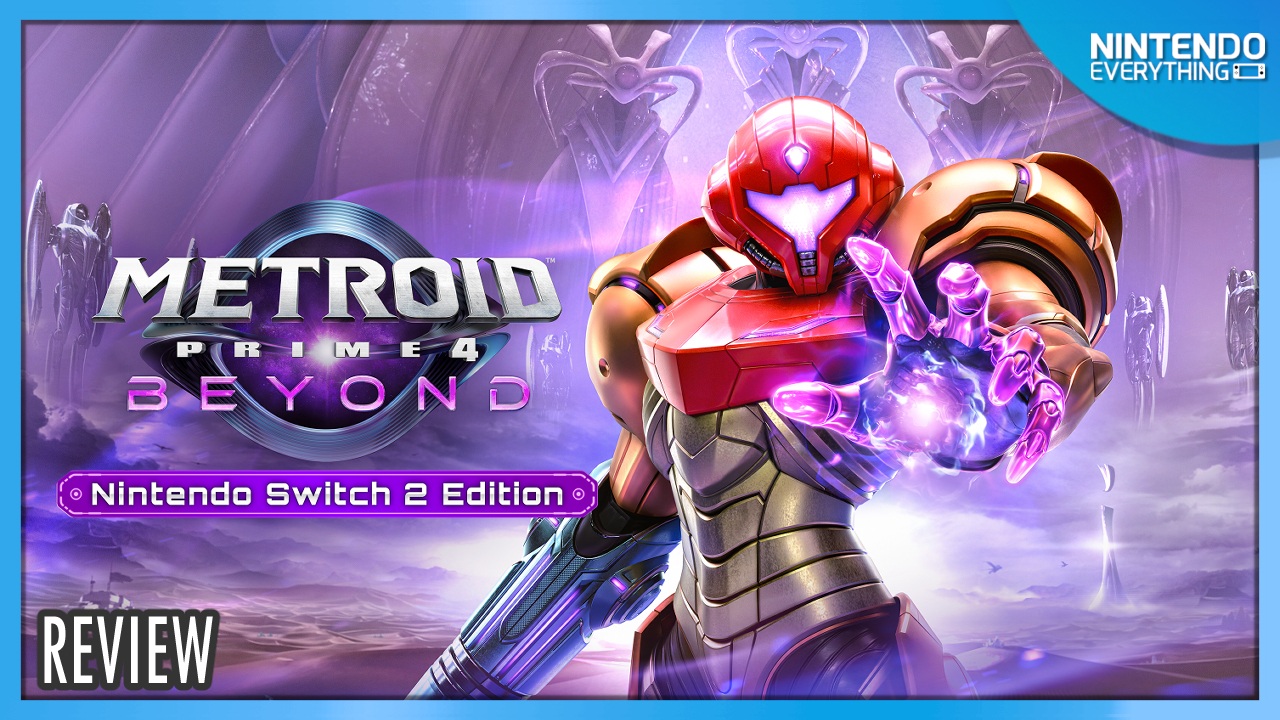
After nearly two decades of anticipation, Metroid Prime fans finally have reason to celebrate: Metroid Prime 4: Beyond released on December 4, 2025, delivering the long-awaited sequel to one of Nintendo’s most revered franchises.
Developed by Retro Studios and published by Nintendo, this title stands as both a showcase of the Nintendo Switch 2’s technical prowess and a bold evolution for the series.
Switch 2 players can experience the game in crisp 4K resolution at a consistent 60 frames per second, with support for up to 120 FPS, making it the sharpest and smoothest Metroid adventure to date.
The Metroid Prime series has long been lauded for blending first-person action, environmental storytelling, and a captivating sense of exploration through labyrinthine alien landscapes.
The original trilogy, debuting on the Nintendo GameCube and Wii platforms, set a high standard for narrative and gameplay, with players guiding bounty hunter Samus Aran through dangerous worlds brimming with hostile creatures and secrets.
Metroid Prime 4: Beyond keeps much of the franchise’s DNA intact while introducing new concepts and bold shifts.
Set on the visually rich planet Viewros, players journey through meticulously crafted biomes—ranging from lush jungles to treacherous volcanic regions.
Each area displays Retro Studios’ trademark attention to detail, from dynamic weather effects to interactive environments.
A standout moment is the transformation of the icy laboratory area, where activating a generator gradually thaws frozen machinery, a testament to the team’s immersive world-building.
A major shake-up comes with the introduction of Sol Valley, a desert overworld replacing the traditional elevator-linked zones, which Samus explores using a motorcycle—marking the series’ first instance of direct vehicle control.
This design decision aims to provide a more logically connected world, although the execution occasionally falters, offering breadth over depth and, at times, repetitive tasks such as collecting green crystals.
The inter-biome traversal, while visually impressive, lacks the dense, interconnected complexity fans have come to expect from previous games.
In a concerted effort to refresh storytelling, Metroid Prime 4: Beyond features more frequent cutscenes and fuller voice acting than any previous entry, but stops short of the narrative density found in Metroid: Other M.
Most familiar is the game’s newest antagonist, Sylux, who reappears from earlier Metroid Prime titles.
The primary narrative follows Samus as she joins the Galactic Federation to thwart the Space Pirates, only to be thrust by a mysterious artifact—alongside Sylux—to Viewros.
While the opening is action-packed and promising, Sylux’s presence fades until the closing act, leaving some story threads underdeveloped despite tantalizing hints for future sequels.
On the gameplay front, Retro Studios enhances Samus’ arsenal with new psychic abilities, such as the Control Beam and Psychic Bombs, expanding both combat tactics and environmental puzzle-solving.
These innovations, alongside classic upgrades and responsive controls, ensure the moment-to-moment play still delivers the exhilarating, tactile satisfaction the series is known for.
Boss encounters stand out as series-highlights, blending quick reflexes and thoughtful strategy.
Musically, Metroid Prime 4 is a triumph.
The atmospheric, choral-heavy soundtrack pays homage to the series’ roots while pushing in new, bolder directions, leveraging the audio power of the Switch 2 for thundering lows and delicate highs alike.
Character interaction is more prominent, with Samus occasionally accompanied by a squad of Galactic Federation troopers.
While these allies add camaraderie and humanize Samus through their reactions and radio chatter, the overall cast treads familiar archetypes and the increased guidance can dampen the traditional Metroid sensation of solitary, atmospheric exploration.
In summary, Metroid Prime 4: Beyond stands as an impressive technical achievement for the Nintendo Switch 2 and a welcome, though imperfect, evolution for the Metroid Prime lineage.
Its breathtaking environments, enhanced combat, and haunting soundtrack are undeniable strengths.
Some new ideas—like the more linear world design and heightened character presence—do not always organically blend with the series’ proven formula, but the core remains strong.
For long-standing fans and newcomers alike, Metroid Prime 4: Beyond reaffirms Samus Aran’s place as one of gaming’s most iconic heroes and ensures the Metroid legacy endures on Nintendo’s latest hardware.
After nearly two decades of anticipation, Metroid Prime fans finally have reason to celebrate: Metroid Prime 4: Beyond released on December 4, 2025, delivering the long-awaited sequel to one of Nintendo’s most revered franchises.
Developed by Retro Studios and published by Nintendo, this title stands as both a showcase of the Nintendo Switch 2’s technical prowess and a bold evolution for the series.
Switch 2 players can experience the game in crisp 4K resolution at a consistent 60 frames per second, with support for up to 120 FPS, making it the sharpest and smoothest Metroid adventure to date.
The Metroid Prime series has long been lauded for blending first-person action, environmental storytelling, and a captivating sense of exploration through labyrinthine alien landscapes.
The original trilogy, debuting on the Nintendo GameCube and Wii platforms, set a high standard for narrative and gameplay, with players guiding bounty hunter Samus Aran through dangerous worlds brimming with hostile creatures and secrets.
Metroid Prime 4: Beyond keeps much of the franchise’s DNA intact while introducing new concepts and bold shifts.
Set on the visually rich planet Viewros, players journey through meticulously crafted biomes—ranging from lush jungles to treacherous volcanic regions.
Each area displays Retro Studios’ trademark attention to detail, from dynamic weather effects to interactive environments.
A standout moment is the transformation of the icy laboratory area, where activating a generator gradually thaws frozen machinery, a testament to the team’s immersive world-building.
A major shake-up comes with the introduction of Sol Valley, a desert overworld replacing the traditional elevator-linked zones, which Samus explores using a motorcycle—marking the series’ first instance of direct vehicle control.
This design decision aims to provide a more logically connected world, although the execution occasionally falters, offering breadth over depth and, at times, repetitive tasks such as collecting green crystals.
The inter-biome traversal, while visually impressive, lacks the dense, interconnected complexity fans have come to expect from previous games.
In a concerted effort to refresh storytelling, Metroid Prime 4: Beyond features more frequent cutscenes and fuller voice acting than any previous entry, but stops short of the narrative density found in Metroid: Other M.
Most familiar is the game’s newest antagonist, Sylux, who reappears from earlier Metroid Prime titles.
The primary narrative follows Samus as she joins the Galactic Federation to thwart the Space Pirates, only to be thrust by a mysterious artifact—alongside Sylux—to Viewros.
While the opening is action-packed and promising, Sylux’s presence fades until the closing act, leaving some story threads underdeveloped despite tantalizing hints for future sequels.
On the gameplay front, Retro Studios enhances Samus’ arsenal with new psychic abilities, such as the Control Beam and Psychic Bombs, expanding both combat tactics and environmental puzzle-solving.
These innovations, alongside classic upgrades and responsive controls, ensure the moment-to-moment play still delivers the exhilarating, tactile satisfaction the series is known for.
Boss encounters stand out as series-highlights, blending quick reflexes and thoughtful strategy.
Musically, Metroid Prime 4 is a triumph.
The atmospheric, choral-heavy soundtrack pays homage to the series’ roots while pushing in new, bolder directions, leveraging the audio power of the Switch 2 for thundering lows and delicate highs alike.
Character interaction is more prominent, with Samus occasionally accompanied by a squad of Galactic Federation troopers.
While these allies add camaraderie and humanize Samus through their reactions and radio chatter, the overall cast treads familiar archetypes and the increased guidance can dampen the traditional Metroid sensation of solitary, atmospheric exploration.
In summary, Metroid Prime 4: Beyond stands as an impressive technical achievement for the Nintendo Switch 2 and a welcome, though imperfect, evolution for the Metroid Prime lineage.
Its breathtaking environments, enhanced combat, and haunting soundtrack are undeniable strengths.
Some new ideas—like the more linear world design and heightened character presence—do not always organically blend with the series’ proven formula, but the core remains strong.
For long-standing fans and newcomers alike, Metroid Prime 4: Beyond reaffirms Samus Aran’s place as one of gaming’s most iconic heroes and ensures the Metroid legacy endures on Nintendo’s latest hardware.