
Lego has officially taken the spotlight at CES 2026 with the announcement of its groundbreaking 2x4 smart brick, hailed by the company as the "most significant evolution" in its product line since the debut of the iconic Minifigure in 1978.
As the centerpiece of Lego's "smart play" initiative, this state-of-the-art component is set to first appear in new Star Wars sets arriving in March, with plans for broader expansion into other highly anticipated lines, including the upcoming Pokémon collection scheduled for release this year.
According to detailed reporting by The Verge, Lego’s smart brick marks an unprecedented leap in interactive play.
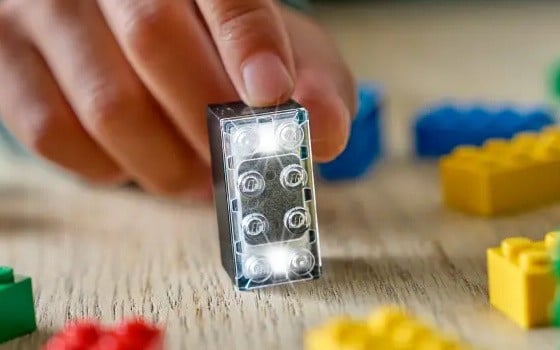
It features a fully integrated miniature computer built into the traditional 2x4 Lego brick.
With its custom ASIC chip smaller than a single Lego stud, and firmware that users can update via a dedicated smartphone app, the smart brick is designed for both longevity and adaptability.
Lego confirms that each smart brick comes equipped with a rechargeable battery capable of retaining performance even after prolonged inactivity and is compatible with wireless charging pads capable of energizing multiple bricks simultaneously.
The new technology allows the brick to detect near-field communication (NFC) smart tags contained within compatible Lego tiles and minifigures.
This enhancement enables immersive features in playsets, such as activating lights, sounds, or even unique character interactions.
For instance, the first Star Wars sets to include the smart brick will allow fans to experience effects like humming lightsabers, illuminated blasters, and authentic starship sounds, further blurring the lines between physical and digital play.
Expanding on the smart brick’s interactive capabilities, Lego shared that it includes light and sound modules, as well as advanced sensors capable of detecting environmental conditions such as movement, tilting, and gestures.
Using Bluetooth mesh networking, smart bricks can communicate with each other to create coordinated effects—such as Star Wars ships triggering battle sequences, or music playing when a minifigure like Emperor Palpatine takes his throne.
The technology also opens possibilities for race sets, where smart bricks could detect which car crosses the finish line first and respond with context-aware audio like engine noises or dramatic crashes if a vehicle flips over.
Lego Group spokesperson Jessica Benson explained that the brick integrates a microphone used only as a “virtual button” and sensory input for play mechanics, such as blowing out virtual candles, assuring users that the product contains neither AI nor a camera.
This distinction maintains privacy and aligns with Lego’s reputation for safe, family-friendly design.
With enhanced technology inevitably comes increased costs, meaning these advanced playsets may carry higher price tags.
Lego’s partnership with Nintendo has already delivered innovative sets for IPs like Animal Crossing and The Legend of Zelda via the Nintendo eShop, demonstrating the potential for this new technology to reach a wide array of themed sets.
As the smart brick becomes a foundational element in upcoming collections such as Pokémon, Lego continues to set the standard for creative and connected play in the modern era.
As the centerpiece of Lego's "smart play" initiative, this state-of-the-art component is set to first appear in new Star Wars sets arriving in March, with plans for broader expansion into other highly anticipated lines, including the upcoming Pokémon collection scheduled for release this year.
According to detailed reporting by The Verge, Lego’s smart brick marks an unprecedented leap in interactive play.
It features a fully integrated miniature computer built into the traditional 2x4 Lego brick.
With its custom ASIC chip smaller than a single Lego stud, and firmware that users can update via a dedicated smartphone app, the smart brick is designed for both longevity and adaptability.
Lego confirms that each smart brick comes equipped with a rechargeable battery capable of retaining performance even after prolonged inactivity and is compatible with wireless charging pads capable of energizing multiple bricks simultaneously.
The new technology allows the brick to detect near-field communication (NFC) smart tags contained within compatible Lego tiles and minifigures.
This enhancement enables immersive features in playsets, such as activating lights, sounds, or even unique character interactions.
For instance, the first Star Wars sets to include the smart brick will allow fans to experience effects like humming lightsabers, illuminated blasters, and authentic starship sounds, further blurring the lines between physical and digital play.
Expanding on the smart brick’s interactive capabilities, Lego shared that it includes light and sound modules, as well as advanced sensors capable of detecting environmental conditions such as movement, tilting, and gestures.
Using Bluetooth mesh networking, smart bricks can communicate with each other to create coordinated effects—such as Star Wars ships triggering battle sequences, or music playing when a minifigure like Emperor Palpatine takes his throne.
The technology also opens possibilities for race sets, where smart bricks could detect which car crosses the finish line first and respond with context-aware audio like engine noises or dramatic crashes if a vehicle flips over.
Lego Group spokesperson Jessica Benson explained that the brick integrates a microphone used only as a “virtual button” and sensory input for play mechanics, such as blowing out virtual candles, assuring users that the product contains neither AI nor a camera.
This distinction maintains privacy and aligns with Lego’s reputation for safe, family-friendly design.
With enhanced technology inevitably comes increased costs, meaning these advanced playsets may carry higher price tags.
Lego’s partnership with Nintendo has already delivered innovative sets for IPs like Animal Crossing and The Legend of Zelda via the Nintendo eShop, demonstrating the potential for this new technology to reach a wide array of themed sets.
As the smart brick becomes a foundational element in upcoming collections such as Pokémon, Lego continues to set the standard for creative and connected play in the modern era.