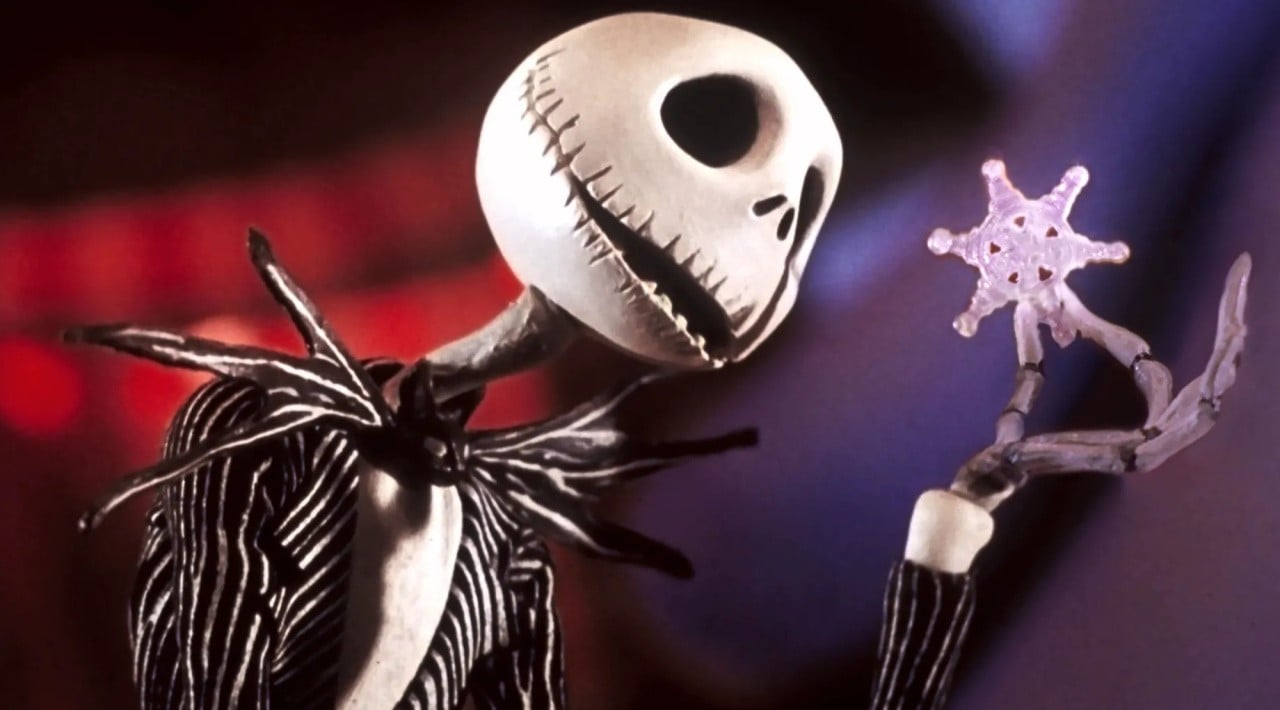
Ken Christiansen’s concept work for an unreleased A Nightmare Before Christmas game reveals an alternative path Disney Interactive almost pursued in the early 2000s — one that ultimately gave way to Capcom’s PlayStation 2 release The Nightmare Before Christmas: Oogie’s Revenge.
Christiansen, who worked at Disney Interactive from 2000–2004, shared sketches and development recollections that illuminate why several internal pitches never reached market and how Capcom came to hold the game rights.
Christiansen described two separate internal concepts for a Nightmare-based game.
One was his own narrative-driven pitch in which Jack Skellington returns to a forest of holiday-themed trees only to find realms corrupted and villains team up; Jack and Sally’s children — appearing in Christiansen’s portfolio as characters named Nick and Sandy — are kidnapped, forcing the duo to team up and traverse multiple themed lands.
The other concept, led by artist-producer Chris Takami (known for work on the Tim Burton web animation Stain Boy), focused on rhythm and music-based mechanics.
According to Christiansen, Disney’s leadership repeatedly prioritized projects tied to active film or major promotional properties and set tight production windows.
He said executives were reluctant to greenlight original game concepts without an accompanying film, and commonly allocated roughly 18 months from start to ship — with about three of those months absorbed by concept selection and developer onboarding — leaving limited time for full development.
Christiansen recounted that after Disneyland’s Haunted Mansion was overlaid with Nightmare Before Christmas characters in 2001, internal interest in a game rose.
Rather than advancing the existing in-house designs, he said Disney negotiated a bundled deal with Capcom: Capcom wanted a Mickey Mouse project, and Disney packaged the Nightmare license alongside it.
Capcom developed Oogie’s Revenge using its in-house engine; the PlayStation 2 action title released in Japan in 2004 and reached Europe and North America in 2005.
Takami is credited in Oogie’s Revenge’s production credits as Disney’s senior producer, which suggests elements of earlier rhythm-oriented work influenced the finished product.
Critical response to Oogie’s Revenge at launch was mixed.
Reviewers noted the game’s technical polish but criticized repetitive combat, camera problems, and limited length.
Meanwhile, a separate handheld tie-in, The Nightmare Before Christmas: The Pumpkin King, appeared on Game Boy Advance in the mid-2000s.
Christiansen remains candid that his pitch was sidelined and believes the finished Capcom title fell short of what a more ambitious, internally driven project might have achieved.
His surviving concept art offers a rare glimpse into an alternate sequel that never materialized and highlights the constraints and licensing decisions that shaped licensed game development during the PlayStation 2 and Game Boy Advance era.
Christiansen, who worked at Disney Interactive from 2000–2004, shared sketches and development recollections that illuminate why several internal pitches never reached market and how Capcom came to hold the game rights.
Christiansen described two separate internal concepts for a Nightmare-based game.
One was his own narrative-driven pitch in which Jack Skellington returns to a forest of holiday-themed trees only to find realms corrupted and villains team up; Jack and Sally’s children — appearing in Christiansen’s portfolio as characters named Nick and Sandy — are kidnapped, forcing the duo to team up and traverse multiple themed lands.
The other concept, led by artist-producer Chris Takami (known for work on the Tim Burton web animation Stain Boy), focused on rhythm and music-based mechanics.
According to Christiansen, Disney’s leadership repeatedly prioritized projects tied to active film or major promotional properties and set tight production windows.
He said executives were reluctant to greenlight original game concepts without an accompanying film, and commonly allocated roughly 18 months from start to ship — with about three of those months absorbed by concept selection and developer onboarding — leaving limited time for full development.
Christiansen recounted that after Disneyland’s Haunted Mansion was overlaid with Nightmare Before Christmas characters in 2001, internal interest in a game rose.
Rather than advancing the existing in-house designs, he said Disney negotiated a bundled deal with Capcom: Capcom wanted a Mickey Mouse project, and Disney packaged the Nightmare license alongside it.
Capcom developed Oogie’s Revenge using its in-house engine; the PlayStation 2 action title released in Japan in 2004 and reached Europe and North America in 2005.
Takami is credited in Oogie’s Revenge’s production credits as Disney’s senior producer, which suggests elements of earlier rhythm-oriented work influenced the finished product.
Critical response to Oogie’s Revenge at launch was mixed.
Reviewers noted the game’s technical polish but criticized repetitive combat, camera problems, and limited length.
Meanwhile, a separate handheld tie-in, The Nightmare Before Christmas: The Pumpkin King, appeared on Game Boy Advance in the mid-2000s.
Christiansen remains candid that his pitch was sidelined and believes the finished Capcom title fell short of what a more ambitious, internally driven project might have achieved.
His surviving concept art offers a rare glimpse into an alternate sequel that never materialized and highlights the constraints and licensing decisions that shaped licensed game development during the PlayStation 2 and Game Boy Advance era.