Introduction
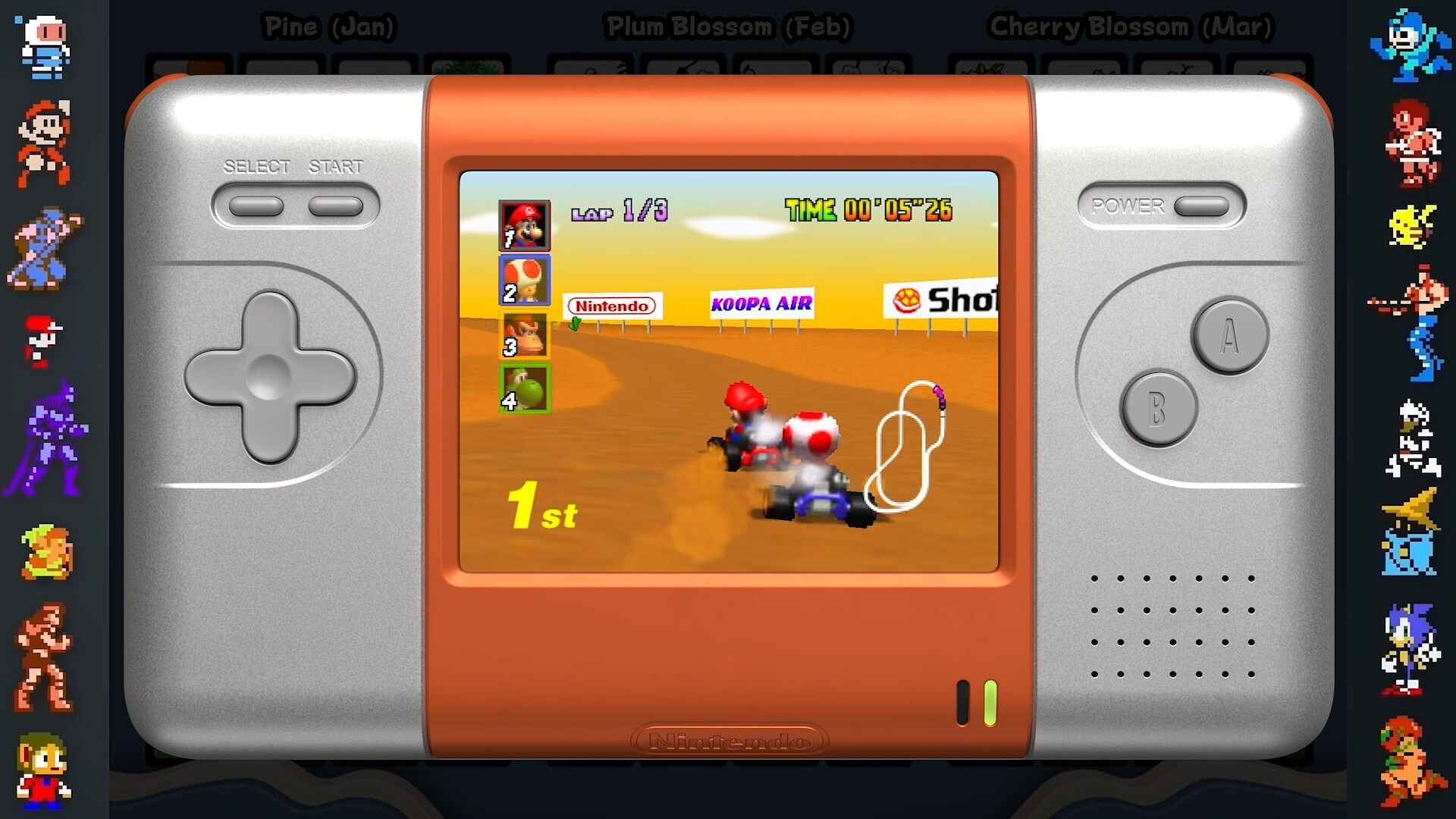
Project Iris was Nintendo's internal effort in the early 2000s to develop a next‑generation handheld that would succeed the Game Boy Advance.
Built under the direction of veteran engineer Satoru Okada beginning in 2002, Iris was conceived as a cost‑efficient, single‑screen portable with roughly four times the processing power of the Game Boy Advance and improved battery endurance.
The project later became a pivotal part of Nintendo's pivot to the dual‑screen Nintendo DS after competitive pressure from Sony's PlayStation Portable (PSP).
What was Project Iris?
Documentation and interviews with former Nintendo staff describe Iris as a compact, single‑screen unit targeted at delivering near N64‑class visuals on a handheld platform.
The design prioritized manufacturing affordability and longer battery life relative to the DS by omitting features such as touch input and Wi‑Fi in order to maintain a simpler hardware profile.
Iris was also intended to provide cleaner backward compatibility with Game Boy Advance titles and include built‑in wireless local multiplayer, avoiding reliance on link cables or external adapters.
Why Nintendo changed course
Sony unveiled the PSP at E3 2003, a moment that significantly altered Nintendo's market calculus.
Contemporary reports noted a sharp market reaction when Sony revealed its handheld, and members of Nintendo leadership reassessed the company’s approach to portable hardware.
Hiroshi Yamauchi, Nintendo's former president who remained an influential board figure after stepping down in 2002, regarded a direct power race with Sony as unwinnable.
He directed Nintendo to abandon Iris in favor of a new dual‑screen concept codenamed Project Nitro, which ultimately launched as the Nintendo DS.
Satoru Iwata later summarized the transition in public interviews by explaining that Iris represented the next‑generation device Nintendo was exploring to follow the Game Boy Advance, and that the work on Iris formed the basis for Nitro, which became the DS.
He framed Iris as the engineering foundation whose objectives were realized across the subsequent project timeline.
Development timeline and outcome
Because Nintendo accelerated development to meet market timing around late 2004, many Nitro/DS features were grafted onto Iris foundations in under a year.
The Nintendo DS shipped in North America on November 21, 2004, and in Japan on December 2, 2004.
The gamble produced one of gaming’s biggest commercial successes: the Nintendo DS family went on to sell approximately 154 million units worldwide, becoming one of the best‑selling game systems in history.
Elements of Okada’s original vision resurfaced later with smaller hardware releases; work associated with Iris helped inform designs that led to the Game Boy Micro, which sold around two million units.
Legacy and public disclosure
Project Iris remained largely confidential until details surfaced in public interviews and archival disclosures.
A notable public acknowledgement came in 2009 during an Iwata Asks interview, and retrospective coverage — including analysis from outlets and video features such as Did You Know Gaming — has since traced how Iris evolved into the Nintendo DS.
The episode illustrates how strategic decisions at the executive level and rapid competitive developments can redirect hardware strategy, producing solutions that reshape a generation of portable gaming.