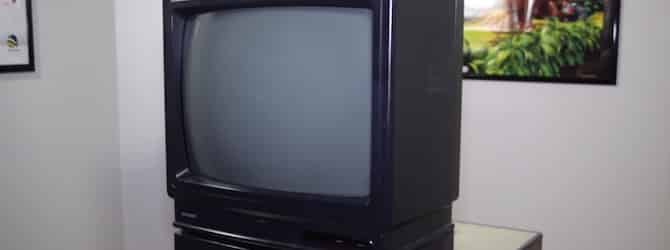
Nintendo and Sharp have a storied history of hardware innovation, having collaborated on several pivotal projects in the gaming industry. From the early days of the Game & Watch to the technological advancements found in the Nintendo 3DS, these two companies have often combined their expertise to deliver unique devices to fans worldwide. One of the most intriguing—and lesser-known—outcomes of this partnership was the Sharp Nintendo Television (model 19SV111), an ambitious hybrid product that merged the functionality of a traditional television with the gaming prowess of the legendary Nintendo Entertainment System (NES).
The Sharp Nintendo Television debuted in North America in 1989, targeting consumers looking for a convenient way to enjoy NES games without the need for a separate console. The product was essentially a 19-inch CRT television with a fully integrated NES, offering a streamlined alternative to the traditional setup. This all-in-one unit aimed to simplify entertainment centers and attract gamers who valued convenience and space.
Norman Caruso, known as The Gaming Historian, has researched the Sharp Nintendo Television extensively. He explained that while the concept was innovative, the final product struggled to win over consumers. Factors such as a bulky design and a considerably higher price point compared to separate TVs and NES consoles discouraged widespread adoption. Caruso noted that despite the novel integration, customers balked at investing in a TV that cost significantly more than standard options, especially considering the rapid advancement of home electronics during that period.
The commercial fate of the Sharp Nintendo Television reflected these challenges. Released at a premium price, the 19SV111 lasted only about six months on North American store shelves before being quietly discontinued. Retailers reported lackluster interest, and the model became a rarity shortly after its introduction. This endeavor, however, was not Nintendo and Sharp’s first attempt at blending gaming hardware into television sets. In Japan, Sharp previously released the C1 TV, which featured a built-in Famicom. Later, Sharp also produced a television integrated with the Super Famicom (SNES), although both of these variants remained exclusive to the Japanese market.
Despite its commercial shortcomings, the Sharp Nintendo Television stands as a testament to the spirit of collaboration and experimentation that has defined Nintendo’s hardware journey. Today, collector interest in the 19SV111 has surged, with enthusiasts recognizing its place in the broader narrative of Nintendo’s approach to making gaming more accessible and integrated with everyday technology. The legacy of this unique partnership continues to resonate in industry conversations about innovation and cross-brand integration, echoing through Nintendo’s ongoing evolution with modern hardware platforms like the Nintendo Switch.
For gaming historians and hardware aficionados, the Sharp Nintendo Television is more than just a curiosity—it’s a reminder of the risks and creative efforts that have driven the video game hardware market for decades.
The Sharp Nintendo Television: A Rare Collaboration Between Nintendo and Sharp That Shaped Gaming Hardware
Nintendo News Hub
Related Topics
Explore more articles about these topics:
Source: NintendoInsider