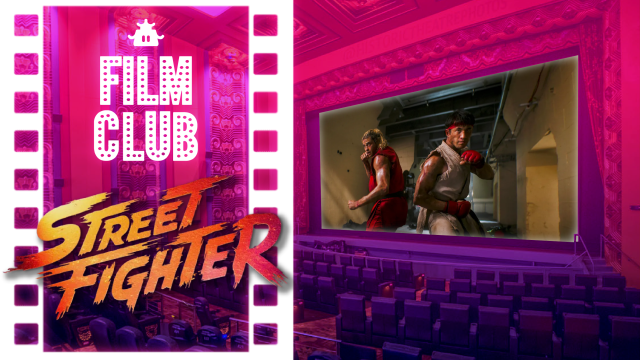





The new Street Fighter live-action film, produced by Paramount and Legendary in partnership with Capcom and directed by Kitao Sakurai, leans hard into the franchise’s signature spectacle.
Drawing on decades of source material — from the original 1994 live-action Street Fighter to the acclaimed Street Fighter II: The Animated Movie and later adaptations such as Street Fighter: The Legend of Chun-Li — the film prioritizes faithful visual callbacks, big personalities, and set-piece fights over grounded dramatic realism.
Cast and adaptation: The picture centers on Ryu and Ken, played by Andrew Koji and Noah Centineo respectively, with Callina Liang as Chun-Li and David Dastmalchian as M.
Bison.
The ensemble also includes numerous World Warriors from the games, represented by actors such as Cody Rhodes (Guile), Joe "Roman Reigns" Anoa'i (Akuma), Jason Momoa (Blanka), Curtis "50 Cent" Jackson (Balrog), Olivier Richters (Zangief), Vidyut Jammwal (Dhalsim), Mel Jarnson (Cammy), Andrew Schulz (Dan), and others.
Tone and faithfulness: The film is unapologetically over-the-top, prioritizing the franchise’s gonzo energy and iconic costumes.
In journalistic terms, the production returns the franchise to its larger-than-life roots rather than attempting a grounded reinterpretation: it celebrates the spectacle, camp, and recognizable move set of the games.
One reviewer summarized this approach as delivering 'major-league butt-kicking' while faithfully reproducing the characters’ classic looks and set pieces.
Story and characterization: The narrative frames Ryu’s internal struggle around the Dark Hado and Akuma’s attraction to that power, establishing stakes that pull other fighters back into a new World Warrior tournament.
The film depicts Ryu as brooding and conflicted and Ken as flamboyant and public-facing, while Chun-Li functions as a determined emissary working against M.
Bison’s plans.
Many characters are portrayed close to their video-game counterparts, and the filmmakers opted to use the franchise’s recognizable costumes and signature moves on screen.
Action and choreography: Fight sequences mix anime-inspired animation with live-action choreography, putting classic techniques such as Hadoukens, Shoryukens, and Flash Kicks on display.
Several multi-character battles and one-on-one showdowns aim to recreate the kinetic energy fans expect.
Production choices and reception notes: The film leans into a 1990s aesthetic in design and soundtrack, and it embraces sex appeal and macho humor consistent with long-running franchise portrayals — choices that some viewers will applaud for fidelity and others may critique.
The movie also ends on a cliffhanger, setting up further chapters if the film performs well with audiences.
Platform context: Street Fighter’s presence across platforms is long-standing — the series has appeared on Nintendo hardware since the Super Nintendo era and continues to be accessible to players via modern releases and collections on platforms such as the Nintendo Switch and digital storefronts like the eShop.
Bottom line: For viewers looking for a faithful, high-energy adaptation that prioritizes character recognition and fight spectacle over somber reinvention, the film delivers an enthusiastic, camp-tilted interpretation of Capcom’s World Warriors.
It will likely appeal to fans who want to see the franchise’s iconic moves and costumes realized in live action.