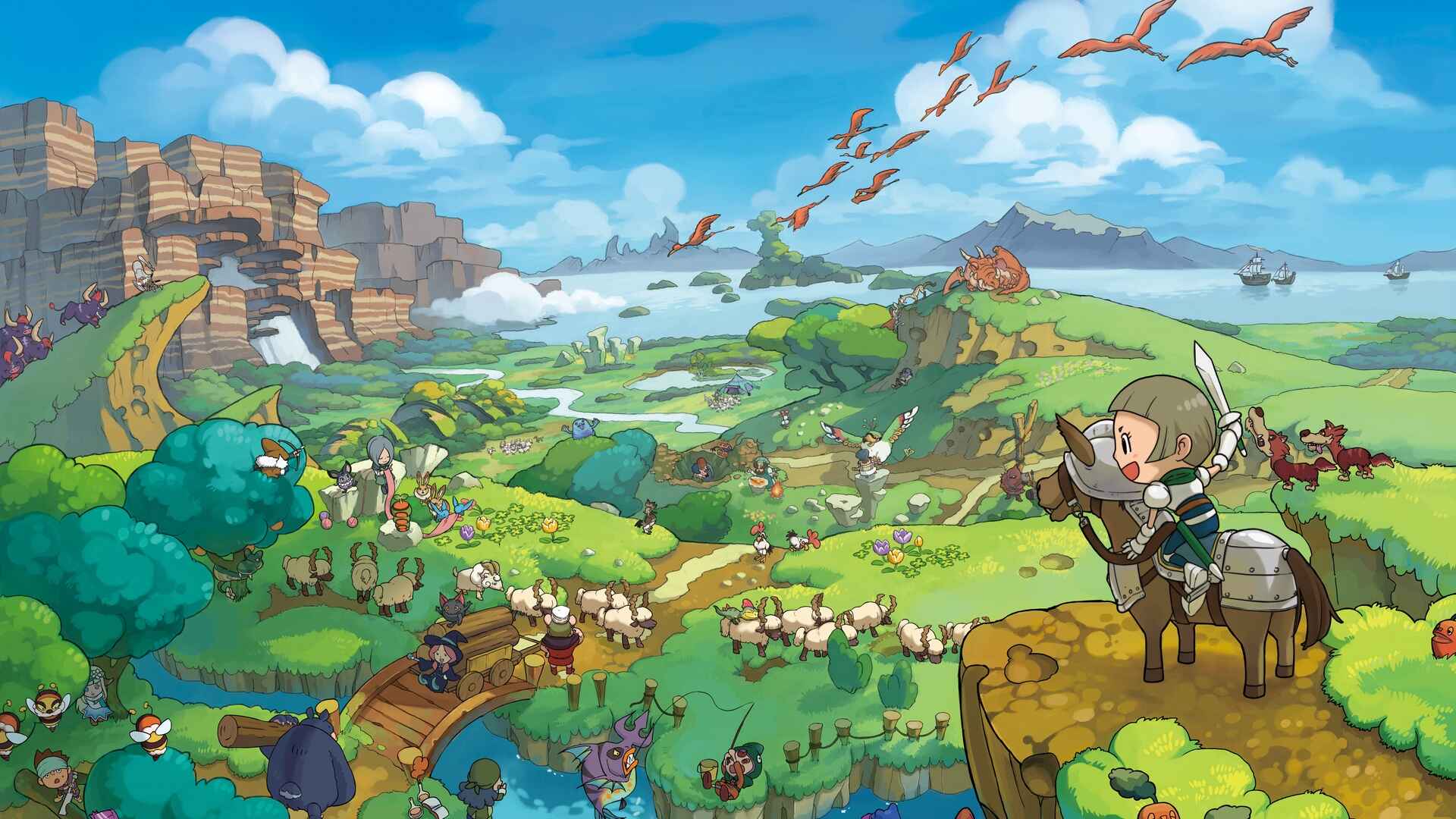
Fantasy Life on Nintendo 3DS landed as a distinct entry in LEVEL-5’s catalog that merged life-simulation, action-RPG mechanics and robust localization for Western audiences.
Developed by LEVEL-5—the studio behind Professor Layton and Ni no Kuni—Fantasy Life first launched in Japan in 2012 and was localized for Western markets in 2014.
The title pairs a broad class system with a whimsical art direction and contributions from composer Nobuo Uematsu and illustrator Yoshitaka Amano.
Gameplay and design
Fantasy Life centers on player choice and character progression across a dozen distinct 'Lives'—classes that include Paladin, Mercenary, Hunter, Magician, Miner, Woodcutter, Angler, Cook, Blacksmith, Carpenter, Tailor and Alchemist.
LEVEL-5 positioned those Lives as paths by which characters can contribute to the game world, emphasizing flexibility: players can change Lives later and pursue different skills, while core abilities such as dashing and sneaking improve through play.
The game combines quest-driven story progression with optional requests, challenges and town activities.
Players earn three in-game currencies—Bliss, Stars and Dosh—to expand inventory, increase Life rank and purchase items.
Life ranks progress from Novice toward Legend, unlocking new techniques, recipes or crafting efficiencies tied to each Life.
Social and technical features
Fantasy Life supports local and online multiplayer, letting friends join quests and exchange items through the Castele Guild Office.
StreetPass integration lets players encounter others’ avatars in-game, and Link Mode can share progress notifications between friends when playing offline.
The title also includes a day-night cycle and housing customization, inviting extended play and social interaction on the Nintendo 3DS platform.
Localization, audio and art
LEVEL-5’s Western release received praise for its translation and writing, which preserved the game’s humor and emotional beats.
Musically, the score features work by veteran composer Nobuo Uematsu, while character and promotional art include illustrations by Yoshitaka Amano—both contributors with long pedigrees in Japanese game development and anime-influenced art.
Reception and legacy
Upon its Western release, Fantasy Life was widely described as engrossing and approachable; early impressions frequently noted extended sessions where players lost track of time due to the game’s varied systems and charm.
The title arrived during a period of strong commercial momentum for LEVEL-5—anchored in part by successes such as the Yo-kai Watch franchise in Japan—and remains one of the studio’s notable 3DS-era experiments in blending life-sim and RPG design.
For Nintendo 3DS owners, Fantasy Life represents a polished, social-friendly experience that highlights LEVEL-5’s strengths in character-driven design, localization and cross-genre gameplay.
Developed by LEVEL-5—the studio behind Professor Layton and Ni no Kuni—Fantasy Life first launched in Japan in 2012 and was localized for Western markets in 2014.
The title pairs a broad class system with a whimsical art direction and contributions from composer Nobuo Uematsu and illustrator Yoshitaka Amano.
Gameplay and design
Fantasy Life centers on player choice and character progression across a dozen distinct 'Lives'—classes that include Paladin, Mercenary, Hunter, Magician, Miner, Woodcutter, Angler, Cook, Blacksmith, Carpenter, Tailor and Alchemist.
LEVEL-5 positioned those Lives as paths by which characters can contribute to the game world, emphasizing flexibility: players can change Lives later and pursue different skills, while core abilities such as dashing and sneaking improve through play.
The game combines quest-driven story progression with optional requests, challenges and town activities.
Players earn three in-game currencies—Bliss, Stars and Dosh—to expand inventory, increase Life rank and purchase items.
Life ranks progress from Novice toward Legend, unlocking new techniques, recipes or crafting efficiencies tied to each Life.
Social and technical features
Fantasy Life supports local and online multiplayer, letting friends join quests and exchange items through the Castele Guild Office.
StreetPass integration lets players encounter others’ avatars in-game, and Link Mode can share progress notifications between friends when playing offline.
The title also includes a day-night cycle and housing customization, inviting extended play and social interaction on the Nintendo 3DS platform.
Localization, audio and art
LEVEL-5’s Western release received praise for its translation and writing, which preserved the game’s humor and emotional beats.
Musically, the score features work by veteran composer Nobuo Uematsu, while character and promotional art include illustrations by Yoshitaka Amano—both contributors with long pedigrees in Japanese game development and anime-influenced art.
Reception and legacy
Upon its Western release, Fantasy Life was widely described as engrossing and approachable; early impressions frequently noted extended sessions where players lost track of time due to the game’s varied systems and charm.
The title arrived during a period of strong commercial momentum for LEVEL-5—anchored in part by successes such as the Yo-kai Watch franchise in Japan—and remains one of the studio’s notable 3DS-era experiments in blending life-sim and RPG design.
For Nintendo 3DS owners, Fantasy Life represents a polished, social-friendly experience that highlights LEVEL-5’s strengths in character-driven design, localization and cross-genre gameplay.