Factorio Nintendo Switch 2 Edition Review: Excellence in Portable Automation
The Nintendo Switch 2’s launch year was a milestone for both fans of Nintendo’s flagship franchises and enthusiasts of technically ambitious indie titles.
Alongside notable Nintendo launches like The Legend of Zelda: Breath of the Wild and Kirby and the Forgotten Land, and third-party successes such as No Man’s Sky, Wube Software’s Factorio stands out as a testament to expert optimization and gameplay innovation on Nintendo’s new hardware.
Originally known as a deeply complex simulation on PC, Factorio’s transition to consoles demanded significant technical ingenuity—especially given its CPU-heavy requirements.
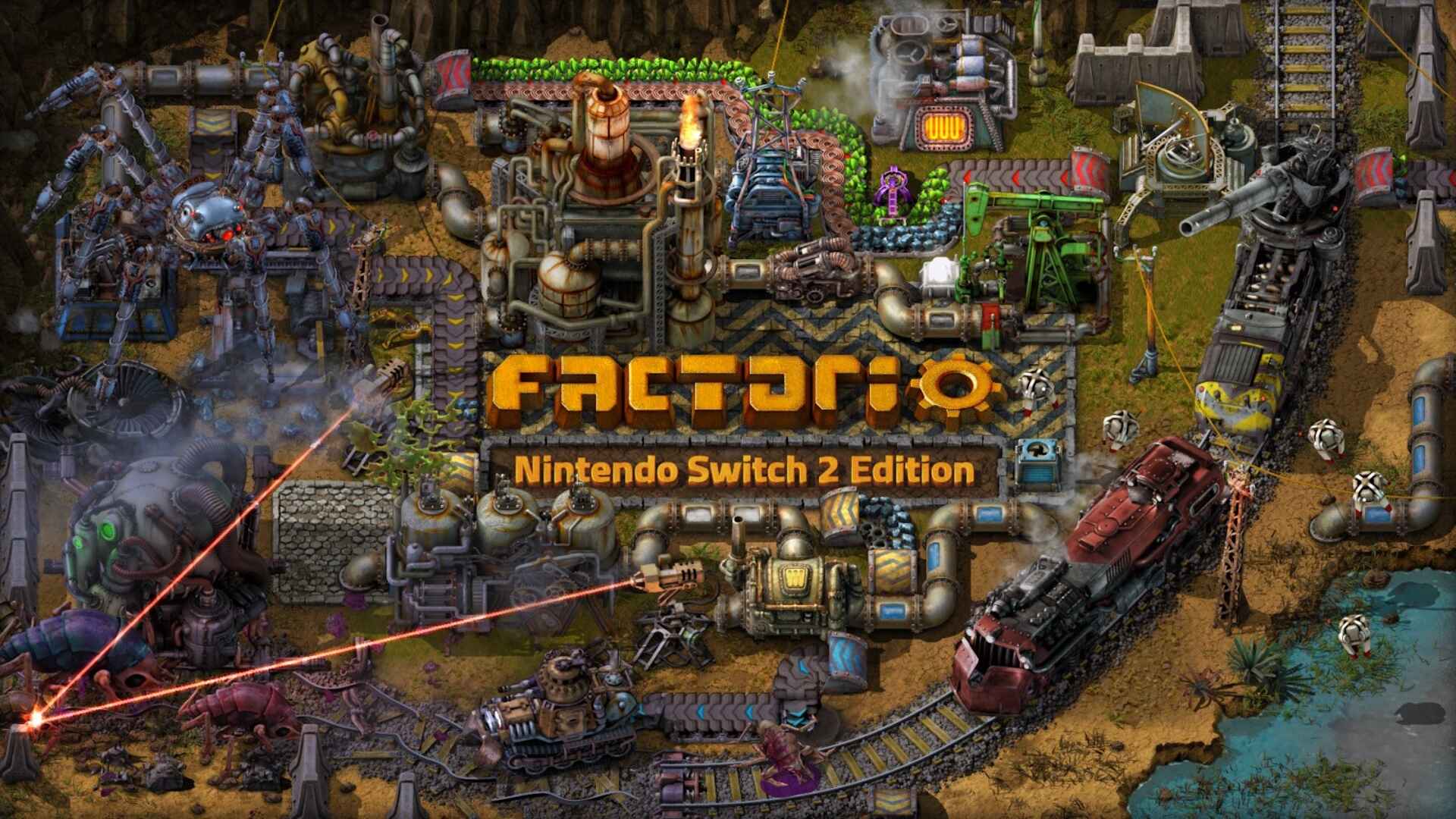
Factorio, developed and published by Wube Software, is a sandbox automation game where players construct elaborate factories from basic beginnings.
Starting with rudimentary resource gathering, players steadily build and connect vast conveyor systems, machines, and production lines, culminating in the launch of a rocket, the game’s principal end goal.
The game is celebrated for its intricate systems and engaging mechanics, offering a rewarding challenge to both new and seasoned players.
Wube Software’s technical team has meticulously crafted Factorio Nintendo Switch 2 Edition to leverage the console's upgraded CPU and GPU.
This results in noticeably faster load times, improved resolution, and smoother gameplay across both docked and handheld modes.
The updated port continues to support a suite of control options—including robust touch controls, complete controller support with accessible radial menus, and, notably, mouse compatibility—making the complex interfaces and rapid inventory management more intuitive than ever on a home console.
On UI scaling, Factorio offers comprehensive options, allowing both automatic and manual adjustments.
Players can set the UI scale up to 150% for optimal readability in handheld mode, ensuring comfort across diverse play styles and screen sizes.
The port’s responsiveness, especially in handheld mode, underlines its status as one of the best-looking portable variants to date.
For players concerned about performance hiccups in massive, late-game factories, Factorio does an admirable job maintaining its signature 60 frames per second target—though extremely elaborate maps can still challenge even the Switch 2’s power envelope.
One standout feature is Factorio’s flexible cross-save option, allowing players to synchronize progress between the Switch 2 and Steam Deck by initiating multiplayer maps and transferring saves.
Although not a seamless cloud-based approach, it supports extended play sessions across platforms.
Multiplayer also performs reliably, enabling co-op builds without significant technical setbacks, even in complex save states that would not have run on the original Switch hardware.
Factorio Nintendo Switch 2 Edition takes advantage of the platform’s VRR (Variable Refresh Rate) in handheld mode, further enhancing its smoothness and visual fidelity.
While other high-profile titles—like Star Wars Outlaws—showcase the console’s graphical capabilities, Factorio uniquely displays the Switch 2’s versatility in input and interface adaptation.
Though this review does not cover the recently released Space Age DLC in depth, it is available for Switch 2, complementing the base game’s already impressive feature set.
Wube Software’s consistent post-launch support demonstrates their commitment to both performance and content parity with the PC edition.
In summary, Factorio is a shining example of an "impossible port" that defies expectations on Nintendo hardware.
The Switch 2 edition is a clear evolution, boasting better visuals, speedier loads, responsive controls, and full feature support.
For fans of automation and strategic problem-solving, this release is essential.
Factorio Nintendo Switch 2 Edition not only meets but exceeds the standards set by its PC predecessor, delivering outstanding portable gameplay for automation enthusiasts and newcomers alike.
Reviewed on: Nintendo Switch 2
Review code provided by Wube Software
Score: 9/10
The Nintendo Switch 2’s launch year was a milestone for both fans of Nintendo’s flagship franchises and enthusiasts of technically ambitious indie titles.
Alongside notable Nintendo launches like The Legend of Zelda: Breath of the Wild and Kirby and the Forgotten Land, and third-party successes such as No Man’s Sky, Wube Software’s Factorio stands out as a testament to expert optimization and gameplay innovation on Nintendo’s new hardware.
Originally known as a deeply complex simulation on PC, Factorio’s transition to consoles demanded significant technical ingenuity—especially given its CPU-heavy requirements.
Factorio, developed and published by Wube Software, is a sandbox automation game where players construct elaborate factories from basic beginnings.
Starting with rudimentary resource gathering, players steadily build and connect vast conveyor systems, machines, and production lines, culminating in the launch of a rocket, the game’s principal end goal.
The game is celebrated for its intricate systems and engaging mechanics, offering a rewarding challenge to both new and seasoned players.
Wube Software’s technical team has meticulously crafted Factorio Nintendo Switch 2 Edition to leverage the console's upgraded CPU and GPU.
This results in noticeably faster load times, improved resolution, and smoother gameplay across both docked and handheld modes.
The updated port continues to support a suite of control options—including robust touch controls, complete controller support with accessible radial menus, and, notably, mouse compatibility—making the complex interfaces and rapid inventory management more intuitive than ever on a home console.
On UI scaling, Factorio offers comprehensive options, allowing both automatic and manual adjustments.
Players can set the UI scale up to 150% for optimal readability in handheld mode, ensuring comfort across diverse play styles and screen sizes.
The port’s responsiveness, especially in handheld mode, underlines its status as one of the best-looking portable variants to date.
For players concerned about performance hiccups in massive, late-game factories, Factorio does an admirable job maintaining its signature 60 frames per second target—though extremely elaborate maps can still challenge even the Switch 2’s power envelope.
One standout feature is Factorio’s flexible cross-save option, allowing players to synchronize progress between the Switch 2 and Steam Deck by initiating multiplayer maps and transferring saves.
Although not a seamless cloud-based approach, it supports extended play sessions across platforms.
Multiplayer also performs reliably, enabling co-op builds without significant technical setbacks, even in complex save states that would not have run on the original Switch hardware.
Factorio Nintendo Switch 2 Edition takes advantage of the platform’s VRR (Variable Refresh Rate) in handheld mode, further enhancing its smoothness and visual fidelity.
While other high-profile titles—like Star Wars Outlaws—showcase the console’s graphical capabilities, Factorio uniquely displays the Switch 2’s versatility in input and interface adaptation.
Though this review does not cover the recently released Space Age DLC in depth, it is available for Switch 2, complementing the base game’s already impressive feature set.
Wube Software’s consistent post-launch support demonstrates their commitment to both performance and content parity with the PC edition.
In summary, Factorio is a shining example of an "impossible port" that defies expectations on Nintendo hardware.
The Switch 2 edition is a clear evolution, boasting better visuals, speedier loads, responsive controls, and full feature support.
For fans of automation and strategic problem-solving, this release is essential.
Factorio Nintendo Switch 2 Edition not only meets but exceeds the standards set by its PC predecessor, delivering outstanding portable gameplay for automation enthusiasts and newcomers alike.
Reviewed on: Nintendo Switch 2
Review code provided by Wube Software
Score: 9/10