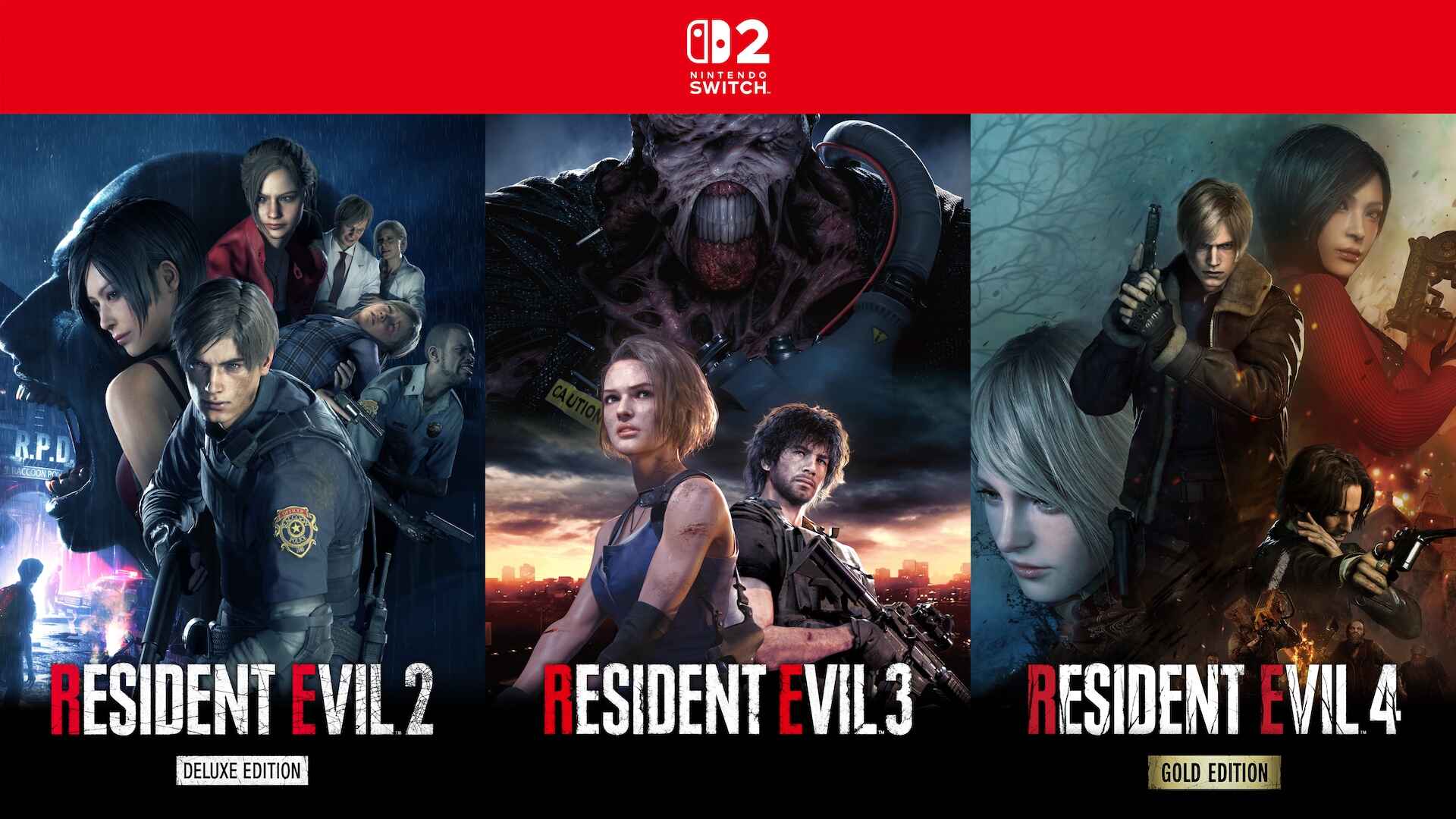

The latest addition to Capcom’s legendary survival horror series, Resident Evil Requiem, has made its much-anticipated debut this week—marking a crucial moment for Nintendo Switch 2.
As one of the first major third-party releases to land on the hybrid platform alongside other console versions, there’s considerable interest around how the Switch 2 port compares.
Thanks to Digital Foundry’s in-depth technical review, we now have a detailed look at how Resident Evil Requiem performs on Nintendo’s latest hardware.
Capcom’s Commitment to Visual Fidelity
Capcom has a longstanding reputation for delivering polished ports across a range of hardware, and Resident Evil Requiem for Switch 2 is no exception.
In their analysis, Digital Foundry notes that the developer has successfully “preserved the core visual identity” of the game, providing what they describe as a highly convincing mobile version.
Leveraging Nvidia’s DLSS upscaling technology—one of Switch 2’s standout hardware features—Capcom has managed to present visuals that exceed expectations, especially considering the console’s limited processing power.
Resolution and Image Quality: What Players Can Expect
Digital Foundry’s assessment reveals that Resident Evil Requiem runs at a base resolution of 540p while docked, which is then upscaled using DLSS, resulting in image quality that actually surpasses the native output of the Xbox Series S in some respects.
The user interface on Switch 2 remains crisp at a fixed 1080p.
In handheld mode, the game drops to a rendered resolution of just 360p, but once again DLSS intervenes, effectively boosting perceived clarity to a viable 720p output and upscaling further to fit the handheld’s 1080p screen.
The analysis highlights that, on paper, a 540p image scaled up to full HD might not sound promising.
However, with DLSS—likely employing a neural network-based approach similar to its PC variant—the resultant visuals look surprisingly refined.
Even in handheld mode, the fourfold resolution upscale from 360p to 720p is handled deftly, providing a satisfactory mobile gameplay experience.
Performance: Targeting 60fps, With Room for Improvement
While Capcom has succeeded in maintaining visual appeal, frame rate performance proves more variable.
Resident Evil Requiem targets an unlocked 60fps across both docked and handheld modes but struggles to maintain it consistently.
According to Digital Foundry, the game frequently operates in the 40-50fps range in docked mode and can dip as low as 30fps during more demanding scenes.
Handheld performance is slightly lower still, with similar drops in complex segments.
Digital Foundry suggests there is room for optimization here, and hopes Capcom can address these frame-rate issues in future patches.
Visual Trade-Offs and Loading Times
As expected with any port to less powerful hardware, some visual compromises are present.
Geometry density has been reduced, texture quality is dialed back, and Capcom has modified character hair rendering specifically for Switch 2.
Variability in frame-rate remains noticeable, though these cutbacks have minimal impact on the overall gameplay experience.
On the positive side, Digital Foundry commends the Switch 2 port for its fast loading times, both when entering new levels and reloading saved games—a significant advantage for portable or on-the-go play.
Conclusion: A Strong, Albeit Imperfect, Entry for Switch 2
Resident Evil Requiem’s arrival on Nintendo Switch 2 stands as a testament to Capcom’s technical expertise and the capabilities of DLSS technology.
While some inevitable trade-offs in resolution and frame-rate are apparent, especially when compared to more powerful consoles, the core visual identity of Resident Evil Requiem has been impressively maintained.
With swift loading times and overall solid execution, this release represents a promising milestone for third-party support on the Nintendo Switch 2 platform.
Gamers can find the full breakdown and performance metrics in Digital Foundry’s comprehensive review.
As one of the first major third-party releases to land on the hybrid platform alongside other console versions, there’s considerable interest around how the Switch 2 port compares.
Thanks to Digital Foundry’s in-depth technical review, we now have a detailed look at how Resident Evil Requiem performs on Nintendo’s latest hardware.
Capcom’s Commitment to Visual Fidelity
Capcom has a longstanding reputation for delivering polished ports across a range of hardware, and Resident Evil Requiem for Switch 2 is no exception.
In their analysis, Digital Foundry notes that the developer has successfully “preserved the core visual identity” of the game, providing what they describe as a highly convincing mobile version.
Leveraging Nvidia’s DLSS upscaling technology—one of Switch 2’s standout hardware features—Capcom has managed to present visuals that exceed expectations, especially considering the console’s limited processing power.
Resolution and Image Quality: What Players Can Expect
Digital Foundry’s assessment reveals that Resident Evil Requiem runs at a base resolution of 540p while docked, which is then upscaled using DLSS, resulting in image quality that actually surpasses the native output of the Xbox Series S in some respects.
The user interface on Switch 2 remains crisp at a fixed 1080p.
In handheld mode, the game drops to a rendered resolution of just 360p, but once again DLSS intervenes, effectively boosting perceived clarity to a viable 720p output and upscaling further to fit the handheld’s 1080p screen.
The analysis highlights that, on paper, a 540p image scaled up to full HD might not sound promising.
However, with DLSS—likely employing a neural network-based approach similar to its PC variant—the resultant visuals look surprisingly refined.
Even in handheld mode, the fourfold resolution upscale from 360p to 720p is handled deftly, providing a satisfactory mobile gameplay experience.
Performance: Targeting 60fps, With Room for Improvement
While Capcom has succeeded in maintaining visual appeal, frame rate performance proves more variable.
Resident Evil Requiem targets an unlocked 60fps across both docked and handheld modes but struggles to maintain it consistently.
According to Digital Foundry, the game frequently operates in the 40-50fps range in docked mode and can dip as low as 30fps during more demanding scenes.
Handheld performance is slightly lower still, with similar drops in complex segments.
Digital Foundry suggests there is room for optimization here, and hopes Capcom can address these frame-rate issues in future patches.
Visual Trade-Offs and Loading Times
As expected with any port to less powerful hardware, some visual compromises are present.
Geometry density has been reduced, texture quality is dialed back, and Capcom has modified character hair rendering specifically for Switch 2.
Variability in frame-rate remains noticeable, though these cutbacks have minimal impact on the overall gameplay experience.
On the positive side, Digital Foundry commends the Switch 2 port for its fast loading times, both when entering new levels and reloading saved games—a significant advantage for portable or on-the-go play.
Conclusion: A Strong, Albeit Imperfect, Entry for Switch 2
Resident Evil Requiem’s arrival on Nintendo Switch 2 stands as a testament to Capcom’s technical expertise and the capabilities of DLSS technology.
While some inevitable trade-offs in resolution and frame-rate are apparent, especially when compared to more powerful consoles, the core visual identity of Resident Evil Requiem has been impressively maintained.
With swift loading times and overall solid execution, this release represents a promising milestone for third-party support on the Nintendo Switch 2 platform.
Gamers can find the full breakdown and performance metrics in Digital Foundry’s comprehensive review.