Pokémon Legends: Z-A, developed by Game Freak and published by Nintendo, is the latest addition to the acclaimed Pokémon series for Nintendo Switch and the upcoming Switch 2 hardware.
Since its announcement, anticipation has run high as fans look forward to the technical strides made by the next generation of Nintendo consoles.
Digital Foundry, a leading authority in gaming technology analysis, has now provided a thorough evaluation of Pokémon Legends: Z-A, revealing notable differences between the two platforms and what fans can expect from the game's performance and visuals.
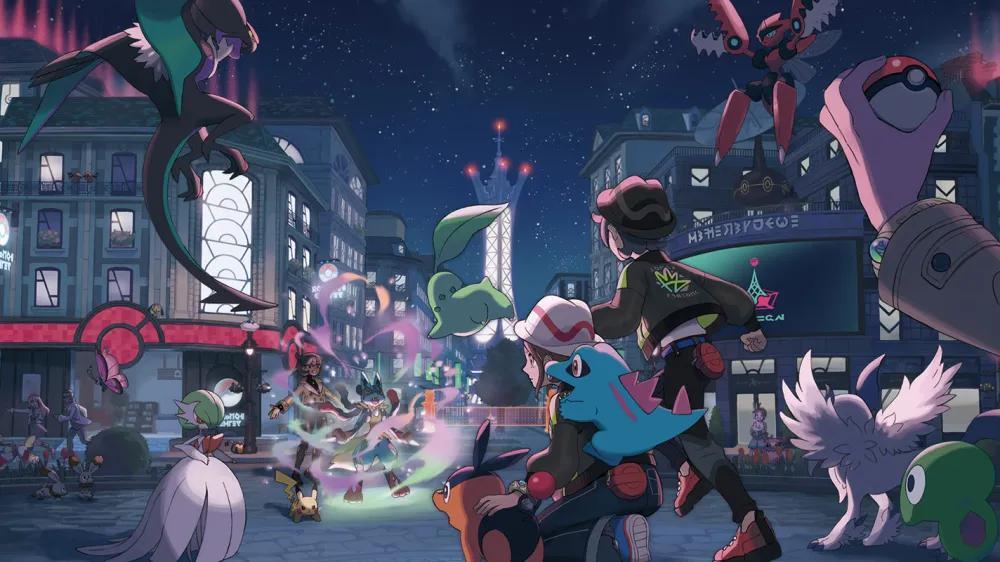
The spotlight of Digital Foundry's analysis focuses on the game's visuals within Lumiose City, the primary showcased location.
According to their report, the visual execution on both Nintendo Switch and Switch 2 is "rough around the edges," with brighter color schemes and lighting that Digital Foundry characterizes as overly harsh—even on the advanced Switch 2 hardware.
A notable shortcoming in both versions is the animation of Non-Playable Characters (NPCs); most pedestrians remain motionless at fixed points, lacking the lively movement fans may expect in an urban landscape.
When it comes to graphical fidelity, both versions of Pokémon Legends: Z-A exhibit significant 'pop-in' and 'pop-out' issues.
This refers to the sudden appearance or disappearance of objects and characters as players explore Lumiose City, which can reduce overall immersion.
Additionally, Digital Foundry notes repetitive texture mapping on building exteriors, particularly on windows and balconies, which results in pixelation and flat visuals upon closer inspection—a critique applicable even to the more powerful Switch 2 iteration.
Despite these issues, the Nintendo Switch 2 represents a substantial upgrade in environmental detail and image quality.
Digital Foundry highlights the use of Deep Learning Super Sampling (DLSS) upscaling technology, which allows the Switch 2 to deliver a crisp 1440p resolution when docked and 1080p in handheld mode.
This marks a significant leap over the original Switch, which lacks such upscaling capabilities and presents softer image clarity.
Frame rate performance is another area where Switch 2 demonstrates its hardware advantages.
The standard Nintendo Switch targets 30 frames per second (fps), but users may experience regular dips into the low 20s, particularly while moving the in-game camera.
In comparison, Switch 2 secures a stable 60fps, with only the occasional and infrequent drop.
This notable improvement leads to a much smoother gaming experience and makes full use of the console's upgraded internals.
Digital Foundry's verdict reinforces expectations for the Nintendo Switch 2, confirming that its enhanced hardware and modern upscaling technology translate to tangible, real-world improvements in flagship titles like Pokémon Legends: Z-A.
Fans eager for more detailed insights can visit Digital Foundry's website for the full technical breakdown.
In summary, while both current and next-generation platforms offer their own advantages, the Switch 2 establishes a clear standard for performance and graphical fidelity in upcoming Nintendo titles.
Since its announcement, anticipation has run high as fans look forward to the technical strides made by the next generation of Nintendo consoles.
Digital Foundry, a leading authority in gaming technology analysis, has now provided a thorough evaluation of Pokémon Legends: Z-A, revealing notable differences between the two platforms and what fans can expect from the game's performance and visuals.
The spotlight of Digital Foundry's analysis focuses on the game's visuals within Lumiose City, the primary showcased location.
According to their report, the visual execution on both Nintendo Switch and Switch 2 is "rough around the edges," with brighter color schemes and lighting that Digital Foundry characterizes as overly harsh—even on the advanced Switch 2 hardware.
A notable shortcoming in both versions is the animation of Non-Playable Characters (NPCs); most pedestrians remain motionless at fixed points, lacking the lively movement fans may expect in an urban landscape.
When it comes to graphical fidelity, both versions of Pokémon Legends: Z-A exhibit significant 'pop-in' and 'pop-out' issues.
This refers to the sudden appearance or disappearance of objects and characters as players explore Lumiose City, which can reduce overall immersion.
Additionally, Digital Foundry notes repetitive texture mapping on building exteriors, particularly on windows and balconies, which results in pixelation and flat visuals upon closer inspection—a critique applicable even to the more powerful Switch 2 iteration.
Despite these issues, the Nintendo Switch 2 represents a substantial upgrade in environmental detail and image quality.
Digital Foundry highlights the use of Deep Learning Super Sampling (DLSS) upscaling technology, which allows the Switch 2 to deliver a crisp 1440p resolution when docked and 1080p in handheld mode.
This marks a significant leap over the original Switch, which lacks such upscaling capabilities and presents softer image clarity.
Frame rate performance is another area where Switch 2 demonstrates its hardware advantages.
The standard Nintendo Switch targets 30 frames per second (fps), but users may experience regular dips into the low 20s, particularly while moving the in-game camera.
In comparison, Switch 2 secures a stable 60fps, with only the occasional and infrequent drop.
This notable improvement leads to a much smoother gaming experience and makes full use of the console's upgraded internals.
Digital Foundry's verdict reinforces expectations for the Nintendo Switch 2, confirming that its enhanced hardware and modern upscaling technology translate to tangible, real-world improvements in flagship titles like Pokémon Legends: Z-A.
Fans eager for more detailed insights can visit Digital Foundry's website for the full technical breakdown.
In summary, while both current and next-generation platforms offer their own advantages, the Switch 2 establishes a clear standard for performance and graphical fidelity in upcoming Nintendo titles.