A technically ambitious homebrew effort has surfaced in the Sega retro community: an early 32X port of the arcade racing classic Daytona USA built on the engine from the 32X release Virtua Racing Deluxe (1994).
Daytona USA was originally developed by Sega AM2 and released in arcades in 1994; Virtua Racing Deluxe is likewise a 1994 32X-era release, and modders are now combining elements of both titles on the aging 32X hardware.
Earlier today, a short test clip was uploaded to YouTube by user CamTrack and a build dump was published to the GitHub repository of modder MatiasZanolli.
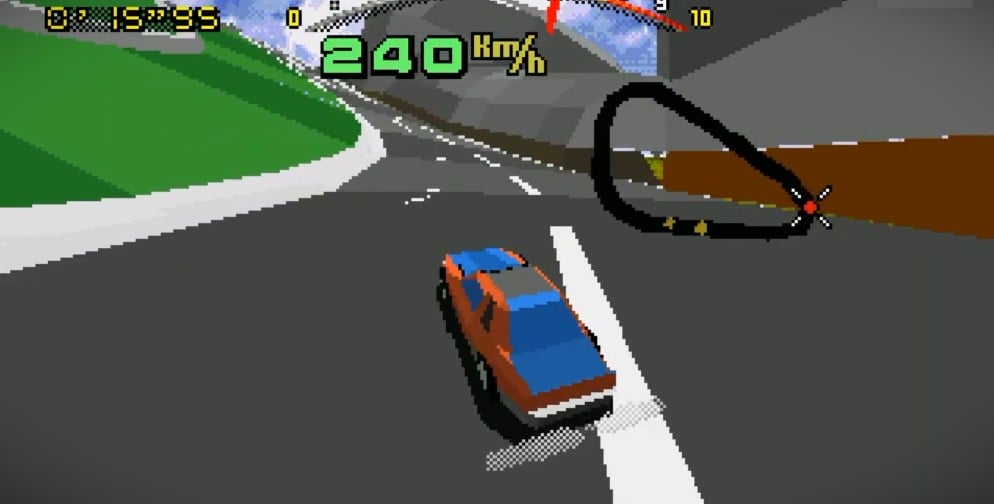
The footage shows the iconic Hornet car running on an IndyCar-style circuit that closely resembles the Three Seven Speedway from the original Daytona USA arcade build.
The clip includes a handful of notable features already integrated into the prototype: a basic version of the Daytona USA heads-up display, a “shuttering” style title screen effect, and engine behavior derived from Virtua Racing Deluxe.
MatiasZanolli has stated that the project is aiming for a steady 30 frames per second, and the early footage appears smooth relative to many Model 1-era homebrew attempts.
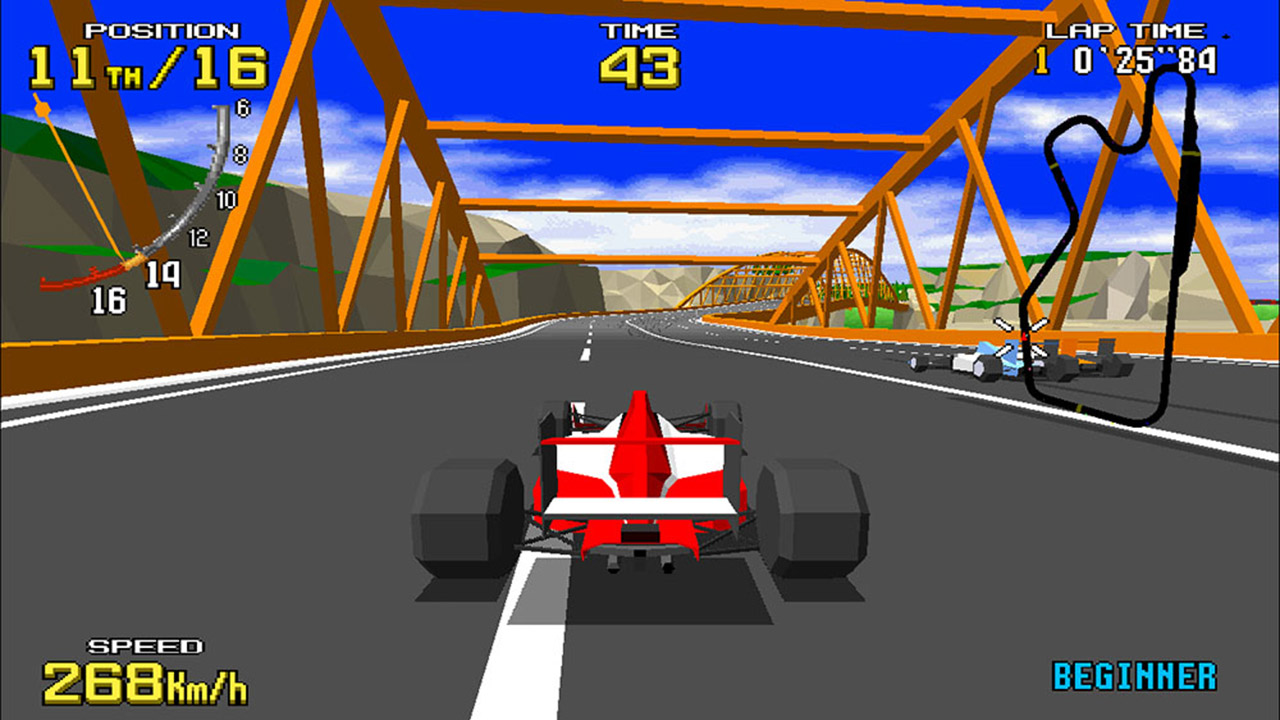
Observers also noted a stray Virtua Racing F1 car appearing briefly in the demo footage, an artifact of the engine mash-up between the two 1994-era 32X titles.
Reported facts from the build logs confirm the use of Virtua Racing Deluxe assets and the developer’s target of 30 FPS for gameplay stability.
The port has drawn enthusiastic attention from the retro development community.
In journalistic terms, the project channels the original arcade’s energetic rallying call and aims to recreate that spirit on 32X hardware.
While this release remains an early proof-of-concept, the public footage and repository give collectors and developers concrete material to examine and test.
This work also sits alongside other recent Model 1-era community projects: efforts to add high-definition visuals to Virtua Fighter on 32X, a new FPGA core for Virtua Racing, and a port of Sega’s F1 racer to the PlayDate handheld have all been reported.
For now, the Daytona USA 32X port is an early technical showcase; interested parties can view the CamTrack video on YouTube and inspect the MatiasZanolli repository on GitHub for the current build files and technical notes.
Daytona USA was originally developed by Sega AM2 and released in arcades in 1994; Virtua Racing Deluxe is likewise a 1994 32X-era release, and modders are now combining elements of both titles on the aging 32X hardware.
Earlier today, a short test clip was uploaded to YouTube by user CamTrack and a build dump was published to the GitHub repository of modder MatiasZanolli.
The footage shows the iconic Hornet car running on an IndyCar-style circuit that closely resembles the Three Seven Speedway from the original Daytona USA arcade build.
The clip includes a handful of notable features already integrated into the prototype: a basic version of the Daytona USA heads-up display, a “shuttering” style title screen effect, and engine behavior derived from Virtua Racing Deluxe.
MatiasZanolli has stated that the project is aiming for a steady 30 frames per second, and the early footage appears smooth relative to many Model 1-era homebrew attempts.
Observers also noted a stray Virtua Racing F1 car appearing briefly in the demo footage, an artifact of the engine mash-up between the two 1994-era 32X titles.
Reported facts from the build logs confirm the use of Virtua Racing Deluxe assets and the developer’s target of 30 FPS for gameplay stability.
The port has drawn enthusiastic attention from the retro development community.
In journalistic terms, the project channels the original arcade’s energetic rallying call and aims to recreate that spirit on 32X hardware.
While this release remains an early proof-of-concept, the public footage and repository give collectors and developers concrete material to examine and test.
This work also sits alongside other recent Model 1-era community projects: efforts to add high-definition visuals to Virtua Fighter on 32X, a new FPGA core for Virtua Racing, and a port of Sega’s F1 racer to the PlayDate handheld have all been reported.
For now, the Daytona USA 32X port is an early technical showcase; interested parties can view the CamTrack video on YouTube and inspect the MatiasZanolli repository on GitHub for the current build files and technical notes.