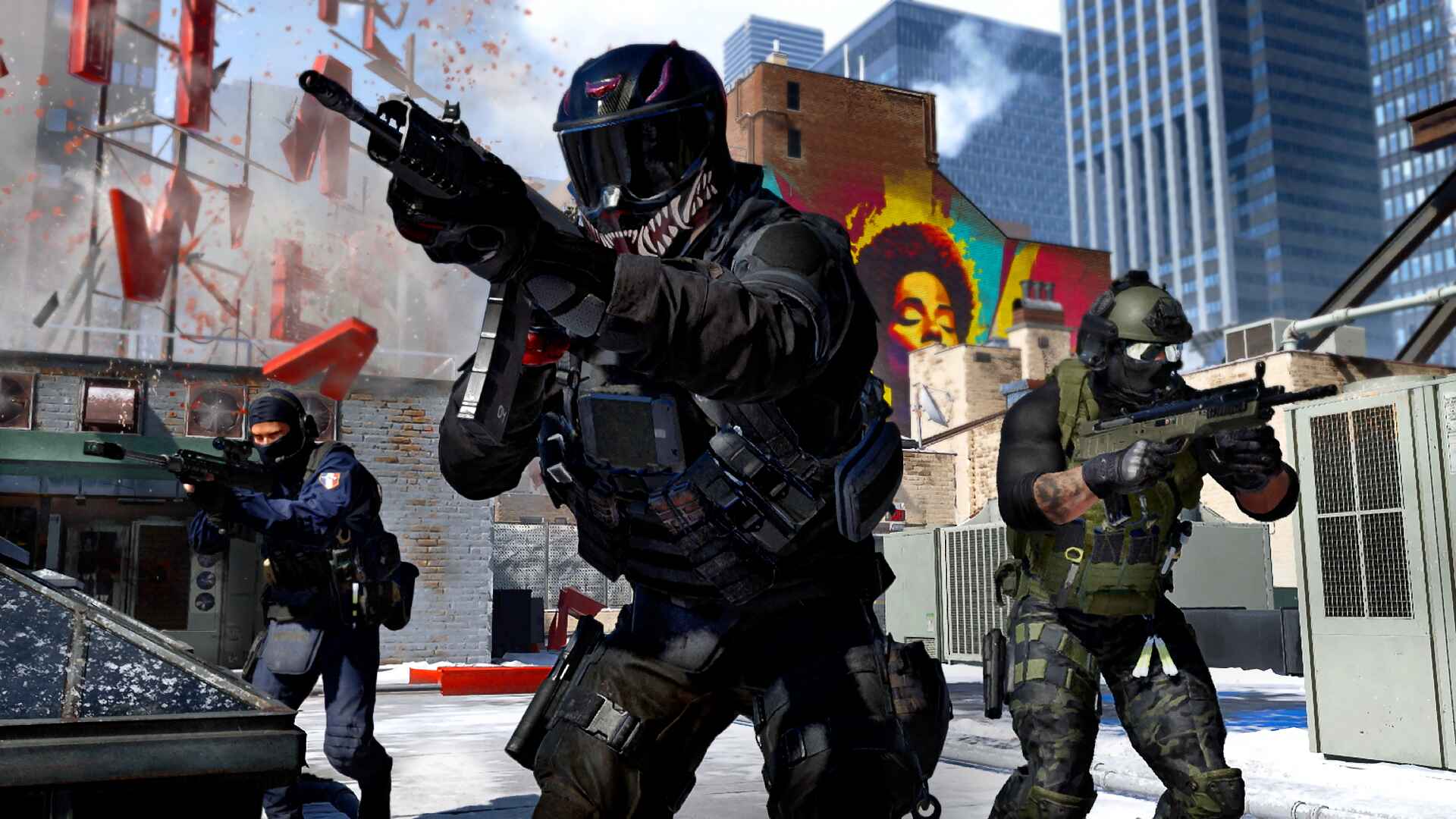
New reports on platform performance for Call of Duty: Modern Warfare 4 indicate differing frame-rate targets across consoles, with the Nintendo Switch 2 version prioritizing multiplayer stability.
The title, published by Activision and associated with developer Infinity Ward’s Modern Warfare lineage, is the latest entry in a franchise that began in 2003 and whose Modern Warfare subseries traces back to Infinity Ward’s 2007 Call of Duty 4: Modern Warfare.
According to the details circulating, the single-player campaign for Modern Warfare 4 runs at 30 frames per second on Nintendo Switch 2 hardware, while the multiplayer mode targets 60 frames per second on the same platform.
The same reports state that PlayStation 5 and Xbox Series X|S versions target 60fps across all modes.
PlayStation 5 and Xbox Series X|S consoles launched in November 2020 and have been marketed as current-generation hardware optimized for higher frame rates and resolutions; the original Nintendo Switch platform was released on March 3, 2017.
Rewritten for clarity: sources say the Switch 2 build of Modern Warfare 4 will cap the campaign at 30fps to preserve single-player presentation and run multiplayer at 60fps to support competitive play, while the PS5 and Xbox Series X|S editions are set to run at 60fps for both campaign and multiplayer.
These reported performance targets reflect typical platform strategies: developers and publishers often balance visual fidelity and frame rate based on hardware capabilities and the design priorities of specific modes.
Activision has historically coordinated multi-platform releases across consoles and PC, and Nintendo continues to use channels such as Nintendo Direct for major announcements and the Nintendo eShop for digital distribution when a Switch-family release is confirmed.
At this stage, the information should be treated as an early performance report pending official confirmation from Activision, Infinity Ward, or platform holders.
Fans looking for authoritative details should watch for an official announcement via publisher statements or platform showcases, and check the eShop or Nintendo Direct updates for definitive technical breakdowns and release information.
For publishers and developers, frame-rate choices remain a key part of communicating performance goals to players—especially for a high-profile franchise like Call of Duty, where multiplayer responsiveness is central to the player experience.
The title, published by Activision and associated with developer Infinity Ward’s Modern Warfare lineage, is the latest entry in a franchise that began in 2003 and whose Modern Warfare subseries traces back to Infinity Ward’s 2007 Call of Duty 4: Modern Warfare.
According to the details circulating, the single-player campaign for Modern Warfare 4 runs at 30 frames per second on Nintendo Switch 2 hardware, while the multiplayer mode targets 60 frames per second on the same platform.
The same reports state that PlayStation 5 and Xbox Series X|S versions target 60fps across all modes.
PlayStation 5 and Xbox Series X|S consoles launched in November 2020 and have been marketed as current-generation hardware optimized for higher frame rates and resolutions; the original Nintendo Switch platform was released on March 3, 2017.
Rewritten for clarity: sources say the Switch 2 build of Modern Warfare 4 will cap the campaign at 30fps to preserve single-player presentation and run multiplayer at 60fps to support competitive play, while the PS5 and Xbox Series X|S editions are set to run at 60fps for both campaign and multiplayer.
These reported performance targets reflect typical platform strategies: developers and publishers often balance visual fidelity and frame rate based on hardware capabilities and the design priorities of specific modes.
Activision has historically coordinated multi-platform releases across consoles and PC, and Nintendo continues to use channels such as Nintendo Direct for major announcements and the Nintendo eShop for digital distribution when a Switch-family release is confirmed.
At this stage, the information should be treated as an early performance report pending official confirmation from Activision, Infinity Ward, or platform holders.
Fans looking for authoritative details should watch for an official announcement via publisher statements or platform showcases, and check the eShop or Nintendo Direct updates for definitive technical breakdowns and release information.
For publishers and developers, frame-rate choices remain a key part of communicating performance goals to players—especially for a high-profile franchise like Call of Duty, where multiplayer responsiveness is central to the player experience.