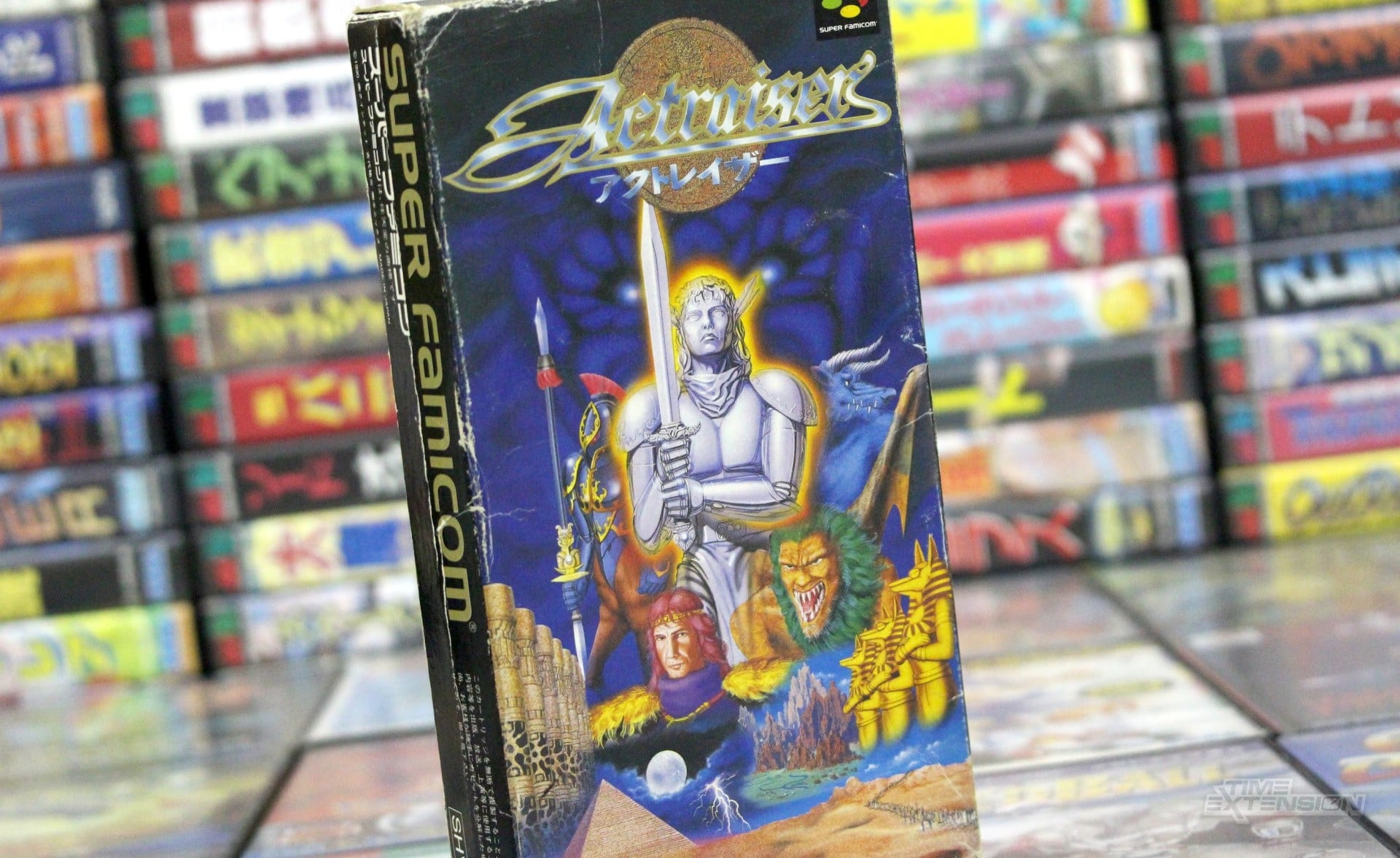
Few titles in video game history epitomize innovation like ActRaiser, released by Enix for the Super Nintendo Entertainment System (SNES) in December 1990 in Japan, and later in North America and Europe.
Fusing God simulation mechanics with side-scrolling action, ActRaiser quickly secured its place as a trailblazer in the SNES library.
Even three decades after its debut, the legacy of ActRaiser endures, with a modern remake, ActRaiser Renaissance, launching on platforms such as the Nintendo Switch and eShop in September 2021.
A fascinating detail about the game’s evolution has recently come to light, thanks to composer Yuzo Koshiro, whose legendary soundtrack remains one of ActRaiser’s hallmarks.
On social media, Koshiro shared that ActRaiser’s original design was markedly different from the classic fans know today.
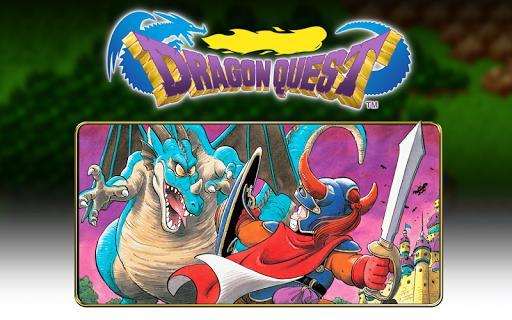
"My sister told me that ActRaiser was initially conceived as a traditional JRPG, akin to Dragon Quest," Koshiro revealed, crediting his sibling Ayano, who was also involved in the game’s development.
This early design direction changed dramatically due to the influence of programmer Hashimoto.
According to Koshiro, "Hashimoto was deeply interested in Rockman (known internationally as Mega Man), and his passion for that series significantly shaped ActRaiser's action segments." Koshiro recounted that the integration of these side-scrolling stages shifted the game’s genre merging, and from that pivotal point, the project reached completion in approximately six months.
Koshiro, reflecting further, noted that he learned about these early design discussions only in retrospect.
He recalled, "When I joined the ActRaiser team, the action elements were already in place.
At that time, I remember Hashimoto occasionally lauding Mega Man’s gameplay, which clearly had a notable impact on how the action sections were crafted."
Praised for seamlessly blending rich orchestral music, city-building strategy, and arcade-style action, ActRaiser became one of Enix’s early milestones on the SNES and remains influential among developers today.
The game’s legacy continued with an SNES sequel, ActRaiser 2, though it famously omitted the beloved simulation elements.
With renewed interest brought on by ActRaiser Renaissance and a constantly evolving eShop library, ActRaiser’s story is a prime example of creative iteration in Japanese game development.
Mega Man’s inspiration on ActRaiser, as revealed by Yuzo Koshiro and the team, underscores the cross-pollination of ideas that defined the SNES era—shaping not just a single game, but the trajectory of innovation for years to come.
Fusing God simulation mechanics with side-scrolling action, ActRaiser quickly secured its place as a trailblazer in the SNES library.
Even three decades after its debut, the legacy of ActRaiser endures, with a modern remake, ActRaiser Renaissance, launching on platforms such as the Nintendo Switch and eShop in September 2021.
A fascinating detail about the game’s evolution has recently come to light, thanks to composer Yuzo Koshiro, whose legendary soundtrack remains one of ActRaiser’s hallmarks.
On social media, Koshiro shared that ActRaiser’s original design was markedly different from the classic fans know today.
"My sister told me that ActRaiser was initially conceived as a traditional JRPG, akin to Dragon Quest," Koshiro revealed, crediting his sibling Ayano, who was also involved in the game’s development.
This early design direction changed dramatically due to the influence of programmer Hashimoto.
According to Koshiro, "Hashimoto was deeply interested in Rockman (known internationally as Mega Man), and his passion for that series significantly shaped ActRaiser's action segments." Koshiro recounted that the integration of these side-scrolling stages shifted the game’s genre merging, and from that pivotal point, the project reached completion in approximately six months.
Koshiro, reflecting further, noted that he learned about these early design discussions only in retrospect.
He recalled, "When I joined the ActRaiser team, the action elements were already in place.
At that time, I remember Hashimoto occasionally lauding Mega Man’s gameplay, which clearly had a notable impact on how the action sections were crafted."
Praised for seamlessly blending rich orchestral music, city-building strategy, and arcade-style action, ActRaiser became one of Enix’s early milestones on the SNES and remains influential among developers today.
The game’s legacy continued with an SNES sequel, ActRaiser 2, though it famously omitted the beloved simulation elements.
With renewed interest brought on by ActRaiser Renaissance and a constantly evolving eShop library, ActRaiser’s story is a prime example of creative iteration in Japanese game development.
Mega Man’s inspiration on ActRaiser, as revealed by Yuzo Koshiro and the team, underscores the cross-pollination of ideas that defined the SNES era—shaping not just a single game, but the trajectory of innovation for years to come.